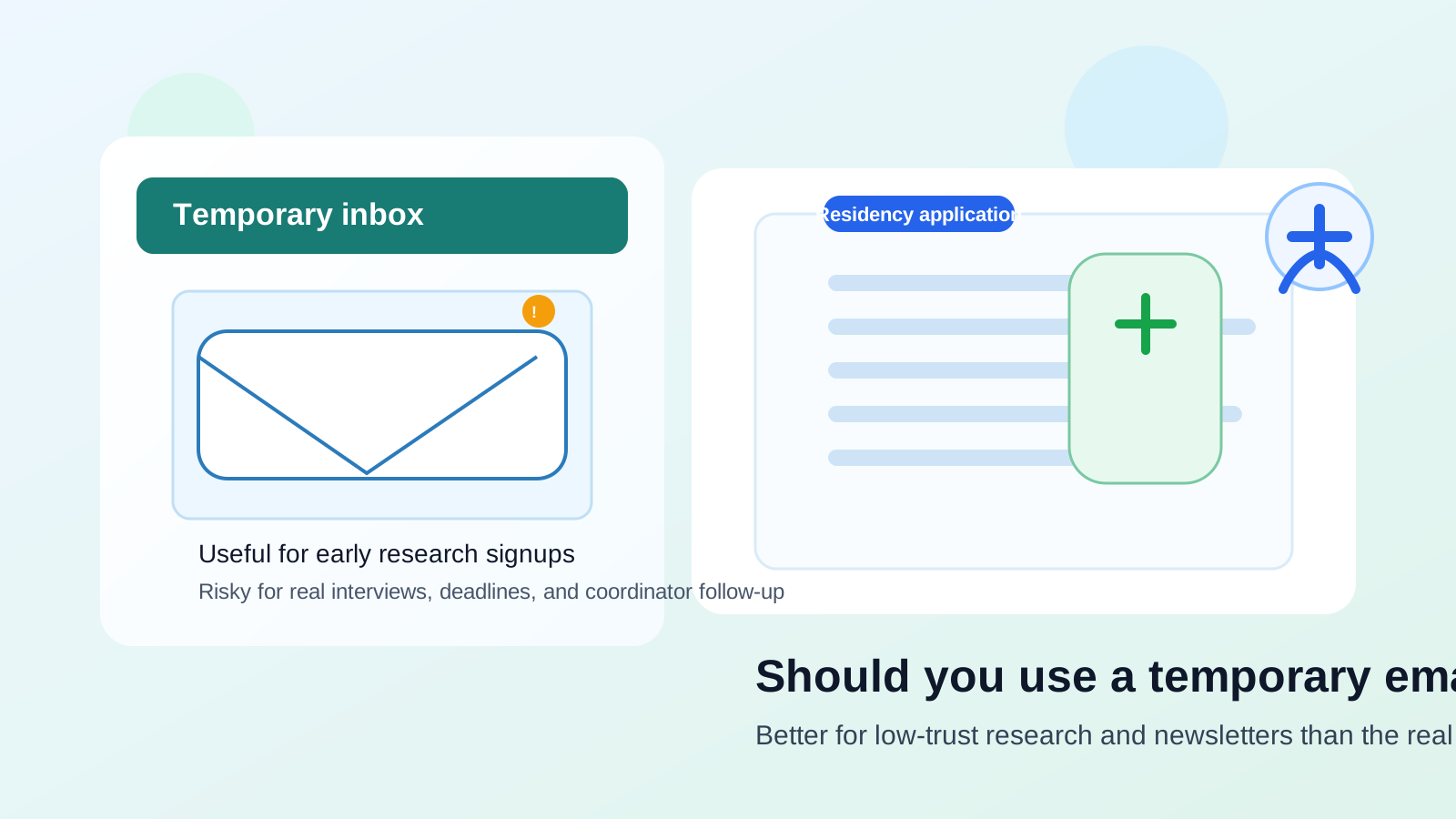
Usually no for the actual residency application process. A temporary email can help with low-trust signups, newsletters, or early research, but real residency applications need a stable inbox for ERAS updates, interview invitations, coordinator messages, and ranking-season logistics.
If you want more privacy while applying, the safer move is usually a separate long-term email or a reliable alias—not a disposable inbox you might lose access to when a program finally replies.
Why applicants even consider temporary email in the first place
Residency season generates a lot of online activity before the serious communication starts. Applicants sign up for program newsletters, virtual open houses, webinars, residency fair follow-up lists, specialty resources, discussion forums, and third-party tools that promise interview tips or application tracking. If you use your main personal inbox for all of it, your email can turn into a noisy pile of promotions, reminders, and generic recruiting messages at exactly the moment you need to notice something important.
That is why the idea of a temporary email sounds appealing. It offers distance. You can receive a verification link, access a download, or join a mailing list without handing your primary address to every form on the internet.
For that narrow use case, a temporary inbox can be practical. But the key phrase is for that narrow use case. Residency applications are not just casual signups. They are long, high-stakes, deadline-driven workflows where missing one message can create real consequences.
Where a temporary email can help
A temporary email is most useful before your real application communication begins. It can make sense for:
- Downloading residency prep checklists from sites you do not fully trust yet
- Joining vendor or conference mailing lists that are likely to generate marketing follow-up
- Testing a discussion board, webinar signup, or resource portal before deciding whether to stay subscribed
- Separating low-value informational traffic from the inbox you actually monitor for applications
Used that way, a tool like Anonibox can be a clean buffer. You still get the confirmation email you need, but you do not automatically invite long-term inbox clutter into the account you rely on for important academic and professional communication.
Why temporary email is risky for real residency applications
The problem is not that temporary email is bad in general. The problem is that the residency process expects continuity.
1. Interview invites do not always arrive on your ideal schedule
Programs, coordinators, and platforms can send messages at odd times, especially during busy review periods. An address that expires, stops forwarding, or becomes hard to monitor introduces unnecessary risk. Even if you think you will only use it briefly, residency timelines have a habit of stretching longer than expected.
2. You may need the same inbox for follow-up
Application questions, interview confirmations, waitlist movement, program updates, thank-you replies, and logistical clarifications often build on earlier messages. A disposable inbox can break that thread. What starts as a “quick privacy move” can become a problem when you need to reference earlier communication or prove which address you used.
3. Some systems treat odd or disposable-looking addresses with suspicion
Not every program will care, but some staff members may be less comfortable when an application comes from an address that looks obviously temporary or unfamiliar. Residency communication is formal enough that a stable, professional-looking email usually helps you more than it hurts.
4. Deadlines and documents matter more than inbox tidiness
Missing a webinar promo is annoying. Missing a scheduling notice, document request, or interview-related update is much worse. In residency applications, reliability should beat cleverness almost every time.
A better setup for privacy-conscious applicants
If your goal is to protect your personal inbox without creating delivery risk, a dedicated residency email is usually the strongest option. That can be:
- a separate long-term inbox used only for applications,
- a reliable alias that forwards into an account you monitor constantly, or
- a structured email system where all residency communication stays isolated from everyday mail.
This approach gives you the main benefit people want from temporary email—better privacy and less clutter—without the biggest downside, which is losing a message at the wrong moment.
In practice, a dedicated application inbox works well because it creates one obvious rule: if a message lands there, it deserves attention. That is far safer than hoping a short-lived inbox still exists when a program coordinator follows up later.
How to use temporary email safely around residency applications
If you still want the privacy benefits of temporary email, the safest approach is to use it around the residency process, not as the residency process.
Use it for low-trust early research
If a site offers a free guide, mailing list, or webinar replay and you are not sure how aggressively it will market to you, a temporary email is fine. This is the ideal use case.
Switch to a stable inbox before any real application step
The moment a signup becomes important—submitting an application, communicating with a program, confirming an interview, or relying on a portal—move to a permanent address you control and check constantly.
Save important confirmations immediately
If you do use a temporary inbox for early signups, do not leave useful messages sitting there. Save the details you need right away, especially links, event dates, and account credentials.
Keep one master communication channel for the actual match season
During residency applications, simplicity matters. One dependable inbox beats a clever but fragmented setup. You want fewer moving parts, not more.
Signs you should avoid temporary email completely for a given step
- The message could affect your ability to interview or respond on time
- You may need to reply from the same address later
- The account might hold records, documents, or scheduling links you need again
- The platform is central to your application workflow rather than just informational
- The sender is a real program, coordinator, faculty member, or official portal
If any of those are true, a stable inbox is the better tool.
What about spam, scams, and privacy worries?
Those concerns are real. Applicants should be careful with their contact information, especially when using job boards, student forums, list-building lead magnets, and third-party “career help” sites that may prioritize marketing over restraint.
But the answer is usually not to run your actual application through a disposable address. The better answer is to separate trusted communication from untrusted communication. In other words:
- use a temporary email for sketchier signups or low-value downloads,
- use a dedicated long-term application inbox for genuine residency communication, and
- avoid mixing official program messages with random promotional traffic.
That gives you privacy without turning important correspondence into a gamble.
A practical residency email workflow that works
- Create one professional application inbox before the season gets busy.
- Reserve temporary email only for low-trust resources such as downloads, mailing lists, or one-off event access.
- Check your real application inbox obsessively during active windows, because timing matters.
- Keep folder rules simple: interviews, documents, programs, and scheduling are enough for most people.
- Whitelist official senders when possible so critical messages do not drown in clutter.
This workflow gives you the best of both worlds: less spam exposure, but no self-inflicted risk when the communication actually matters.
So, should you use a temporary email for residency applications?
For the real application itself, usually no. Residency communication is too important, too time-sensitive, and too spread out over time to trust to a disposable inbox.
For early research, low-trust signups, and newsletter-style resources, temporary email can still be useful. That is the smart middle ground. Use it as a privacy shield at the edges of the process, not as the address that carries your interviews, coordinator messages, and application follow-up.
If you want to stay organized and protect your personal inbox, a dedicated long-term residency email or dependable alias is the better answer. It gives you privacy, professionalism, and continuity—the three things that matter most once the actual application process begins.