Yes — an email alias can work very well for residency applications if it forwards into a stable inbox you check constantly. It gives you a cleaner public-facing address, more privacy, and better organization without the reliability risk that comes with a temporary inbox.
For most applicants, an alias is a smart middle ground: more controlled than using your everyday personal email everywhere, but safer than using a disposable address for a process that can stretch across months of coordinator updates, interview invites, and follow-up messages.
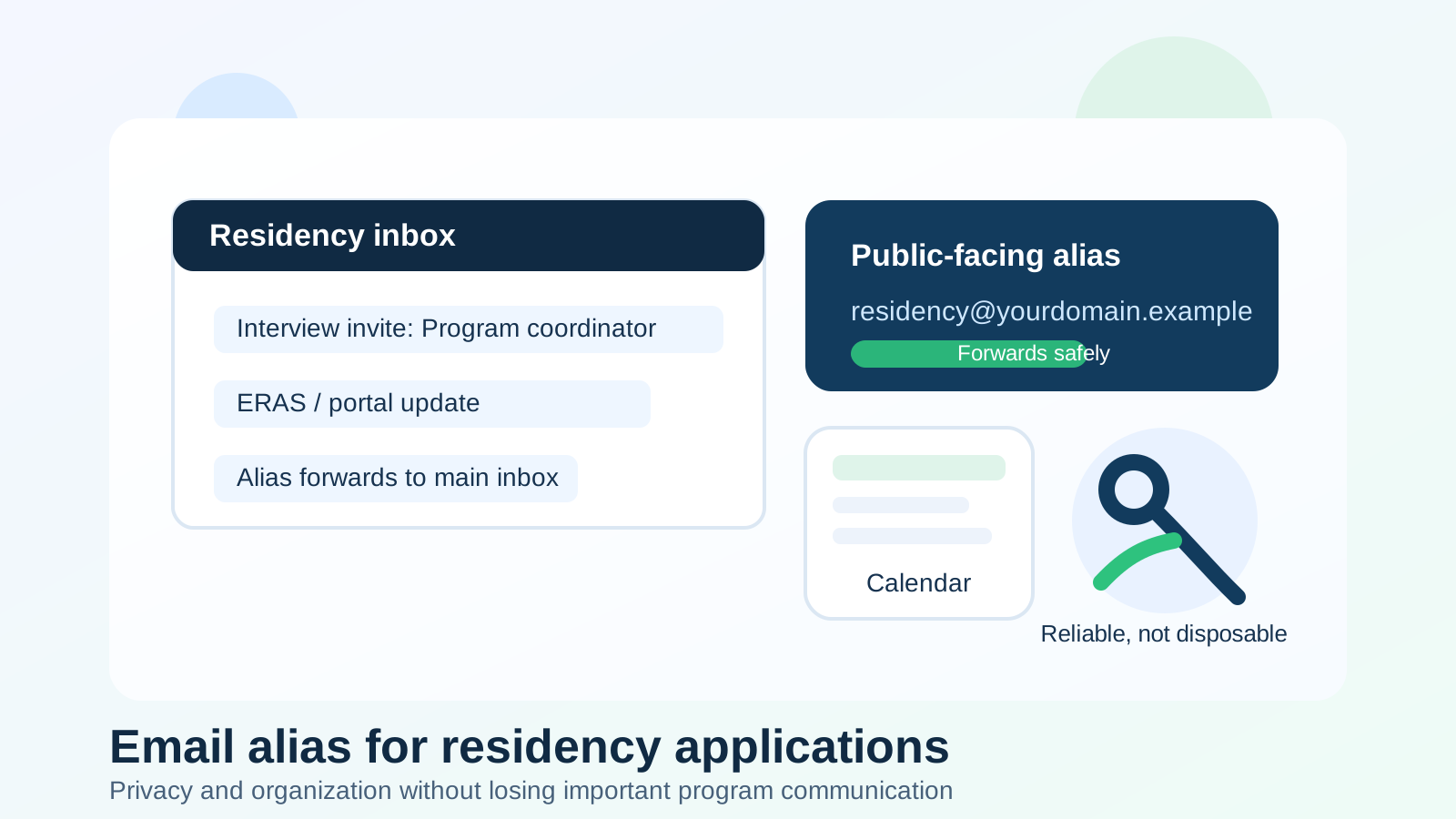
Why residency applications are different from ordinary signups
Residency applications are not a one-click newsletter signup. They usually involve a long chain of communication: application-platform confirmations, program coordinator emails, interview scheduling links, waitlist movement, document requests, and reminders that may show up long after you first applied. That changes the email decision.
When people ask about using an email alias for residency applications, they are usually trying to solve two problems at once. First, they want privacy. They do not want their long-term personal address spread across every portal, webinar, resource site, and mailing list that touches the residency process. Second, they want organization. They need a setup that makes important messages easier to notice, not harder.
An alias can help with both — if you set it up correctly.
What an email alias actually does
An email alias is a secondary email address that forwards into a real mailbox you already control. To the outside world, programs and related tools see the alias. On your side, messages still land in the dependable inbox you actually monitor.
That makes an alias different from a temporary email address. A temporary inbox is often designed for short-term use and may not be a good place to park high-stakes communication. An alias, by contrast, can be long-lived and dependable as long as the underlying mailbox is dependable too.
It is also different from opening a fully separate email account. A separate account gives stronger separation, but it also creates one more mailbox to secure, check, and manage. For some people that is worth it. For others, an alias gives most of the same benefits with less overhead.
Why an alias can be a strong choice for residency applications
1. It limits unnecessary exposure of your main address
Your primary personal email tends to accumulate years of accounts, receipts, subscriptions, and contact history. If you use that same address for every residency-adjacent form, mailing list, program page, and application step, you lose some control over where it spreads. An alias gives you a cleaner public-facing address without forcing you to rebuild your whole communication setup.
2. It keeps the workflow easier to monitor
The best inbox is not always the most private-looking one. It is the one you will actually check. If your alias forwards into a mailbox you already monitor carefully on your phone and laptop, that can be safer than creating a brand-new account that you forget to open often enough.
3. It makes filtering and labeling easier
If the alias is used only for residency-related communication, you can create filters, folders, labels, and notifications around it. That makes it easier to separate interview scheduling, coordinator replies, and portal notices from the rest of your daily mail.
4. It gives you flexibility if the inbox starts attracting noise
Residency season often includes resource vendors, webinar organizers, conference follow-ups, and list-building forms that are only loosely related to the applications you truly care about. An alias gives you more control over that exposure. In some setups, you can even pause or replace the alias later without changing the real mailbox behind it.
When an alias is better than a temporary email
For actual residency applications, an alias is almost always safer than a disposable inbox. The core reason is continuity. Interview invites and program communication do not always arrive on your ideal timeline. A short-lived inbox can become a liability if a message shows up later than expected, if you need to search older threads, or if you must prove which address you used earlier.
An alias avoids that problem because the real destination is still a normal inbox you control. You get some privacy and separation, but you do not bet the whole process on a mailbox that might disappear or look questionable. That is why privacy-conscious applicants who still want reliability often land on one of two options: a separate long-term account or a long-term alias.
When a separate full email account may still be better
An alias is not automatically the best choice for everyone. Sometimes a separate account is cleaner.
- Your main inbox is already chaotic: If the alias forwards into a mailbox buried under years of clutter, the forwarding trick will not magically make you organized.
- You want stronger separation: Some applicants feel calmer when every residency-related message lives in its own login, with its own notification rules and its own minimalist inbox.
- Your current mailbox is tied to school or work access: If you might lose access later, do not build residency communication on top of an account that may not stay available.
- Your alias setup is technically confusing: If there is any risk you will misconfigure forwarding, replies, or spam handling, simplicity may be safer than cleverness.
In other words, an alias is a good tool when it reduces friction. If it creates uncertainty, use a separate long-term account instead.
Best practices if you use an email alias for residency applications
Forward it into a mailbox you already trust
The destination inbox matters more than the alias itself. Use a stable mailbox you can access from multiple devices, secure with a strong password, and protect with two-factor authentication where possible.
Choose a professional-looking alias
Residency communication is formal enough that your address should look normal and credible. A simple name-based alias is usually better than something quirky, overly anonymous, or obviously disposable-looking.
Test the full flow before using it everywhere
Send yourself messages. Confirm they arrive quickly. Test whether replies come from the address you expect. Make sure the alias does not create confusion where incoming mail goes to one place but outgoing replies expose a different address in ways you did not intend.
Set filters for high-priority residency messages
Create rules for program coordinators, application platforms, interview scheduling systems, and any official domains you expect to hear from. A good alias setup is not just about receiving mail. It is about noticing the right mail fast.
Turn on notifications thoughtfully
You do not need your phone buzzing for every generic mailing-list message, but you probably do want alerts for time-sensitive replies. The right balance depends on how active your application season is, but ignoring notifications entirely can defeat the purpose of a dedicated setup.
Keep the alias active for the full cycle
This is not a short-term trial signup. Keep the alias and its destination mailbox available through interview season, ranking-related communication, and any later follow-up you may need.
What to avoid
- Do not forward into an inbox you barely check. That is the easiest way to create avoidable risk.
- Do not use a disposable-looking address for serious program communication. Even if delivery works, it can look less professional than a normal long-term alias.
- Do not assume an alias is anonymous. It improves separation, but it is not the same thing as a legal or technical invisibility cloak.
- Do not forget about replies. Some setups handle incoming forwarding nicely but make outbound replies messy or inconsistent.
- Do not mix low-trust research traffic with critical application traffic unless you have good filtering. If you sign up for every webinar and free guide through the same alias, you may recreate the clutter you were trying to avoid.
Alias vs separate inbox vs temporary email
If you want a simple rule of thumb, it is this:
- Temporary email: best for low-trust research signups, free downloads, or one-off informational resources — not for the core application process.
- Email alias: great when you want privacy and organization, but still want everything landing in a dependable primary inbox.
- Separate full account: best when you want maximum separation and a completely dedicated residency communications lane.
That is also where Anonibox fits naturally. A temporary inbox can still be useful around the edges of residency season for low-trust signups or mailing-list experiments. But for real application communication, an alias or a stable dedicated inbox is usually the safer tool.
A quick checklist before you commit to an alias
- Does it forward into a mailbox you already monitor closely?
- Does the address look professional enough for residency communication?
- Have you tested delivery, spam placement, and replies?
- Can you keep it active for the entire application cycle?
- Would a separate account reduce stress more than an alias would?
If the answers are mostly yes, an alias is probably a solid fit.
Final answer
Yes, using an email alias for residency applications is often a smart choice. It gives you more privacy and cleaner organization than handing out your everyday personal address everywhere, while staying much more reliable than a temporary inbox for a long, deadline-sensitive process.
The important part is not the alias label itself. It is the system behind it. If your alias forwards into a stable, secure, well-monitored mailbox and you test it before relying on it, it can be one of the best ways to stay organized without making yourself harder to reach.