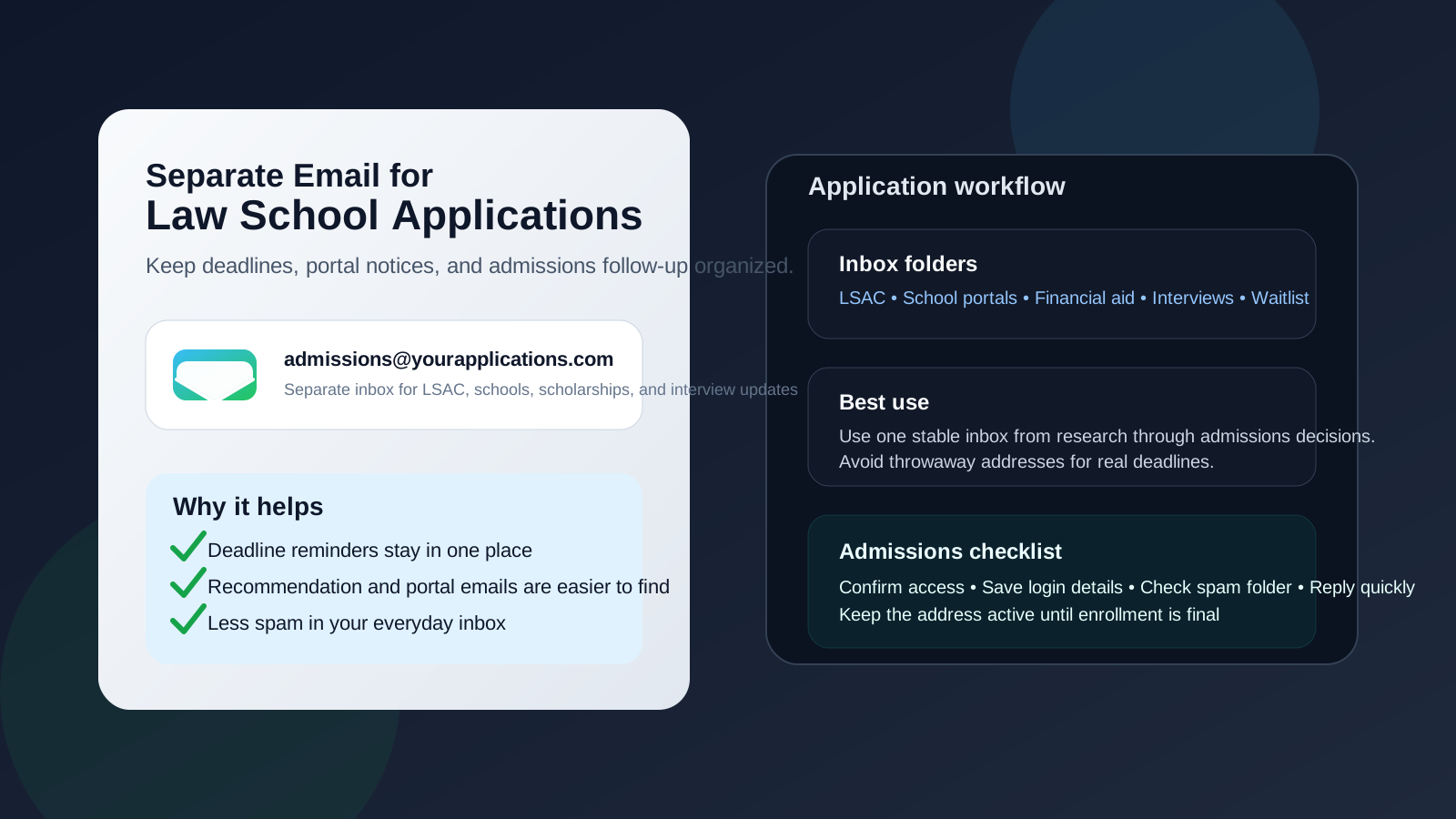
Yes — a separate email is usually the safest and most practical choice for law school applications. It gives you one stable inbox for LSAC messages, school portals, interview updates, scholarship notices, and waitlist follow-up without cluttering your everyday email.
A throwaway inbox is usually too risky for a process this long, while your main personal email can become messy fast. A dedicated law-school-only address is the middle ground that protects privacy and keeps important deadlines easier to manage.
Why law school applications create unusual email pressure
Law school applications are not a one-and-done signup. Even before you submit anything, your inbox can start filling up with school marketing, LSAC-related notices, webinar invites, event reminders, fee-waiver offers, admissions newsletters, and requests to finish incomplete profile steps. Once you begin applying, the volume usually goes up again.
A single application cycle can involve credential assembly updates, school-specific instructions, status-checker emails, interview invitations, scholarship questions, admitted-student event reminders, financial-aid paperwork, and waitlist or deposit communication. Some messages matter right away. Others become important weeks later when you are comparing offers or tracking deadlines.
That is why inbox setup matters more than people expect. The issue is not just privacy. It is organization, searchability, and reducing the odds that one important message disappears inside your normal personal email.
Short answer: why a separate email usually beats the alternatives
If your goal is to stay organized without creating avoidable risk, a separate email works better than either extreme.
- Better than your main personal email: it keeps law-school traffic from mixing with bills, friends, work messages, and marketing mail.
- Better than a temporary or burner inbox: it stays active long enough for a cycle that can stretch across months.
- Better than random aliases you forget about: a dedicated address becomes the place you know to check for every admissions update.
For most applicants, the best setup is a normal long-term email account created specifically for applications and related admissions communication.
What a separate law-school email helps you manage
1. LSAC and application-platform communication
If you are using centralized services, status emails and reminders can pile up quickly. A separate inbox makes those notices easier to spot, search, and archive without mixing them into everything else happening in your life.
2. School-specific status checkers and follow-up
Different schools often send different types of updates. Some rely heavily on status portals, while others still send key prompts by email. Keeping those messages in one place reduces the chance that you miss a next step because it got buried between personal conversations and promotional mail.
3. Interview invitations and scheduling
Interview requests can be time-sensitive. A dedicated address helps you respond quickly because you are not hunting through a crowded inbox to find the original thread, calendar note, or scheduling link.
4. Scholarships, financial aid, and fee waivers
Admissions is only part of the process. You may also receive messages about merit aid, forms, deposits, admitted-student events, housing information, or additional documentation. When all of that lives in one application-specific inbox, comparison becomes much easier later.
5. Waitlist and late-cycle movement
One of the biggest arguments against disposable contact details is timing. A cycle can stay active long after you expected it to be over. If you end up on a waitlist, you want the same stable address to remain active and easy to monitor.
Privacy benefits without the fragility of a throwaway inbox
A separate email helps with privacy, but in a realistic way. You are not hiding from every school or pretending email does not matter. You are simply limiting how widely your main personal address gets circulated during a high-volume process.
That has a few practical advantages:
- You reduce long-term clutter in the inbox you use for everyday life.
- You make it easier to filter or retire law-school-related marketing later.
- You keep application tracking separate from personal and work communication.
- You create a cleaner record of everything connected to the cycle.
If you want extra privacy during very early research or newsletter signups, a temporary address can sometimes help for low-stakes browsing. Tools like Anonibox can be useful for that kind of short-term sign-up privacy. But for actual law school applications, recommendation follow-up, interview scheduling, or admissions decisions, a stable dedicated inbox is usually the safer choice.
Why a temporary or burner email is usually a bad primary choice
It is easy to understand the appeal of a throwaway inbox. Law school marketing can be noisy, and many applicants do not want their main email exposed everywhere. The problem is that applications are not short-lived. A temporary or burner inbox can create more risk than it removes once you move from browsing into real submissions.
Here is what can go wrong:
- You lose access too early. Admissions cycles can stretch for months, and important messages may arrive long after your first submission.
- You miss school-specific follow-up. A request for clarification, an interview invitation, or a scholarship update may not arrive when you expect it.
- You create confusion for yourself. If you use one address for browsing, another for LSAC, and a third for direct school forms, staying organized gets harder instead of easier.
- You look less stable if you need to change contact details mid-cycle. Updating addresses across systems is possible, but it adds friction you do not need.
That does not mean disposable email is never useful. It just means it is better treated as an early research tool than as the main address attached to serious applications.
How to set up a separate email the right way
Choose a normal provider and keep the address simple
Use a mainstream email provider you trust and plan to keep active. Pick a straightforward address based on your name rather than something overly clever. You want it to look calm, stable, and professional.
Create a small folder system
You do not need an elaborate productivity setup. A few folders or labels are enough:
- LSAC or central application services
- Applied schools
- Interviews
- Scholarships and financial aid
- Waitlist and deposits
That structure makes it easier to find the right message when deadlines start overlapping.
Turn on strong account security
Because this inbox can end up holding sensitive admissions communication, enable a strong password and whatever standard account protection your provider supports. Losing access to the inbox is almost as bad as using a disposable address that expires.
Check it consistently
A dedicated email only works if you actually use it. During active parts of the cycle, check it daily. When interview season, scholarship review, or waitlist movement is happening, check it even more carefully.
Save key contacts and deadlines outside the inbox too
Email is the source of many updates, but it should not be your only memory system. Add important interview dates, seat deposit deadlines, and financial-aid steps to a calendar or checklist as soon as they arrive.
When using your main email may still be fine
Not everyone needs a separate address. If you already keep a very organized inbox, apply to only a small number of schools, and do not mind some marketing spillover, your main email may be perfectly workable. The point is not that every applicant must use a second address. It is that a separate one usually makes the process cleaner and easier to control.
For applicants who are applying broadly, attending lots of events, requesting fee waivers, or comparing many schools, the benefits become much clearer.
A quick decision checklist
If you are unsure, ask yourself:
- Do I want law-school emails mixed into my personal inbox for the next several months?
- Am I likely to apply to multiple schools, attend events, and receive a lot of follow-up?
- Would one searchable, application-only inbox make deadlines easier to manage?
- Do I want more privacy without risking the instability of a throwaway address?
If the answer to most of those is yes, a separate email is probably the right move.
Final answer
A separate email is usually the best choice for law school applications because it balances privacy, reliability, and organization. It keeps admissions traffic out of your everyday inbox, but it stays stable enough for interviews, scholarships, deposits, and waitlist updates that may arrive months after you first apply.
If you only use a temporary address for very early low-stakes research, that can be reasonable. But for the real application process, a dedicated long-term inbox is the safer setup. In a cycle where one missed message can matter, having a clean and dependable address is a small step that can save a lot of stress.