Yes — an email alias is often a smart choice for nursing school applications if you want a cleaner inbox without risking missed deadlines, interview invites, or portal notices.
For most applicants, an alias works better than a throwaway inbox because nursing school admissions can stretch across months and involve transcripts, recommendation requests, interview scheduling, waitlist movement, and enrollment follow-up.
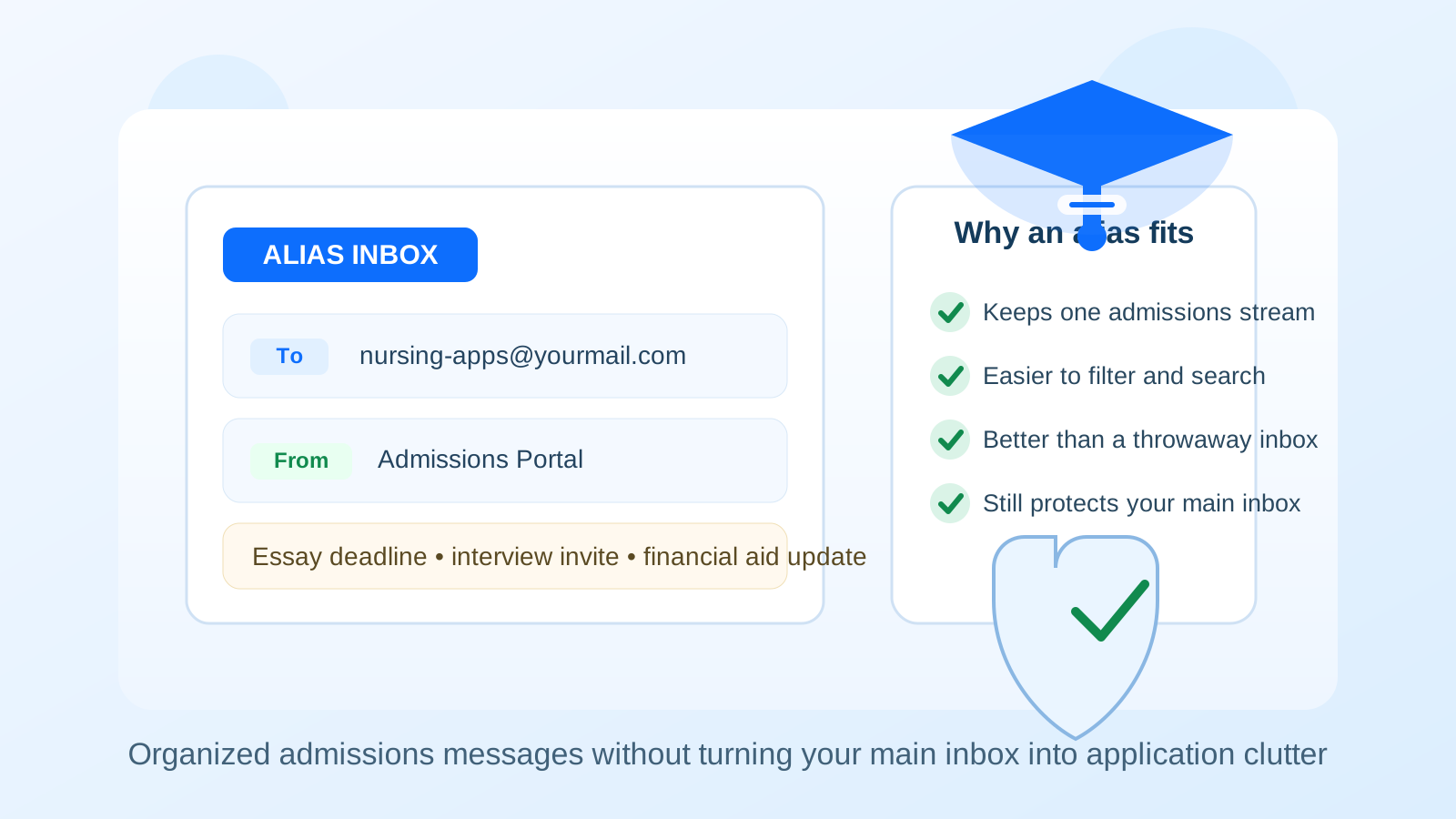
Why this question matters for nursing school applicants
Nursing school applications create a surprisingly busy email trail. You may hear from centralized application services, individual schools, financial aid offices, interview coordinators, transcript processors, testing services, and student-success teams. Even if every message is legitimate, the volume can pile up fast.
That is why many applicants start asking whether they should use a separate address, a temporary inbox, or an alias. The right answer depends on reliability. In most nursing school cases, reliability matters more than anonymity. You need an inbox setup that protects your main email from clutter while still staying dependable for a long admissions cycle.
An alias often hits that middle ground. It lets you route school-related messages into one place, create filters, and stay organized without forcing you to manage a fully separate mailbox from scratch.
What an email alias actually means
An email alias is an alternate address that forwards into your main inbox or into a mailbox you already control. For example, you might use something like nursingapps@yourdomain.com or a provider-managed alias that lands in the same account you already check daily.
That is different from a temporary email address. A temporary inbox is useful for short-lived signups and low-trust forms, but it can be risky for anything tied to interviews, deadlines, waitlists, or onboarding. Nursing school applications are usually too important and too long-running for a disposable address to be your primary contact point.
Why an alias is often a better fit than a temporary email
1. Nursing school timelines are not short
You might submit applications in one month and still receive useful messages weeks or months later. Some schools send supplemental instructions after the initial application. Others send interview details, missing-document requests, or status changes later than you expect. A disposable inbox is a poor match for that reality.
2. You need a professional, stable contact point
An alias can look clean and intentional. A well-named alias tied to a normal mailbox is easier to trust than an obviously disposable address. That matters when you are communicating with admissions staff, scholarship offices, or faculty interviewers.
3. You can keep your real inbox organized without losing control
Using an alias does not mean you stop seeing important messages. It means you can route them into a dedicated folder, label them clearly, and search them faster later. That is a real advantage when you are juggling application fees, recommendation reminders, essay drafts, prerequisite questions, and interview logistics at the same time.
When an email alias makes the most sense
An alias is usually a strong choice if any of the following apply:
- You are applying to several nursing programs at once and want one organized admissions stream.
- You want to protect your primary address from long-term marketing or follow-up clutter.
- You already use filters, folders, or labels and want school-related mail to land in one place.
- You want to keep a professional address format without opening a completely separate mailbox.
- You expect the process to continue for months and want a contact method you can safely keep active.
If that sounds like your situation, an alias is usually more practical than a burner or temp address.
When an alias may not be enough on its own
An alias helps with organization, but it is not magic. If your underlying mailbox is chaotic, an alias will not fix bad email habits by itself. You still need to check the account regularly, whitelist important domains when possible, and avoid letting school messages drown under newsletters, store receipts, and daily noise.
You should also be realistic about privacy. An alias can reduce clutter and give you more control, but it does not create a legal, technical, or security guarantee. If you reply to a school, upload documents, or sign into portals, your broader digital footprint still matters.
Risks and limitations to understand
An alias can still feed one crowded mailbox
If every alias forwards into the same overloaded inbox and you do nothing with filters, you may still miss something important. The fix is simple: create rules before you start applying, not after the messages pile up.
Not every alias method looks equally polished
Some plus-address formats are perfectly functional, but not every applicant loves how they look. If professionalism is your priority, choose an alias style that looks tidy and deliberate.
You still need long-term access
Do not pick an alias setup that you might stop checking halfway through the cycle. Nursing admissions decisions, scholarship notices, and onboarding steps can arrive long after the first application submission.
How to set up an alias for nursing school applications
1. Pick a clear naming format
Choose something simple and readable, such as an alias built around admissions or nursing applications. Avoid anything jokey, vague, or overly complicated.
2. Send it into a mailbox you already monitor
The best alias is one connected to an inbox you actually check every day. Reliability matters more than novelty here.
3. Create automatic filters before you apply
Set up labels or folders for nursing applications, financial aid, interview invites, transcripts, and school portals. That way, messages begin sorted from day one.
4. Save important sender domains
If you notice repeated messages from specific schools or application systems, star them, whitelist them when appropriate, and add them to contacts so future messages are easier to spot.
5. Test the alias yourself
Before you put it on a real application, send yourself a few test emails. Make sure forwarding works, formatting looks normal, and replies go where you expect.
Should you ever use a temporary email in this process?
Sometimes, but usually not for the core application itself. A temporary inbox can be fine for low-stakes, early-stage research such as downloading a brochure, testing a low-trust lead form, or checking whether a third-party resource will spam you. That is the kind of short-lived scenario where a tool like Anonibox can be useful.
But once the interaction involves real nursing program applications, interview scheduling, school portals, or financial aid communication, an alias or separate long-term address is the safer choice. The process is simply too important to leave on a mailbox that might disappear or stop receiving messages when you still need it.
Alias vs separate mailbox: which is better?
If you are highly organized already, an alias is usually the easier option. You keep one core inbox, one login routine, and less overhead. If you know your main account is messy or you want a harder wall between personal life and applications, a completely separate admissions mailbox may be better.
The deciding question is not “Which option is more private in theory?” It is “Which option will I reliably monitor for the entire cycle?” For many applicants, that answer is an alias attached to a dependable mailbox.
A practical checklist before you submit applications
- Make sure the alias looks professional.
- Confirm test emails arrive correctly.
- Create filters or labels for every nursing program.
- Check spam and promotions folders during busy weeks.
- Use calendar reminders for known deadlines instead of trusting memory alone.
- Keep a simple spreadsheet or note with each school, portal link, and contact email.
That combination matters more than the alias alone. The best email setup is the one that helps you respond quickly and miss nothing important.
Final answer
Yes, using an email alias for nursing school applications is often a smart move. It gives you more control over inbox clutter and application organization while staying more reliable than a disposable address. For a long, deadline-heavy process, that balance is hard to beat.
If you only need short-term privacy for a casual download or low-trust signup, a temporary inbox can still have a place. But for actual nursing program applications, interviews, and admissions follow-up, an alias or another long-term email setup is usually the better fit. The goal is simple: stay reachable, stay organized, and avoid turning your main inbox into a mess while you work through an important admissions cycle.