Yes — in most cases, an email alias is a smart option for dental school applications if it forwards reliably to an inbox you control and check every day.
It gives you more privacy and cleaner organization than using your everyday address, without the risk of an expiring disposable inbox during a months-long admissions cycle.
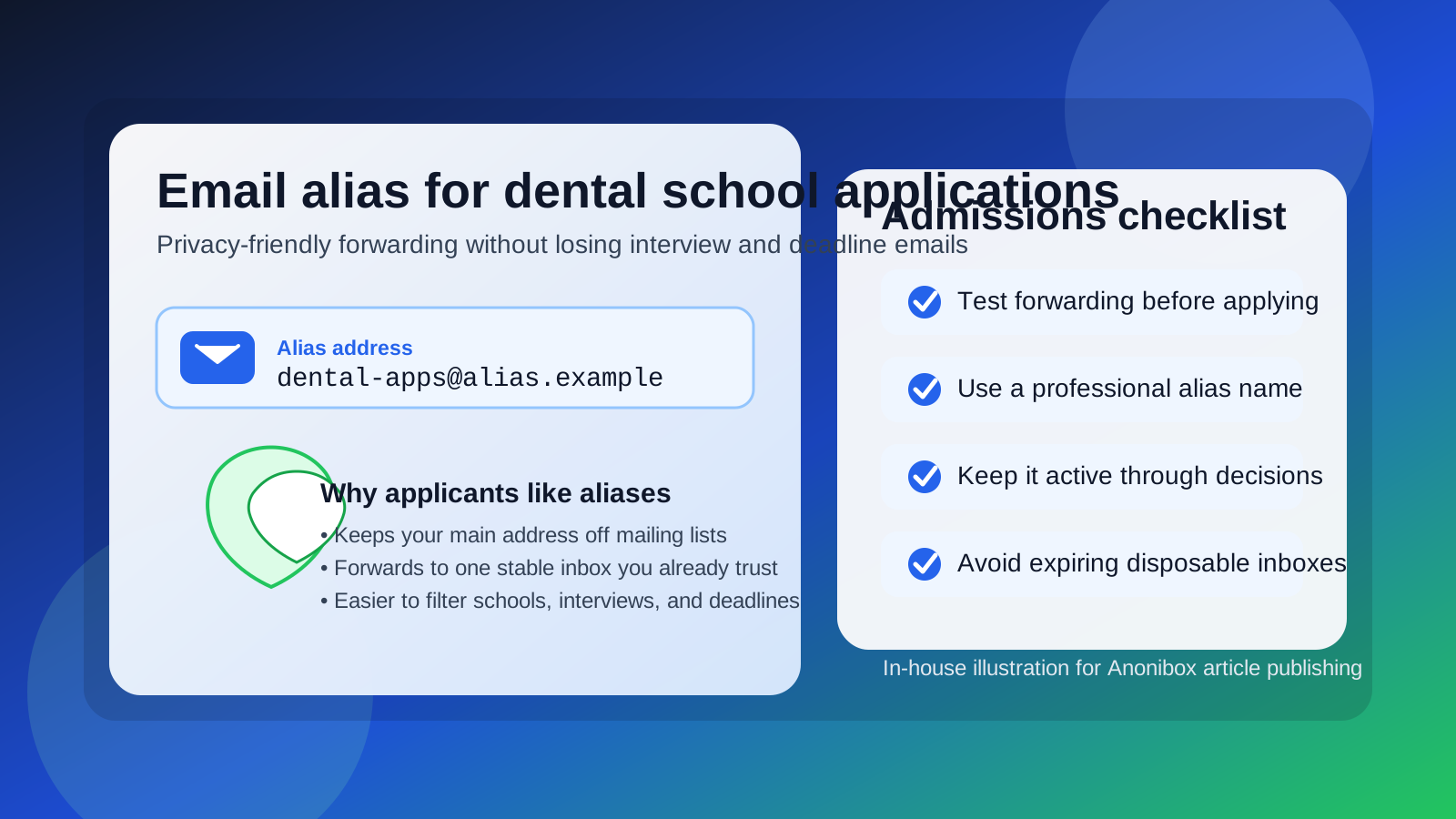
Why dental school applicants think about email privacy in the first place
Dental school applications create more email traffic than many applicants expect. You may hear from centralized application services, individual schools, supplemental application portals, interview schedulers, recommendation systems, financial-aid offices, campus visit coordinators, and waitlist or deposit workflows. Even when every message is legitimate, the volume can get messy fast.
That is why many applicants wonder whether their normal everyday address is the best one to put everywhere. If your main inbox already handles bills, shopping, travel, newsletters, group chats, and random sign-ups, admissions email can get buried. At the same time, you may not want every school, vendor, event signup, and third-party application platform to have your most-used personal address forever.
An email alias is often a practical middle ground. It can give you extra privacy and better filtering without forcing you into a fully separate inbox or a disposable address that may become risky later.
What an email alias actually is
An email alias is a secondary address that routes messages into a main inbox you already own. Instead of creating a completely separate mailbox that needs its own login and monitoring routine, you use an alternate address that forwards or lands in the same account.
For example, an alias like firstname.dentalapps@yourdomain.com or admissions@yourmailsetup.com can still deliver into your primary mailbox, where you can sort, label, and search it alongside everything else.
That is different from a disposable inbox. A temporary inbox can be useful for low-stakes signups, but dental school admissions are too important and too long-running to depend on something that might expire, stop forwarding, or become awkward to reference months later.
Why an alias is often a good fit for dental school applications
Dental school timelines tend to be long enough that you need reliability, but busy enough that you also benefit from cleaner organization. That makes an alias a strong option for many applicants.
1. It protects your main address a bit more
When you use an alias, your primary day-to-day address is not the one copied into every application form, webinar registration, open-house reminder, and admissions mailing list. That does not make you invisible, but it does give you more control over where your most-used address is exposed.
2. It keeps dental school messages easy to filter
If all application-related communication comes through one alias, you can build labels, rules, or folders around it. That makes it much easier to separate real admissions traffic from everything else in your life.
3. It is more stable than a temp inbox
Interview invites, missing-document notices, recommendation reminders, and financial-aid follow-up can arrive weeks or months apart. A forwarding alias connected to a stable inbox is much safer for that than an address meant only for short-term verification.
4. It can be easier to retire later
After the admissions cycle ends, some applicants like having the option to pause, remove, or stop using the alias if it starts attracting lower-value follow-up email. That is often easier than cleaning years of school-related mailing lists out of a heavily used personal inbox.
When an alias makes more sense than a totally separate inbox
An alias is especially useful if you already trust your main mailbox and simply want a cleaner front door for dental school communication. It can be a better fit than creating an entirely new inbox when:
- you want one place to read everything, but better sorting from the start;
- you are organized enough to use filters and labels inside your current mail provider;
- you do not want to manage another login, password, and mailbox routine;
- you want extra privacy without building a full separate-email workflow.
For applicants who already keep a well-managed email account, an alias can deliver most of the practical benefits with less friction.
When a separate inbox may be even better
An alias is not automatically the best answer for everyone. A fully separate application inbox may still be smarter if your main mailbox is already chaotic, if you want a hard wall between personal life and admissions, or if you know you will be applying broadly and tracking dozens of threads at once.
That is why the live companion topic on separate email is also valid: a dedicated long-term inbox can be excellent for dental school admissions. The tradeoff is simply that it takes more setup and a bit more discipline.
When a temporary email is the wrong tool
For a full admissions cycle, a temporary or disposable email is usually too fragile. Dental school applications can involve supplemental forms, interview scheduling, financial-aid updates, waitlist movement, and enrollment paperwork long after the original submission. Losing access halfway through is not a good risk.
Tools like Anonibox make more sense for low-stakes signups, quick research, or situations where you want to keep your real inbox away from aggressive marketing. For something as important as dental school admissions, an alias or stable separate inbox is usually the safer move.
Best practices if you use an email alias for dental school applications
Choose an alias that looks professional
The address should be easy to read and appropriate in a formal setting. Your name, initials, or a simple admissions-oriented variation usually works better than anything playful, anonymous-sounding, or overly clever.
Test the forwarding before you submit anything
Send several test emails to the alias before you use it on real applications. Confirm that messages arrive quickly, attachments work, and the emails are not landing in spam. Do not assume the setup is fine just because the first test worked once.
Create filters for schools and application services
As soon as you start applying, make folders or labels for each school, each portal, and important workflow types like interviews, financial aid, recommendations, and supplemental forms. Small organizational habits early on can save you from painful inbox archaeology later.
Whitelist key senders
If a school or application service sends a confirmation or portal email, add that domain or sender to your safe list. This reduces the chance that something important disappears into spam during a busy week.
Keep the alias active until everything is truly finished
Do not shut it off after you submit the primary application. Keep it working through interviews, decisions, waitlist updates, deposits, and any final paperwork. Admissions cycles often stay active longer than people expect.
Check it daily during peak periods
Even if the alias forwards into a main inbox, build a routine around it. During active parts of the cycle, daily checking is the minimum. Around deadlines, interview season, or waitlist movement, more frequent checks can make sense.
Common mistakes to avoid
- Using an expiring or unstable address: reliability matters more than novelty.
- Picking an unprofessional alias: keep it simple and applicant-friendly.
- Forgetting to test forwarding: one silent misconfiguration can cost you something important.
- Turning the alias off too early: schools may contact you later than expected.
- Assuming an alias replaces organization: it helps, but you still need filters, folders, and consistent checking.
Email alias vs separate inbox vs disposable email
- Email alias: best if you want privacy and organization while keeping one dependable mailbox.
- Separate inbox: best if you want maximum separation and do not mind managing another account.
- Disposable email: best for low-stakes testing or short-term signups, but usually not for the full dental school admissions process.
If you are deciding between them, ask one simple question: do you need this address to stay dependable for months? If the answer is yes, rule out anything temporary.
A quick decision checklist
An email alias is probably a good choice if most of these are true:
- you want to keep your main everyday address less exposed;
- you are comfortable managing filters in one main inbox;
- you want something more stable than a disposable inbox;
- you expect a long admissions timeline with many follow-up messages;
- you want a setup that can stay professional from application to matriculation.
If instead you want a complete clean break from your personal inbox, a fully separate admissions email may be better.
Final answer
Yes — for many applicants, using an email alias for dental school applications is a smart and balanced choice. It gives you extra privacy, cleaner filtering, and long-term reliability without forcing you to depend on an expiring temp inbox.
The key is to treat the alias like real admissions infrastructure: make it professional, test it carefully, monitor it consistently, and keep it active for the full cycle. If you do that, an alias can help you stay organized and protect your main address without risking missed interview invites, supplemental instructions, or deadline-sensitive updates.