A temporary email for nursing school applications can help during early research, but it is usually a poor choice for the full admissions cycle because nursing programs may contact you for months about interviews, portal updates, financial aid, and compliance steps.
Yes, you can use a temp inbox for low-stakes brochure downloads or webinar signups — but for real applications, a stable long-term address is usually the safer and smarter option.
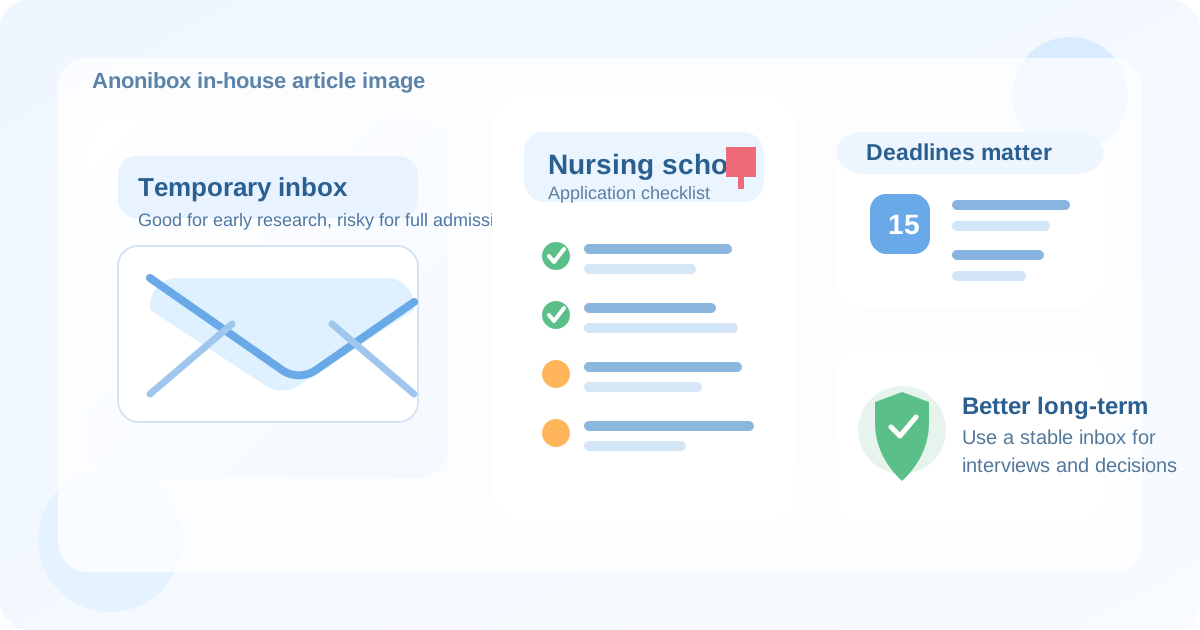
Why this question matters for nursing school applicants
Nursing school applications look simple from the outside, but the email side gets complicated fast. One program may send a portal setup link, another may ask for prerequisite clarification, another may schedule an interview, and another may follow up with financial-aid or admitted-student instructions weeks later. Even before that, schools and third-party resources may send brochures, open-house invites, entrance-exam prep offers, and event reminders.
That volume is exactly why applicants start thinking about privacy and inbox control. You want to stay reachable, but you probably do not want every form, school, event, and vendor to have unlimited access to the same personal address you use for daily life. Temporary email sounds like a neat solution at first. Sometimes it is. But nursing school admissions are long enough that the details matter more than the initial convenience.
Short answer: good for early research, risky for real applications
If you are still comparing schools, downloading a guide, or signing up for a one-time information session, a temporary inbox can be useful. It keeps your primary address out of low-stakes mailing lists and helps you see which schools or services send too much follow-up.
Once you are submitting an actual nursing school application, though, the risk changes. You may need reliable access to that same inbox for supplemental forms, interview scheduling, recommendation reminders, waitlist movement, deposit deadlines, and post-acceptance requirements. If the inbox expires, stops receiving mail, or becomes hard to manage later, the downside is not just annoyance. It can create real admissions friction.
When a temporary email can make sense
Temporary email is not automatically a bad idea. It just works better at the research stage than at the application stage.
1. Downloading low-stakes admissions resources
If a school gates a brochure, checklist, or webinar replay behind an email form, using a temporary inbox can be reasonable. You get the link you need without automatically inviting long-tail marketing messages into your everyday inbox.
2. Testing how aggressively a school or third-party service follows up
Some nursing-adjacent resources send a few useful reminders. Others start sending constant promotions for prep courses, webinars, coaching, housing, or financing. A temp inbox lets you see that behavior without committing your long-term address too early.
3. Keeping early exploration separate
If you are still deciding whether you will apply this cycle at all, you may not want your permanent application inbox cluttered with every exploratory signup. A disposable address can be a clean staging area for that kind of casual research.
This is where Anonibox fits naturally: it is useful when you want quick access to verification emails or information requests without turning one small signup into months of inbox noise.
Why a temporary inbox is usually the wrong tool for actual nursing school applications
1. Admissions timelines are longer than they look
Nursing school application cycles do not always move in one straight line. You may submit a centralized application, then receive supplemental requests, then hear about interviews, then wait for decisions, then handle financial-aid and enrollment steps. That can stretch across months. A throwaway inbox is rarely the best foundation for that timeline.
2. You may need the address again for account recovery
Portal logins, password resets, status-check pages, and document systems often tie back to the original address you used. If you lose access to that inbox, untangling the account later can become annoying at best and stressful at worst.
3. Nursing programs may send deadline-sensitive follow-up
Interview slots, missing-document notices, drug-screen instructions, background-check steps, immunization reminders, and deposit deadlines can all arrive with short turnaround windows. A reliable inbox matters more than maximum separation once the process gets serious.
4. Disposable addresses can look unstable
Using a temporary inbox is not inherently wrong, but a highly disposable-looking address may feel less professional in a formal admissions context. You do not need a fancy email address, but you do want one that looks stable, credible, and easy to trust.
What is usually better than a temporary email?
For most applicants, the strongest option is a separate long-term email address created specifically for nursing school applications. That gives you the privacy and organization benefits people want from temp email without the reliability downside. An email alias can also work if it routes to an inbox you already monitor carefully.
In practical terms, the best setup often looks like this:
- Temporary inbox for early brochure downloads, low-stakes forms, and exploratory signups.
- Separate real inbox or dependable alias for actual applications, portals, interviews, and decisions.
That split approach keeps your research clean without putting the important part of the process on a fragile foundation.
How to decide which stage you are in
A lot of applicants make the wrong choice simply because they never define the moment when “research” becomes “real application activity.” A simple rule helps:
- If you are just collecting information, a temp inbox may be fine.
- If you are creating an account you may need to revisit, use a stable address.
- If you are submitting anything tied to admissions review, use a stable address.
- If the message could affect your ability to interview, enroll, or meet requirements later, use a stable address.
Once the contact matters beyond one verification link, temporary email becomes much less attractive.
Best practices if you use temp email during the research phase
Capture important messages immediately
If you use a temporary inbox for a webinar, information session, or gated guide, save any useful links or notes right away. Do not assume you will come back later and find everything exactly where you left it.
Do not let a temp inbox become your default by accident
One common mistake is starting with a disposable inbox for convenience, then reusing it across more serious forms just because it is already open. That is how a research tool quietly turns into an application liability.
Switch before you apply
Before submitting your first real application, decide on the stable address you want to use for the rest of the cycle. The earlier you make that switch, the less likely you are to split records across multiple inboxes.
Watch for mailing-list patterns
One hidden benefit of temporary email is that it shows you who is noisy. If a school or related vendor immediately starts flooding a temp inbox with low-value promotions, that tells you something useful about how carefully you may need to filter later.
Red flags and privacy issues beyond the inbox itself
Email strategy is only one part of application privacy. Whether you use a temp inbox, an alias, or a separate address, you should also pay attention to the legitimacy of the form or sender.
- Be cautious with third-party “admissions help” sites that ask for excessive personal details early.
- Double-check that you are on the real school or application-service domain before entering information.
- Do not send sensitive identity documents by reply unless you are sure the request is legitimate.
- Watch for scammy urgency, especially from unofficial channels promising guaranteed admission help.
Temporary email can reduce spam exposure, but it does not solve weak judgment about where you are submitting your information in the first place.
Common mistakes nursing school applicants make with email
- Using one disposable inbox for everything: easy at first, risky later.
- Forgetting which address was used where: this becomes a problem when portals, logins, or status emails do not match.
- Switching addresses mid-cycle without tracking it: schools and services may keep contacting the original inbox.
- Choosing privacy at the expense of reliability: the best email setup is the one that still works when deadlines matter.
- Ignoring organization: even a separate inbox needs folders, labels, or a simple routine.
A practical setup that works for most people
If you want a simple, low-stress answer, use this approach:
- Create a stable separate email address for nursing school applications.
- Use a temporary inbox only for low-stakes research and marketing-gated content.
- Move all real application, portal, interview, and compliance communication to the stable address.
- Check that stable inbox daily during active parts of the cycle.
- Use filters or folders for each school and for interview, financial-aid, and decision messages.
That setup gives you privacy where it actually helps, without gambling on a disposable address when the consequences get bigger.
Final answer
A temporary email for nursing school applications is usually useful only at the very beginning, when you are gathering information and trying to avoid long-term marketing clutter.
For actual applications, interviews, portal logins, and decisions, a stable separate email or dependable alias is almost always the better choice. Nursing school admissions are too deadline-heavy and too long-running to risk missing an important message because the inbox you used was meant to be temporary.