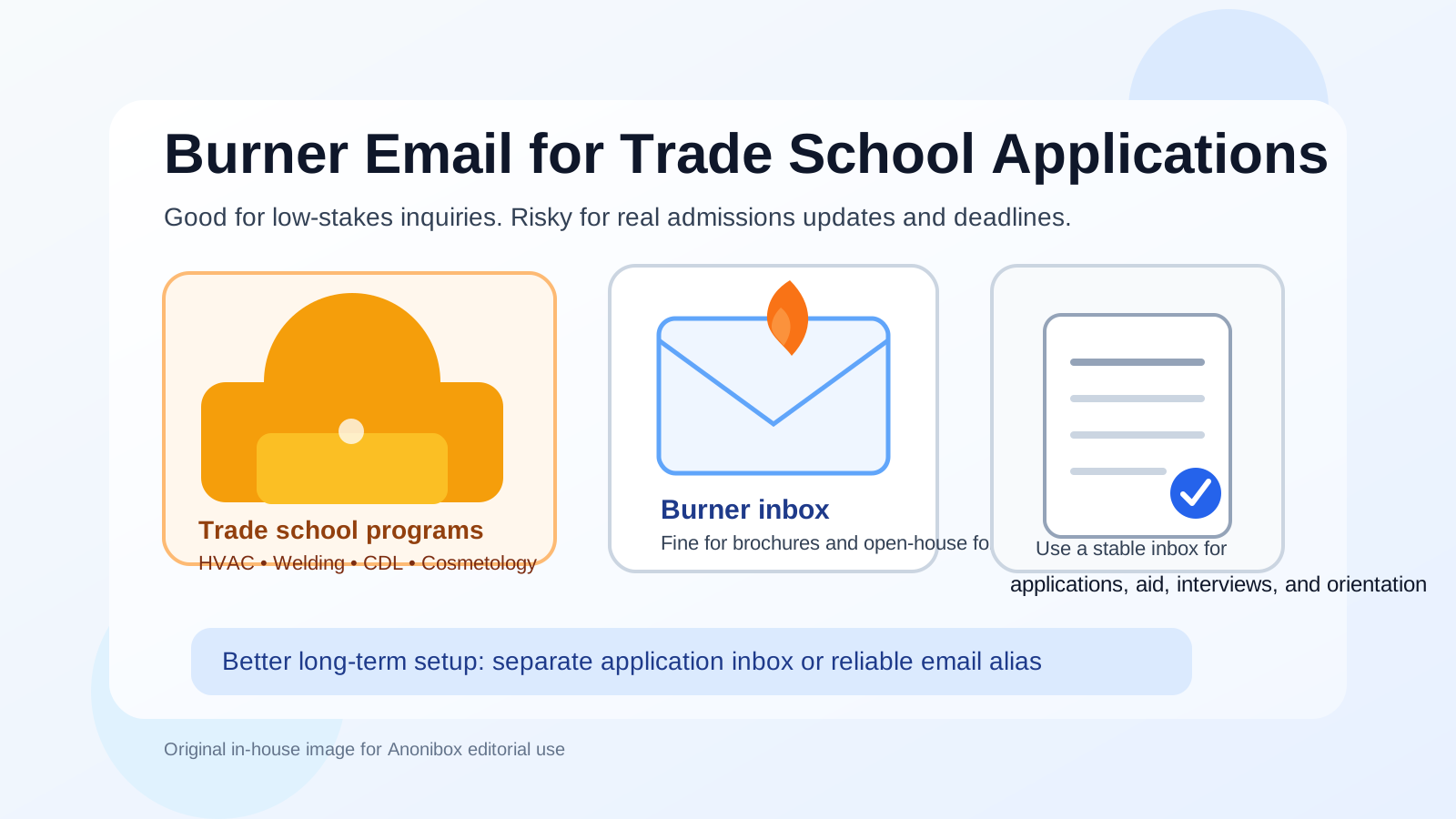
Usually no — a burner email is too fragile to serve as the main inbox for real trade school applications.
It can help with low-stakes research such as brochure requests or open-house forms, but once admissions updates, financial-aid follow-up, interview scheduling, waitlists, and enrollment details enter the picture, a stable separate inbox or reliable alias is usually the safer choice.
Why people consider a burner email in the first place
Trade school applicants often want privacy for good reason. One inquiry form can trigger a flood of follow-up: brochures, tuition reminders, campus-visit invitations, financial-aid prompts, deadline nudges, calls from admissions representatives, and repeated “are you still interested?” emails. If you are comparing several programs at once — HVAC, welding, electrician training, CDL, plumbing, cosmetology, dental assisting, medical assistant, ultrasound tech, or another career path — your everyday inbox can get messy fast.
That is why the idea of a burner address sounds appealing. You get some distance between your personal inbox and the schools, lead forms, or partners collecting your contact details. You can explore options without feeling like you are signing your main address up for months of follow-up before you even know which program is worth serious attention.
The instinct is reasonable. The problem is that a real trade school application usually stops being “temporary” much sooner than people expect.
Short answer: useful for research, risky for the real application
A burner email works best when the consequences of losing access are low. That usually means activities such as downloading a program guide, signing up for an information session, checking whether a school follows up aggressively, or comparing several programs before you decide where to apply.
It becomes a poor fit once you start depending on that inbox for anything important. Trade school admissions may move faster than a four-year college cycle, but they still involve time-sensitive messages. You may receive application confirmations, document requests, class-start options, interview invitations, entrance-test details, FAFSA or aid instructions, compliance reminders for healthcare programs, orientation notes, or last-minute schedule changes. Missing even one message can create avoidable problems.
When a burner email can actually help
There are a few situations where a burner email makes practical sense around trade school applications.
1. Early program research
If you are not yet committed to any school and just want to gather brochures or pricing information, a burner inbox can keep your main address out of multiple lead funnels.
2. Open-house and webinar signups
Some schools or third-party training directories require an email just to register for an event. If the event is low stakes and you mainly want quick access to the link, a burner address can be fine.
3. Testing a third-party directory or aggregator
Not every trade school inquiry starts on the school’s own website. Many applicants browse directories, sponsor lists, or “find a school near you” lead forms. Those can generate a lot of outreach. Using a disposable address for that first layer of research can reduce long-term inbox clutter.
4. Separating marketing from real applications
Some applicants use a burner inbox to measure which schools send helpful information and which immediately start blasting sales-like follow-up. That can be a smart filtering step before you move to a real application.
Where a burner email starts to break down
The moment you move from “I am curious” to “I may actually enroll,” the trade-offs change.
1. Trade school timelines can still stretch across weeks or months
People sometimes assume trade school admissions are so quick that a temporary inbox is good enough. Sometimes they are faster than traditional college admissions, but not always. You may ask questions, delay a start date, compare campuses, submit missing documents, wait for aid details, or coordinate with an employer or sponsor. A burner inbox is a weak foundation for that kind of process.
2. Password resets and portal access matter
Schools often use applicant portals, document upload systems, scheduling links, or student onboarding tools. If your login or reset links go to an address you no longer monitor, fixing the problem later can be annoying.
3. Important notices do not always arrive all at once
One of the biggest risks is assuming the important emails will arrive immediately. In reality, some messages show up days later: immunization requirements for healthcare tracks, tool lists, background-check instructions, seat-confirmation reminders, housing details, payment deadlines, or orientation changes. A burner address is a weak place to keep that chain.
4. It can look careless if you need to switch late
Changing contact information once is not the end of the world, but doing it mid-process can create confusion. A school might have one address in the CRM, another in the application portal, and a third in a financial-aid thread. That is not a disaster, but it increases the chance that something gets missed.
Burner email vs temporary email vs alias vs separate inbox
These terms get mixed together, but the practical differences matter.
- Burner email: usually a throwaway address created for short-term use and low attachment.
- Temporary email: often even more short-lived, useful for fast verification and low-stakes forms.
- Email alias: another address that forwards to an inbox you already control.
- Separate inbox: a dedicated long-term email account used only for a specific purpose, such as school or job applications.
For trade school applications, the safest long-term choices are usually a separate inbox or a reliable alias. A burner or temp address can help with the top of the funnel, but it is usually the wrong tool once a school may send something you cannot afford to lose.
What works better for most trade school applicants
A separate email for actual applications
If you expect to apply to multiple programs, a dedicated application inbox is usually the cleanest setup. It keeps admissions messages together, makes search easier, and protects your main personal inbox from long-term follow-up. It also gives you a stable address for password resets, portal notices, and future enrollment tasks.
An email alias if you already have a dependable main inbox
If you want separation without checking another full account, an alias can be a good middle ground. It gives you privacy and organization while still forwarding into an inbox you already monitor. That is often a better fit than a burner address for admissions cycles that may stay active longer than expected.
A temporary or burner inbox only for low-stakes research
If you use a service like Anonibox, the strongest use case here is early exploration: brochure downloads, event signups, or lead-form testing before you decide which schools deserve a real application. Once a school becomes serious, move to a stable address you intend to keep using.
Real scenarios where using a burner email is risky
You are applying to a healthcare-support program
Medical assistant, dental assisting, phlebotomy, and similar programs may send compliance checklists, immunization requirements, background-screening instructions, or externship-related details after the initial application. Those are not messages you want tied to a throwaway inbox.
You are comparing start dates across campuses
A school may follow up with alternate cohorts, seat availability, tuition updates, or orientation timing. If you are juggling schedules around work or family, losing those updates can slow you down.
You are using financial aid
Even when the application itself is simple, aid-related communication can stretch longer than expected. Verification requests, missing-document reminders, award details, or loan counseling notices can arrive later than your first confirmation email.
You are waiting on employer or licensing-path information
Some trade paths involve apprenticeship options, employer partnerships, exam prep, state paperwork, or school-to-work placement conversations. Those follow-ups are easier to manage with a durable address.
A simple setup that balances privacy and reliability
If you want a practical system, this works well for most people:
- Use a burner or temporary inbox only for broad research. Gather brochures, compare marketing quality, and figure out which schools are worth your time.
- Move serious schools to a stable address. Once you start an actual application, switch to a separate school-application inbox or dependable alias.
- Create folders or labels. Separate admissions, financial aid, interviews, and enrollment so nothing gets buried.
- Check that inbox consistently. A privacy-friendly system only works if you monitor it.
- Save critical emails outside the inbox. Keep copies of portal links, deadlines, and application confirmations in notes or a checklist.
What if you already used a burner email on an application?
Do not panic. If the school looks legitimate and you want to continue, switch early rather than waiting until you miss something.
- Update the email in the applicant portal if possible.
- Reply to the admissions contact from your long-term address and ask them to update your record.
- Make sure any pending password reset or confirmation links now point to the right inbox.
- Check whether financial-aid or compliance teams store contact details separately.
The earlier you clean that up, the less chance there is for mixed records or missed updates later.
Final takeaway
So, should you use a burner email for trade school applications? Usually not as your main application address. It is helpful for privacy during early research, but it becomes risky once you are dealing with real admissions steps, scheduling, aid, and enrollment communication.
A better rule is simple: use burner email for low-stakes exploration, and use a stable inbox or dependable alias for anything that could affect your application outcome. That way you still protect your privacy without making your own admissions process harder than it needs to be.