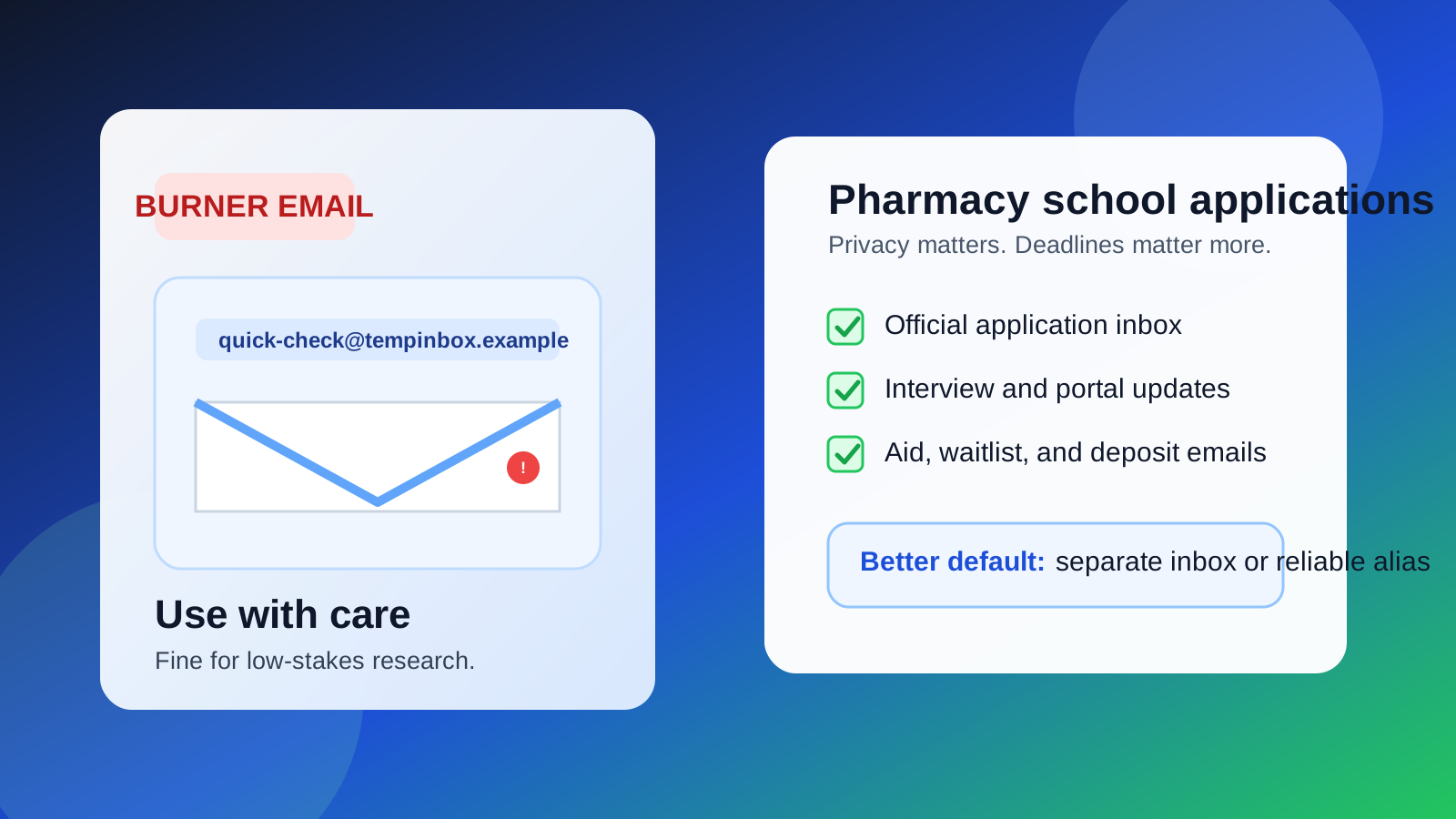
Usually no — a burner email is not the best main address for pharmacy school applications because admissions timelines, interview invites, PharmCAS updates, and financial-aid notices can stretch across months. If you want more privacy, a stable separate inbox or a reliable email alias is usually safer, while a burner address is better reserved for low-stakes research and one-off signups.
That matters because pharmacy school applications are not a one-day task. You may need the same email later for supplemental portals, password resets, interview scheduling, scholarship follow-up, waitlist movement, and final enrollment steps.
Why applicants think about burner email in the first place
The appeal is obvious. Pharmacy school applicants often sign up for program pages, information sessions, brochure downloads, prep resources, campus-event registrations, scholarship tools, and mailing lists before they even submit a real application. That can create a lot of inbox clutter. It can also spread your everyday address across schools, vendors, and third-party education tools faster than you expected.
So the privacy concern is legitimate. A burner email sounds like a clean solution because it promises separation, less spam, and a quick off-ramp if a sender becomes annoying. The problem is that the same traits that make a burner inbox convenient for low-stakes browsing can make it unreliable for a long admissions cycle.
Short answer: use a burner email selectively, not as your main admissions address
If you are only downloading a guide, joining a one-off webinar, checking whether a school resource is worth your time, or testing a third-party form before sharing your real address, a burner email can be reasonable. In that narrow role, it helps filter noise before you commit.
But once you are creating real application accounts, submitting materials, receiving interview communication, or waiting on decisions, the smarter move is to switch to an address you can keep active and monitor consistently. Pharmacy school admissions are too deadline-sensitive to treat as disposable.
Where a burner email can help
1. Early school research
If you are still comparing programs, requesting brochures, or signing up for general mailing lists, a burner inbox can protect your everyday address from marketing-heavy follow-up. Not every program page needs permanent access to your main inbox on day one.
2. One-off event registrations
Some virtual events, prep sessions, or third-party education downloads are useful once and forgettable after that. If missing future messages from that source would not hurt you, a burner inbox can be fine.
3. Testing low-trust forms
Not every site in the admissions ecosystem has the same trust level. If a resource page feels more like lead capture than real support, using a burner address to see what happens can be a practical privacy move.
This is the kind of limited use case where a tool like Anonibox fits naturally: protecting your main inbox during the research phase before an interaction becomes part of your real admissions workflow.
Where a burner email becomes risky
1. PharmCAS or other centralized application messages
Pharmacy school applicants often depend on centralized workflows, verification emails, account access, submission confirmations, and reminders. If the address tied to that account becomes inaccessible, confusing, or easy to forget, the convenience of a burner inbox disappears fast.
2. Supplemental applications and school portals
Many schools send follow-up messages after the main application: portal setup links, fee reminders, supplemental instructions, status updates, and missing-item notices. These are exactly the kinds of messages you do not want trapped inside an inbox you might stop checking.
3. Interview scheduling
Interview emails are often time-sensitive. You may need to claim a date, confirm attendance, or respond within a short window. A burner inbox is a bad match for any step where one overlooked message can cost you an opportunity.
4. Waitlist, acceptance, and deposit deadlines
Even after interviews, the process keeps going. Waitlist movement, seat deposits, admitted-student instructions, and orientation details may appear weeks or months after you first applied. A burner address that felt convenient early on can become the weakest link later.
5. Financial-aid and enrollment follow-up
If you move forward with a school, your email trail can overlap with aid notices, compliance forms, immunization requirements, registration instructions, or onboarding tasks. At that point, reliability matters much more than spam reduction.
Burner email vs. separate inbox vs. email alias
Applicants often lump all privacy-focused email options together, but they solve different problems.
- Burner email: good for low-stakes research, weak for long timelines and official follow-up.
- Separate inbox: best for clear long-term separation and full control during the admissions cycle.
- Email alias: useful if it forwards reliably into an inbox you already monitor and you want privacy plus easy filtering.
If your real goal is to avoid clutter without missing important admissions messages, the best answer is usually not a burner inbox. It is a stable application address with better organization.
Could a burner email look unprofessional?
Sometimes, yes. A school may not care about the domain itself, but an obviously disposable-looking address can create friction if it seems temporary, unusual, or hard to trust as a long-term contact point. That does not mean admissions staff will reject you over it, but it is still an avoidable complication in a process where clarity matters.
A plain separate email or a clean alias usually gives you the privacy benefit without signaling instability.
What applicants actually need most: continuity
The biggest weakness of a burner email is not that it looks odd. It is that admissions processes reward continuity. You need one address that can receive messages today, next month, and later in the cycle when schools follow up about interviews, aid, decisions, or next steps.
That continuity also helps you stay organized. When the same address appears on your application records, school portals, recommendation requests, and calendar invites, it is easier to track what belongs to what. Constantly switching or forgetting which inbox you used creates unnecessary risk.
A practical privacy setup for pharmacy school applications
Use one stable address for anything official
Create or choose a professional inbox you can keep active through the full cycle. That is the address for official applications, portal logins, interview communication, and decision-related follow-up.
Use burner email only for low-value discovery
Keep burner addresses for brochures, one-off resource downloads, speculative signups, and casual research. If losing access to the follow-up would not hurt you, that is the right zone for a disposable inbox.
Organize the stable inbox on purpose
Many applicants reach for burner email because their main inbox is already messy. A better fix is a small organizational system. Use folders or labels such as:
- PharmCAS
- Supplemental applications
- Interviews
- Financial aid
- Accepted / waitlist / denied
That gives you the control people hope to get from a burner address, without the same reliability trade-off.
Save important deadlines outside your inbox too
Email should not be your only reminder system. Move interviews, deposit deadlines, portal tasks, and follow-up dates into a calendar or checklist so one buried message does not become a bigger problem.
When a burner email is clearly the wrong choice
- You are submitting a real pharmacy school application.
- You are creating a portal login you may need later.
- You are waiting on interview invitations or school-specific instructions.
- You may need password resets or access to old confirmations.
- You are expecting financial-aid, scholarship, or enrollment messages.
- Missing one message could affect your admissions outcome.
If any of those are true, a burner inbox is usually solving the wrong problem.
Best practices if you still use a burner email somewhere in the process
Keep it early-stage only
Do not attach a burner address to anything you know will matter later. Use it at the exploration stage, not at the commitment stage.
Move to your stable address before anything becomes official
The moment you create a real application, school portal, or interview workflow, switch to the long-term inbox you actually plan to monitor.
Do not mix multiple disposable addresses casually
If you scatter your research across several throwaway inboxes, you increase the odds of losing track of something important. Even for early research, keep your workflow simple.
Capture anything useful right away
If a burner inbox receives a genuinely helpful checklist, event link, or program note, save it immediately. Do not assume you will come back to that inbox later and remember exactly where it is.
A quick decision checklist
Before you use a burner email for anything related to pharmacy school, ask yourself:
- Would missing one follow-up message matter?
- Could I need this same address months from now?
- Am I signing up for research or for a real admissions workflow?
- Would a separate inbox or alias solve the same privacy problem more safely?
- Am I optimizing for convenience today at the cost of reliability later?
If the answers point toward long timelines and real consequences, use a stable address instead.
Final answer
So, should you use a burner email for pharmacy school applications? Usually not as your main admissions address. It can be helpful for low-stakes research, brochure requests, and early privacy filtering, but it is usually too fragile for the long, deadline-heavy reality of pharmacy school admissions.
If you want the best balance of privacy, organization, and reliability, use a separate long-term inbox or a dependable alias for official applications, and keep burner email for the parts of the process where losing the follow-up would not matter.