Yes — a burner email can help with low-stakes nursing school research, brochure downloads, open-house signups, or one-off interest forms.
For real nursing school applications, interviews, portal updates, waitlists, financial aid, and post-acceptance requirements, a long-term separate inbox is usually safer than a true burner address.
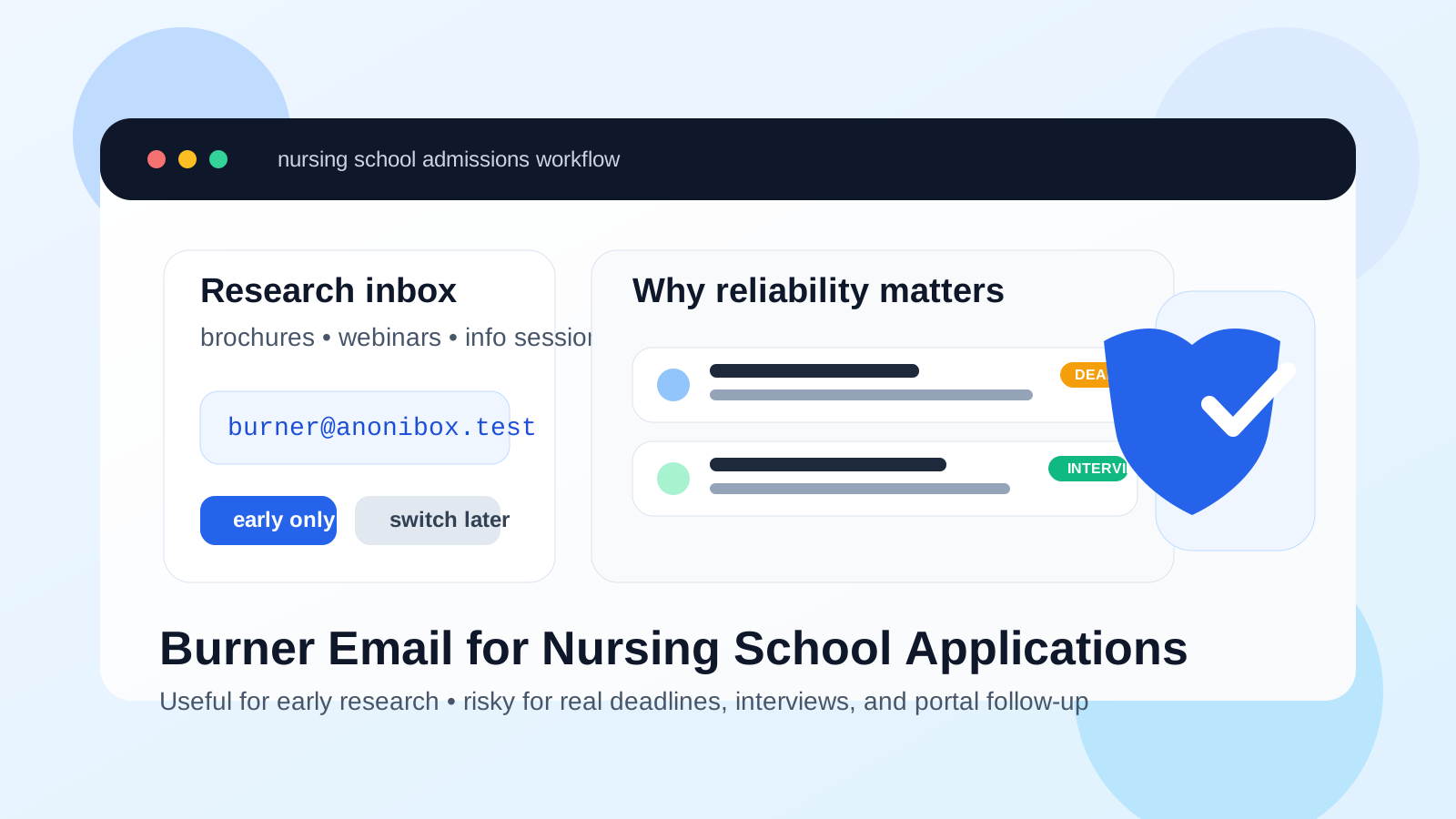
That is the practical answer most applicants need. The phrase burner email for nursing school applications sounds simple, but nursing admissions are not usually simple. You may hear from centralized application services, individual nursing programs, interview coordinators, transcript offices, financial-aid teams, admitted-student portals, and compliance staff over a period that stretches across months. In that kind of process, privacy matters, but continuity matters too.
A burner inbox can still be useful in the right stage. If you are only exploring schools, registering for webinars, downloading brochures, or checking whether a program looks serious enough to pursue, keeping that early noise out of your personal inbox makes sense. A tool like Anonibox can help during that early filtering stage. The mistake is treating that same short-lived inbox as the address you rely on after the application becomes real.
Why this question matters for nursing school applicants
Nursing school admissions generate more email than many people expect. Even one program can send a portal setup link, missing-document reminders, interview information, scholarship notices, immunization instructions, orientation updates, and later enrollment tasks. Multiply that by several schools and the email trail becomes easy to underestimate.
That is why people start thinking about privacy strategy. They want to stay reachable without giving every school, event, vendor, and lead form unrestricted access to the same personal inbox they use for family, work, bills, and daily life. That instinct is reasonable. The better question is not whether privacy matters. It is which type of email setup gives you privacy without creating deadline risk.
When a burner email is actually useful
A burner inbox works best when the communication is clearly temporary and low-stakes.
- Brochure downloads: You want program information without starting long marketing follow-up in your main inbox.
- Webinar or open-house registrations: You only need the confirmation email and maybe one reminder.
- Initial research across many schools: You are narrowing a long list and do not want every inquiry to live forever in your personal inbox.
- Third-party lead forms: You are cautious about who gets your long-term contact details before you decide a school is worth deeper attention.
- One-time informational requests: You only need a quick reply or access link.
In those situations, the burner address acts like a buffer. It protects your main inbox from clutter while you gather early information. That is a real benefit, especially if you are comparing many programs at once.
Why a burner email is usually risky for the actual application
The problem starts when a low-stakes inquiry quietly becomes a real admissions relationship. Nursing school timelines can be long, and the messages that matter do not all arrive at once.
1. Deadlines can arrive weeks later
An application may not end with the form submission. Schools can follow up about prerequisites, transcripts, references, interview slots, deposit dates, or compliance steps. If your burner inbox expires, gets ignored, or becomes disorganized, you may miss something that is much more important than the original signup email.
2. Admissions communication is often spread across multiple offices
You may receive messages from an application service, the nursing program itself, financial aid, student services, and later onboarding teams. A true burner inbox is fine for short bursts. It is less reliable when several departments may contact you over time.
3. Waitlists and late updates are common
Some of the most important nursing school messages do not show up immediately. Waitlist movement, additional document requests, class-seat decisions, and orientation notices may arrive long after the first application push. A short-lived email setup is a weak fit for that reality.
4. Account recovery and portal access still matter
Admissions portals often matter almost as much as the email itself. If your portal login, password reset, or security message depends on an address you no longer control well, a tiny privacy shortcut can turn into a bigger access headache later.
5. Reliability matters more than perfect inbox isolation
For many applicants, the real goal is not maximum anonymity. It is a cleaner, safer inbox strategy. A burner email solves one part of that problem but often creates another if the process becomes serious.
Burner email vs separate email vs alias
If you are trying to choose the right privacy setup, it helps to separate these options clearly.
- Burner email: Best for short-lived, low-stakes interactions where you only need a confirmation or quick reply.
- Separate long-term email: Usually the best option for real nursing school applications because it keeps admissions messages organized without risking expiration.
- Email alias: A good middle ground if you want filtering and privacy but still need a controlled long-term mailbox behind it.
For most serious nursing school applicants, a separate inbox or alias is the smarter choice. It gives you distance from your main personal inbox without creating the fragility that comes with a true burner address.
A safer workflow if you still want the privacy benefit
You do not have to choose between throwing your personal inbox everywhere and making the whole admissions process ride on a disposable address. A staged workflow works better.
- Use a burner inbox for early research only. Let it handle brochure downloads, event registrations, and broad information gathering.
- Create a dedicated admissions inbox before you start real applications. This becomes the stable address for portals, transcripts, interview scheduling, and school follow-up.
- Move serious schools to the dedicated inbox quickly. Once a program is on your actual application list, stop relying on the burner address for that relationship.
- Check the dedicated inbox consistently. A clean setup only helps if you monitor it well during deadline season.
- Save key messages outside the inbox too. Keep a spreadsheet, checklist, or notes file with portal links, interview dates, and missing-document tasks.
This approach gives you the best of both worlds. You still get privacy and spam control during early exploration, but you avoid running a months-long admissions process on a short-term email foundation.
Practical examples
Good use of a burner email
You are comparing twelve nursing programs, registering for virtual info sessions, and collecting brochures. You want to avoid stuffing your main inbox with school marketing before you know which programs you will actually apply to. A burner address makes sense here.
Bad use of a burner email
You submit your real applications with the burner address, then weeks later a school sends an interview invitation, a prerequisite clarification request, or a deposit deadline reminder to an inbox you no longer monitor closely. That is exactly the outcome you want to avoid.
Better middle-ground use
You start with a burner address for broad research, then switch to a dedicated admissions inbox as soon as you begin serious applications. That keeps your main inbox cleaner without sacrificing reliability.
Common mistakes to avoid
- Using the same burner inbox for everything: this creates clutter without giving you a durable long-term system.
- Forgetting to switch before the application becomes real: what starts as research can quietly become a live admissions channel.
- Assuming schools only email once: many important updates come later.
- Treating privacy as more important than reachability: for actual applications, missing a key message can cost more than a little inbox clutter.
- Not documenting deadlines elsewhere: email should support your process, not be the only place your process lives.
A quick decision checklist
Before you use a burner email for anything nursing-school related, ask yourself:
- Is this just research, or is this a real application?
- Could I still need messages from this sender in two or three months?
- Would missing a follow-up email hurt my chances?
- Would a separate long-term inbox give me nearly the same privacy with much less risk?
- Am I using a burner email to stay organized, or just to delay setting up a better system?
If the interaction is temporary and low-stakes, a burner inbox is usually fine. If the communication could affect your application status, interview schedule, financial aid, or enrollment path, a stable dedicated inbox is the safer move.
Final verdict
A burner email for nursing school applications can be useful for early research, event signups, and low-stakes inquiry forms. It is a smart way to reduce clutter and protect your main inbox during the exploration stage.
For actual nursing school applications, though, a burner address is usually too fragile. The admissions process lasts too long and involves too many potentially important follow-ups. If you want privacy without the risk of missed updates, use a dedicated long-term admissions inbox or a reliable alias instead. That keeps your search organized while protecting the messages you cannot afford to lose.