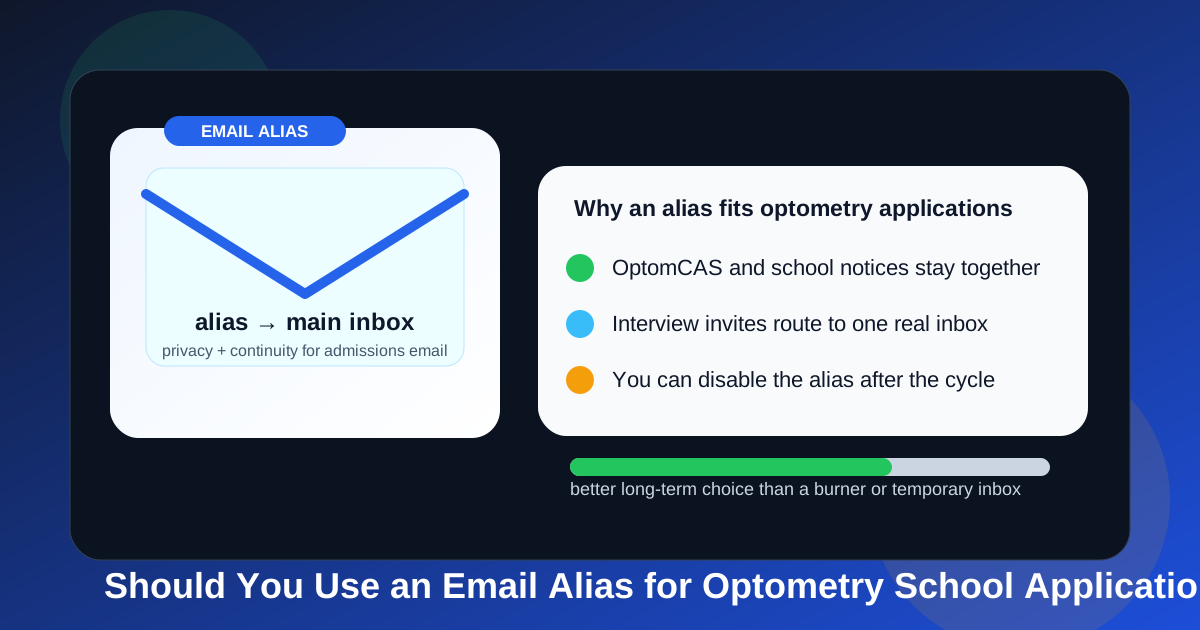
Yes — an email alias is usually a smart choice for optometry school applications if it routes to an inbox you actually check every day.
It gives you privacy and organization without the fragility of a temporary or burner inbox, which matters when OptomCAS updates, supplemental requests, interview invites, and financial-aid notices can stretch across months.
Why this question matters for optometry applicants
Optometry school admissions can create a surprising amount of email. Even before you submit anything, you may collect messages from program research, open houses, brochure downloads, and webinar signups. Once you move into real applications, the flow becomes more serious: OptomCAS confirmations, school-specific supplemental instructions, transcript reminders, recommendation updates, interview scheduling, scholarship notices, deposit deadlines, and final decisions.
That is why inbox strategy matters. If all of that lands in the same address you use for shopping receipts, old subscriptions, social logins, and everyday life, important admissions messages are easier to miss. At the same time, many applicants do not love the idea of handing their long-term primary email address to every school, education platform, and admissions vendor they interact with.
An email alias sits in the middle of those two concerns. It lets you create a distinct contact address for the admissions cycle while still routing mail into a real inbox you control long term.
What an email alias actually is
An email alias is not the same thing as a throwaway mailbox. In simple terms, it is an alternate address that forwards into your real inbox. You can use the alias publicly, but you do not have to expose your main everyday address everywhere.
That difference matters. A temporary inbox can be useful for one-time signups. A burner address can reduce exposure during low-trust research. But optometry school applications are not a one-hour task. They are a long-cycle workflow where continuity matters. You want privacy, but you also want stability.
Short answer: yes, usually — if the alias is stable
For most applicants, an alias is a good fit because it solves the real problem: keeping school-related email organized without forcing you to manage a completely separate fragile mailbox.
The keyword there is stable. If your alias forwards into an inbox you maintain, secure, and monitor regularly, it can be excellent for optometry school applications. If the alias depends on a setup you barely check, cannot recover easily, or may stop working mid-cycle, it becomes risky. Admissions timelines are too important to treat casually.
Why an alias can be better than using your primary email address
It keeps your main address less exposed
Your personal email often connects to years of digital activity: banking alerts, shopping accounts, health portals, cloud storage, travel receipts, and more. There is no rule saying your optometry admissions cycle has to share the same address if you would rather keep that exposure lower.
It creates cleaner organization
One of the biggest benefits of an alias is simple: school-related email becomes easier to spot. You can filter by the alias, label messages automatically, and keep a cleaner record of everything tied to admissions.
It is easier to search later
Admissions cycles are full of details you may need to revisit. A recommendation reminder from three months ago, an interview confirmation, a deposit notice, or a scholarship message can all matter later. An alias makes those searches easier because it creates a clean lane for application email.
It can be retired after the cycle
Once the process ends, you may not want long-term marketing mail from every source that collected your address along the way. With an alias, you can often pause, remove, or redirect that address without disrupting your primary inbox identity.
Why an alias is usually better than a temporary or burner email for optometry school
Optometry school applications are a poor place to gamble on short-lived access. Programs may email you weeks or months after your original submission. You may need the same address for supplemental forms, interview scheduling, waitlist movement, enrollment instructions, and financial-aid follow-up. That is exactly where temporary email setups start to look weak.
A burner or disposable inbox may still be fine for low-stakes research. If you want to download a brochure, register for a general webinar, or compare programs without inviting lots of marketing mail into your main inbox, a tool like Anonibox can be useful at that early stage. But once you are moving into real applications, a stable alias is usually the safer privacy strategy.
In other words, temporary email helps with browsing. An alias helps with the actual admissions process.
Alias vs separate inbox: which is better?
This is where the answer becomes personal. A separate inbox and an alias are both better than a short-lived disposable address for a long admissions cycle. The right choice depends on how you prefer to manage your communication.
An alias may be better if:
- you want one main inbox instead of logging into multiple accounts
- you are good at using filters, labels, and folders
- you want to hide your primary public-facing address without adding much friction
- you want the option to disable the admissions address later
A separate inbox may be better if:
- your primary inbox is already chaotic
- you want hard separation instead of just filtered separation
- you are worried that application messages will still get lost if they forward into your everyday account
- you prefer a fully dedicated login for admissions
If your main inbox is already manageable, an alias is often the most efficient option. If your main inbox is a disaster zone, a totally separate account may still be the cleaner answer.
How to set up an alias for optometry school applications
1. Choose a professional alias name
Keep it simple. Use a version of your name if possible. Avoid jokey wording, random numbers, or anything that looks disposable. The goal is not to impress admissions offices with branding. The goal is to look normal, reliable, and easy to contact.
2. Route it to a secure inbox you already trust
The destination inbox should be one you check consistently and protect with a strong password and two-factor authentication. An alias is only as reliable as the inbox behind it.
3. Create filters before the application rush starts
Set rules so anything sent to the alias gets a label or moves into an admissions folder automatically. You can create subfolders for OptomCAS, each school, interviews, scholarships, and decisions.
4. Use the same alias consistently
Do not switch addresses halfway through unless you absolutely have to. Consistency reduces confusion across centralized application systems, school portals, and direct staff communication.
5. Check spam and promotions folders
Even important admissions email can land in the wrong tab. During active periods of the cycle, check your filtered folders and spam folder regularly.
6. Keep a second system for deadlines
Your inbox should support your workflow, not be your only workflow. Use a spreadsheet, calendar, or checklist to track application deadlines, interview dates, school contacts, and next steps.
What should go through the alias?
Once you decide to use the alias, use it for the actual admissions-related communication that benefits from consistency:
- OptomCAS registration and status messages
- school-specific supplemental application notices
- transcript and recommendation reminders
- interview invitations and scheduling emails
- scholarship and financial-aid communication
- waitlist, acceptance, and deposit deadlines
The more consistently you use the alias for genuine admissions activity, the more useful it becomes as an organizational tool.
Common mistakes to avoid
Using an alias that forwards into an inbox you ignore
An alias does not magically fix bad habits. If the destination inbox is cluttered and rarely checked, the alias will not save you.
Treating the alias like a disposable address
An alias works because it is stable. If you set it up casually and plan to abandon it too early, you lose the main benefit.
Mixing too many unrelated signups into the same alias
If you start using your admissions alias for shopping coupons, newsletters, and random free trials, you recreate the same clutter you were trying to avoid.
Forgetting that admissions timelines can outlast application submission
You may still need the alias well after you press submit. Interviews, waitlists, scholarship updates, and enrollment tasks can arrive later than you expect.
When an alias may not be enough on its own
If you are applying to many programs, traveling frequently, or balancing work and school planning at the same time, email organization alone is not enough. You still need a deadline system and a habit of checking messages consistently. Privacy tools help, but they do not replace process.
It is also worth remembering that an alias is not a legal or security guarantee. It reduces exposure and improves organization, but you still need good account security, healthy skepticism around unexpected links, and solid backup access to the underlying inbox.
A practical rule of thumb
If the interaction is low stakes and short term, temporary email can make sense. If the interaction is important, time-sensitive, and likely to stretch across months, use something durable. Optometry school applications clearly fall into the durable category.
That is why an alias works so well here: it gives you the privacy mindset of a separate contact address without the downside of a throwaway setup.
Final answer
Yes — an email alias is usually a very good option for optometry school applications, as long as it forwards into a real inbox you monitor reliably.
It gives you cleaner organization, lowers exposure for your primary address, and still preserves the continuity you need for a long admissions cycle. For brochures and one-off research, temporary email can be useful. For OptomCAS, supplemental forms, interview invites, and final decisions, a stable alias is usually the better tool.