Yes — a temporary email can help during the earliest optometry school application steps, but it should not be the only inbox you rely on for the full admissions cycle.
Use it for low-risk research like school info requests, webinar signups, or download gates, then move anything tied to OptomCAS, supplemental applications, interviews, financial aid, and decisions to a stable address you check every day.
Why this question matters for optometry applicants
Optometry school applications can stretch across many months. You may start by comparing prerequisites, shadowing expectations, OAT timing, tuition, clinic exposure, and application deadlines. Then the process gets more serious: you create accounts, submit materials through OptomCAS, respond to supplemental requests, track recommendation requirements, schedule interviews, and wait for decisions.
That long timeline creates two competing needs. First, you want privacy. Once you start requesting brochures, joining mailing lists, attending virtual events, and comparing programs, your inbox can fill up fast. Second, you need reliability. Missing one message about a supplemental fee, transcript issue, interview date, or admitted-student deadline can cause real damage.
That is why a temporary inbox is not automatically good or bad. It is useful in the right part of the process and risky in the wrong part.
When a temporary email does make sense
A temporary email is most useful during the exploratory stage, when you want information without turning your main inbox into an admissions marketing folder.
1. School research and information requests
If you are comparing several optometry programs, you may want access to brochures, webinar links, event reminders, or “learn more” content before you decide which schools deserve serious attention. A temporary address can keep that early research separate from your everyday email.
2. Download gates and one-time forms
Some sites ask for an email before they reveal a checklist, admissions guide, or event recording. If the goal is simply to view a resource once, a temporary inbox is often enough.
3. Early-stage privacy protection
Not every inquiry needs your long-term contact details. If you are still figuring out whether optometry school is realistic this cycle, or you are just mapping programs by prerequisites and location, it is reasonable to limit how widely your real address spreads.
This is where a tool like Anonibox fits naturally. It can help you receive one-off verification messages and low-stakes signup emails without handing your permanent inbox to every form you touch during the research phase.
When a temporary email becomes risky
The moment the process shifts from casual research to actual application management, a temporary email becomes much less attractive.
1. OptomCAS and primary application activity
Your central application account is not a place for an address you may lose access to. You may need to revisit messages about verification, status changes, transcript issues, evaluations, payment confirmations, or platform notices weeks later. A temporary inbox is the wrong tool for that job.
2. Supplemental applications
Schools often follow up with their own portals, extra essays, fee instructions, prerequisite clarifications, or technology requirements. Those messages may not all arrive at once. If the inbox expires or you stop monitoring it, you can miss something important.
3. Interview scheduling and waitlist communication
Interview invitations are time-sensitive. So are reschedule notices, waitlist movement, admitted-student events, and deposit deadlines. You do not want those sitting in an inbox that might disappear, auto-delete, or go unmonitored.
4. Financial aid and enrollment steps
Once a school becomes a serious option, you need continuity. That includes scholarship notices, aid follow-up, immunization reminders, onboarding tasks, and housing or orientation communication. A temporary email can create unnecessary risk at exactly the wrong moment.
The best setup: separate long-term inbox plus temporary inbox for research
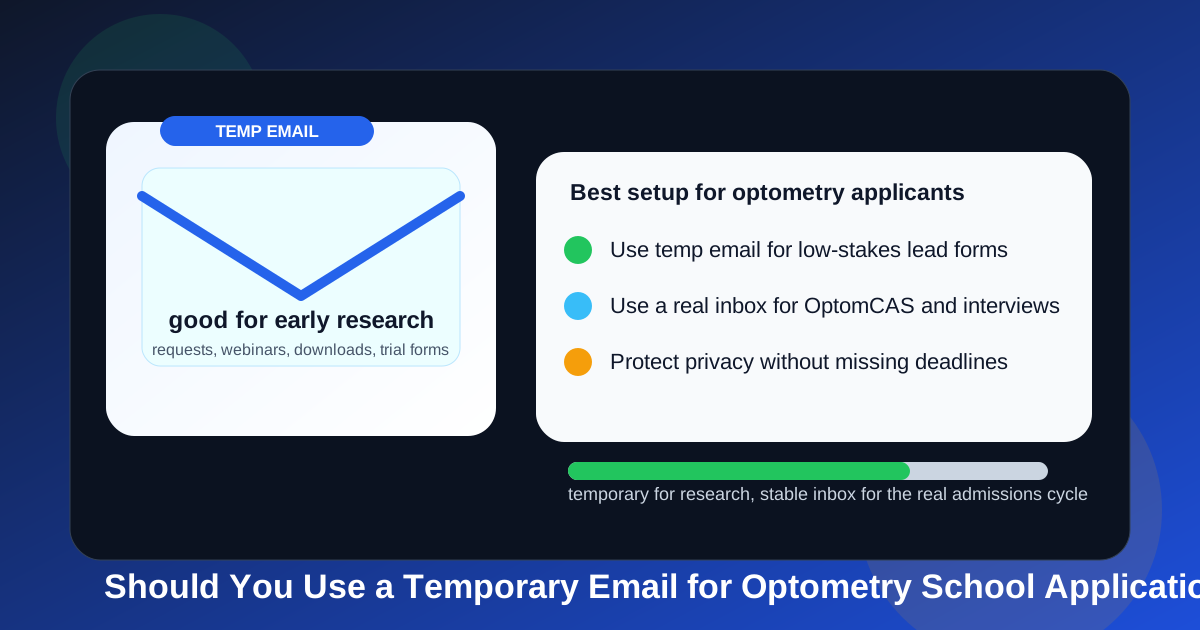
For most applicants, the best answer is not “temporary email everywhere” and not “use your main personal inbox for everything.” It is a two-layer setup:
- Use a stable dedicated admissions email for OptomCAS, recommendation-related contact, supplementals, interview scheduling, aid, and final decisions.
- Use a temporary email only for low-stakes research such as brochures, webinar registrations, school-interest forms, and one-off downloads.
This gives you the privacy benefits of a temporary inbox without gambling on it for messages that affect deadlines and outcomes.
A practical workflow that keeps you organized
Start with a dedicated application inbox
Create one real email account you can keep for the entire cycle. Use it only for optometry school applications and related planning. That makes it easier to search, label, and monitor messages without mixing them with work, shopping, travel, and everyday clutter.
Use temporary email only at the edges
When a school site, prep resource, or event signup asks for email before giving basic information, use a temporary address if the request feels low stakes. Treat it like a buffer, not your mission-critical account.
Move serious schools to the real inbox early
As soon as a program makes your shortlist, switch over to your stable admissions address. Do not wait until after you submit. If a school might matter, give it the address you will actually monitor for months.
Set folders and rules
Create labels or folders for OptomCAS, each school, interviews, financial aid, and decision-related notices. A good system matters more than a clever email trick. Organization is what prevents missed deadlines.
Check the account daily during active periods
During submission season and interview season, check your real admissions inbox every day. Temporary inboxes are for convenience. Your stable application inbox is where discipline matters.
Privacy benefits of a temporary email in this niche
Used carefully, a temporary inbox can still solve real problems for optometry applicants.
- Less promotional clutter: school marketing email can add up quickly once you request information from many programs.
- Cleaner comparison shopping: you can browse events and resources without immediately committing your long-term inbox.
- Reduced spam exposure: your permanent address does not have to reach every mailing list at the first click.
- Better boundary control: you decide when a school moves from “interesting” to “important.”
Mistakes to avoid
Using a temporary email for your primary application account
This is the biggest mistake. If you may need the message later, the inbox should be stable.
Forgetting where you signed up
If you use several temporary addresses during research, keep notes. Otherwise you may forget which schools or events sent useful follow-up material.
Delaying the switch to a real inbox
If you are actively engaging with a program, stop trying to stay half-anonymous. Reliability matters more than inbox purity once deadlines are involved.
Assuming every email is equally important
Brochure mail is not the same as an interview invite. Treat messages according to risk, not just volume.
What about burner or alias options?
If your main concern is privacy but you still want continuity, a separate long-term inbox or an email alias is usually stronger than a temporary inbox for admissions. Those options let you stay organized and reachable over the whole cycle. Temporary email is better for short-lived interactions, not for the core workflow that carries you from application to acceptance.
A quick decision checklist
- Is this just a brochure, webinar, or one-time download?
- Will I need access to this message weeks or months from now?
- Could missing this email affect my application, interview, aid, or deposit?
- Has this school moved from casual research to my real shortlist?
If the answer is “this could matter later,” use your stable admissions inbox.
Final answer
A temporary email for optometry school applications is helpful in the research stage, but risky as your only application inbox. It is a smart privacy tool for low-stakes signups and early information gathering, not a smart long-term home for OptomCAS messages, supplementals, interviews, or deadlines.
The safest approach is simple: use a real dedicated admissions email for the actual cycle, and use temporary email only where losing continuity would not hurt you. That way you protect your inbox without risking missed steps in a process that is already complicated enough.