Yes — an email alias can be a smart choice for physical therapy school applications if it forwards into a stable inbox you already check every day.
It gives you a cleaner layer of privacy for PTCAS updates, supplemental applications, interview scheduling, clinical-observation follow-up, and financial-aid notices without the reliability problems of a throwaway inbox.
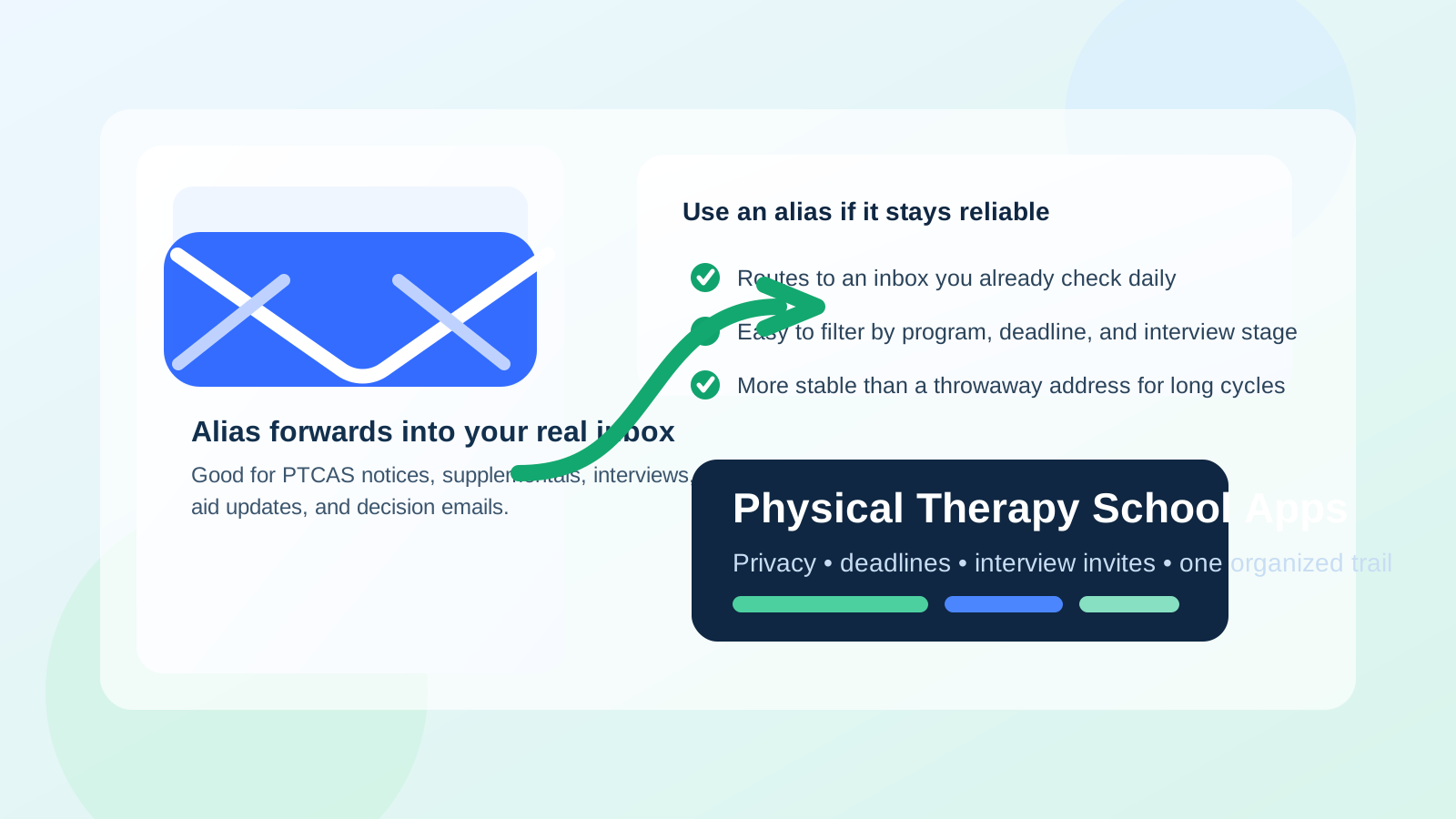
That middle ground matters because physical therapy admissions usually create more email than applicants expect. You are not only sending one application and waiting. You may be researching programs, tracking prerequisite questions, following up on recommendation letters, watching for portal confirmations, checking interview windows, and keeping an eye on deposit deadlines over a span of months.
If all of that lands in the same inbox you use for everyday life, it becomes easier to miss something important. But a separate full inbox is not the only way to stay organized. For many applicants, an alias is the practical option because it keeps the application trail tidy without forcing you to maintain a totally different mailbox from scratch.
What an email alias means for PT school applications
In this context, an email alias is usually a second address that forwards into your main mailbox. For example, you might create something simple and professional that is only used for school applications, then route it into the inbox you already monitor on your phone and laptop.
That is different from a disposable inbox. A disposable or temporary email address is often useful for low-stakes signups, but a real physical therapy school application cycle is rarely low stakes. Programs may contact you long after the day you submit. An alias works better when the timeline is long and the messages matter.
Why applicants worry about email privacy during the PT admissions cycle
Most people do not think about email strategy until their inbox starts getting noisy. One week you are downloading program guides, joining virtual info sessions, or requesting reminders. The next week you are receiving portal confirmations, school newsletters, supplemental instructions, event invites, and broad admissions marketing from programs you only researched briefly.
Physical therapy applications can also involve details that are easy to lose in the noise, such as:
- PTCAS confirmations and status changes
- supplemental application requests from individual programs
- observation-hour or prerequisite clarifications
- interview scheduling windows
- scholarship, aid, or deposit deadlines
- waitlist movement and final decision updates
None of that requires secrecy, but it does benefit from control. An alias helps because it creates a dedicated lane for admissions messages without asking you to expose the same everyday address you use for everything else online.
Why an email alias can work well for physical therapy school applications
1. It gives you some separation without adding another mailbox to babysit
This is the biggest advantage. You still get a cleaner admissions address, but you do not have to remember a second login, a second password, or a second recovery workflow unless you want to. If your alias feeds a mailbox you already check daily, you get convenience and organization at the same time.
2. It is easier to filter by school, urgency, or stage
Aliases pair well with rules, labels, or folders. You can automatically route every message sent to the alias into an application folder, then sort by school name or stage. That makes it easier to find an old interview email, a transcript reminder, or the exact wording of a supplemental request when you need it quickly.
3. It fits a long admissions cycle better than a throwaway address
Physical therapy admissions are not over once you click submit. A program might follow up weeks later. You may get an interview invitation after a quiet stretch, or a school may ask for a clarification well after you assumed everything was complete. An alias protects organization without introducing the fragility of a short-lived inbox.
4. It can reduce spillover from broad marketing lists
If a school fair, webinar signup, or external recruiting form leads to more promotional email than you expected, the alias contains that activity better than your main address. That does not guarantee you will never get extra email, but it does make cleanup easier later.
When an alias is better than a separate full email account
An alias is often the better choice if you already have one dependable inbox and you mainly want cleaner organization plus a bit of privacy. It is a strong fit when:
- you are already disciplined about checking one main inbox every day
- you want application mail to be searchable and filterable in one place
- you do not want to juggle another complete account
- your email provider or domain setup handles aliases cleanly
- you know how to test forwarding before deadlines start arriving
For many applicants, that is enough. The simpler the system feels, the more likely you are to stick with it.
When a separate dedicated inbox may still be the safer choice
An alias is not automatically the best option for everyone. A separate full inbox may be safer if:
- your main inbox is already chaotic and full of unrelated messages
- you have a history of ignoring forwarded mail or missing filter rules
- your provider makes replying from aliases awkward or inconsistent
- you want a hard boundary between personal life and the admissions process
- you expect family members, work alerts, and other priorities to crowd your main mailbox
If your alias still lands inside a messy inbox you do not trust, you have not really solved the problem. In that case, a dedicated admissions account may be worth the extra setup.
Why a temporary email is usually not the right tool for the real application stage
This is where people sometimes over-correct. A temporary inbox can be helpful during early research, especially if you are downloading a guide, checking a webinar signup, or testing a low-trust site you do not want marketing from forever. That is the kind of early privacy use case where a tool like Anonibox makes sense.
But once you are dealing with actual physical therapy school applications, reliability matters more than short-term convenience. A temporary inbox can expire, become awkward to revisit, or create continuity problems if a school follows up later. That is a poor trade when interview invitations, portal resets, and decision emails may arrive long after your initial signup.
The practical rule is simple:
- Temporary inbox: good for early browsing and low-stakes admissions research
- Email alias: good for real applications if forwarding is stable and tested
- Separate full inbox: good if you want maximum separation and control
How to set up an email alias for PT school applications the right way
Choose a professional alias
Keep it plain, readable, and based on your name or purpose. Admissions offices do not need anything clever. They need an address that looks stable and easy to recognize.
Forward it into an inbox you genuinely check
This is the non-negotiable part. If the alias forwards into an account you only remember every few days, you are adding risk instead of reducing it.
Test forwarding before you submit anything important
Send yourself a few messages from different providers. Make sure they arrive quickly, display clearly, and do not land in spam. Then test replies so you understand whether schools will see the alias address or the base inbox address when you answer.
Create one admissions filter before the cycle gets busy
Set a rule so every message sent to the alias is automatically labeled, starred, or moved into a PT applications folder. If your provider supports it, create subfolders for schools, interviews, action items, and aid.
Use the same address consistently
If you decide the alias is your application address, use it consistently across PTCAS, school supplementals, and later follow-up unless a program specifically tells you to update your contact information. Switching back and forth mid-cycle makes the trail harder to manage.
Keep the alias active through the full cycle
Do not retire it the moment you submit applications. Keep it running through interviews, waitlists, acceptance decisions, and any enrollment tasks that follow.
Common mistakes to avoid
- Relying on forwarding you never tested: the first real test should not be an interview invitation.
- Replying from the wrong address: know how your provider handles outbound replies so the thread stays coherent.
- Using an unprofessional-looking alias: keep it simple and readable.
- Overcomplicating the setup: if your workflow is too fancy, you are more likely to make mistakes under deadline pressure.
- Turning the alias off too early: some important messages arrive later than you expect.
A quick decision guide
If you are trying to decide fast, use this rule of thumb:
- Choose an email alias if you want privacy and organization without another full inbox.
- Choose a separate admissions inbox if you want stronger separation from your everyday life.
- Use a temporary inbox only for early research, not for the core application process.
For many PT applicants, the alias option ends up being the sweet spot. It is simple enough to maintain and strong enough to keep the process organized.
Final answer
Yes — an email alias can be an excellent choice for physical therapy school applications if it forwards into a dependable inbox you already monitor every day. It gives you better privacy and better organization while staying more reliable than a disposable address.
The only catch is execution. If forwarding is unreliable, your main inbox is chaos, or replying from the alias is confusing, a separate long-term admissions account may be better. But if the setup is clean, tested, and easy to manage, an alias is a practical way to keep PTCAS updates, school-specific requests, interview emails, and final decisions from getting lost in the rest of your life.