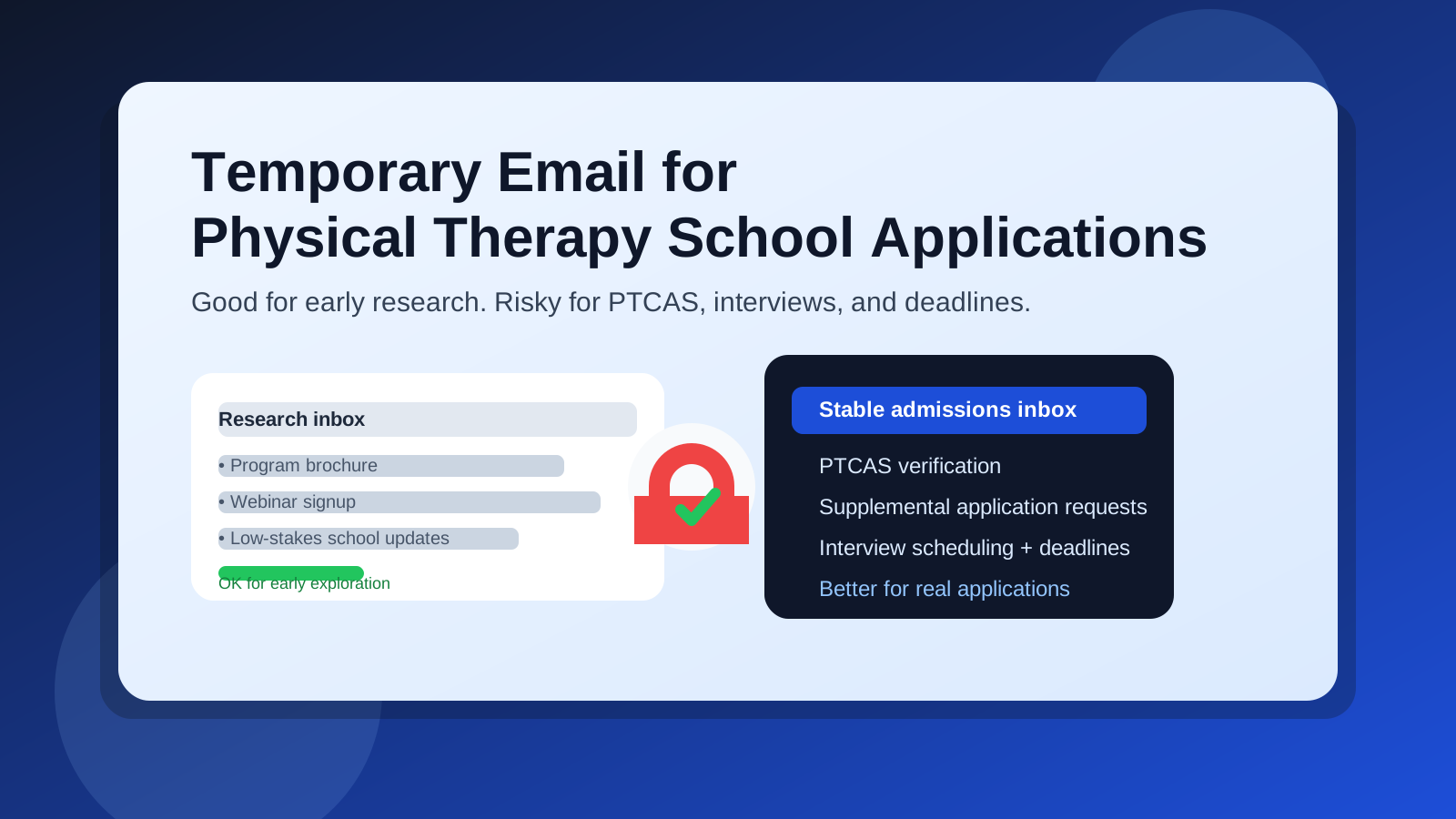
Usually no — a temporary email is fine for early physical therapy school research, but it is too risky as your main inbox for PTCAS, supplemental applications, interview scheduling, and deadline-sensitive admissions updates.
If you want more privacy during the process, a separate long-term email is usually safer than a disposable one because you can still stay organized without risking missed messages.
Why this question matters for physical therapy school applicants
Physical therapy school applications create a lot of email. You may get PTCAS account notices, school-specific supplemental instructions, requests about transcripts or prerequisites, interview invitations, reminders about observation-hour documentation, scholarship information, and eventually waitlist or admission decisions. When all of that lands in your everyday inbox, it can get buried under newsletters, receipts, and unrelated messages.
That is why many applicants start looking for a privacy-friendly workaround. A temporary email sounds appealing: it is quick, keeps your personal inbox cleaner, and limits long-term spam exposure. But physical therapy school applications are not a one-click sign-up or a short free trial. They often stretch across weeks or months, which changes the risk calculation a lot.
Short answer: use a temporary email only for low-stakes research
If you are just exploring programs, downloading brochures, checking whether a school sends too much marketing email, or joining an information session that does not matter to your formal application record, a temporary email can be reasonable. It gives you a little privacy while you figure out which programs deserve more attention.
Once you create real applicant accounts, submit forms, or expect anything tied to admissions timing, a temporary inbox becomes a weak link. Messages may expire, access may disappear, and you can easily lose important instructions. For actual applications, a stable inbox you control is the safer move.
What can go wrong if you use a temporary email for real applications?
1. You can miss deadline-sensitive messages
Physical therapy school admissions often involve strict timelines. A school may ask for a missing prerequisite explanation, send a verification update, or offer interview times that fill quickly. A disposable inbox is not a great place to store messages you may need to revisit days or weeks later.
2. Your applicant history becomes harder to track
It is common to apply to multiple programs at once. If your inbox is unstable, you may lose the thread of which school sent what, when you replied, and which deadlines are still open. That creates avoidable stress during a process that is already detail-heavy.
3. Some systems may reject disposable domains
Admissions portals, form providers, and identity-verification tools sometimes block known temporary email domains. Even if signup works at first, you do not want to discover a compatibility problem after you have already attached important application activity to that address.
4. It is a poor fit for a long admissions cycle
Physical therapy school applications are not just about initial submission. There may be follow-up emails about interviews, financial aid, immunization or onboarding requirements, accepted-student events, and enrollment next steps. A temporary address is built for short-lived access, not long-term continuity.
When a temporary email does make sense
There are still a few moments where using a temporary email can be practical:
- Signing up for a general newsletter from a program you are only loosely considering
- Accessing a webinar, brochure, or school event where you do not expect ongoing two-way communication
- Testing whether a resource library or admissions content hub is worth your time
- Reducing spam while you compare many schools in the earliest research stage
In those cases, the email is helping you filter noise, not manage your actual application record.
What to use instead for real physical therapy applications
The better setup for most applicants is a dedicated long-term admissions inbox. That could be a separate email account you only use for school applications, or a stable alias that forwards into an inbox you check every day. The goal is simple: keep your application traffic organized without using an address that might disappear.
A separate application inbox gives you several advantages:
- Cleaner organization: every PTCAS or school-specific message stays in one place.
- Better privacy: your everyday personal inbox is not exposed to every mailing list and vendor behind the process.
- Searchable history: you can quickly find interview invitations, checklist requests, and confirmation emails later.
- Less panic: you are not wondering whether a disposable inbox expired at exactly the wrong moment.
If you want to reduce spam without creating a fragile workflow, that is usually the smartest compromise.
A practical email strategy for physical therapy school applications
Step 1: Separate research from real applications
Treat early school research and formal admissions as two different phases. For casual research, a temporary inbox can be fine. For PTCAS accounts, supplemental applications, faculty outreach, interviews, and scholarship messages, switch to a stable inbox immediately.
Step 2: Pick one long-term admissions address
Choose one address you can keep for the entire cycle. Do not bounce between multiple temporary inboxes or constantly swap contact details. Consistency makes it easier to avoid confusion with schools and easier for you to track your own progress.
Step 3: Create folders or labels early
Set up folders such as:
- PTCAS
- Submitted applications
- Interview invitations
- Financial aid
- Accepted / waitlist / next steps
This sounds simple, but it saves time when deadlines start stacking up.
Step 4: Check the inbox daily during active periods
Admissions communication is often uneven. You may get nothing for days and then receive three time-sensitive messages in one afternoon. During peak application and interview periods, daily monitoring is a good habit.
Step 5: Save important information outside the inbox too
If an email contains a deadline, interview date, portal link, or document request, save it somewhere else too. Put it on your calendar, in a task list, or in a simple spreadsheet. Your inbox should support your process, not be the only place the process exists.
How this affects privacy
Applicants often worry that using a normal email means accepting endless marketing. That can happen, but the answer is not necessarily to move everything to a disposable address. A better privacy approach is to control exposure while keeping continuity.
That means:
- Using a dedicated admissions inbox rather than your main everyday address
- Being selective about where you sign up for marketing-heavy content
- Using a temporary inbox only when the interaction is genuinely low-stakes
- Unsubscribing from irrelevant school outreach once you narrow your list
If you are using Anonibox, the strongest use case here is usually the research phase: exploring programs, gated resources, and mailing lists without cluttering the inbox you rely on for real admissions follow-up.
What about using a burner email instead?
A burner email is not necessarily much better than a temporary one for this use case. It may last a bit longer depending on the service, but the same core issue remains: physical therapy school admissions require reliability. If an email address is not something you can monitor with confidence for the full cycle, it is still a risky foundation for applications.
That is why most serious applicants are better served by a separate long-term inbox than by a short-lived privacy tool.
Situations where schools may keep contacting you later
Another reason to avoid temporary email for formal applications is that communication often continues after the initial decision. Some schools send additional information about:
- Waitlist movement
- Deposit deadlines
- Orientation and onboarding tasks
- Financial-aid documents
- Background checks, health requirements, or enrollment logistics
If the address tied to your application stops being dependable, those later steps become much harder to manage.
Quick checklist: should you use a temporary email here?
Use this simple rule of thumb:
- Yes, maybe if you are only browsing schools, downloading guides, or signing up for low-stakes info sessions.
- No, probably not if you are creating or managing your real PTCAS or program application workflow.
- Better option: use a dedicated long-term admissions inbox for anything tied to deadlines, verification, interviews, or decisions.
Final answer
So, should you use a temporary email for physical therapy school applications? In most cases, no — not for the real application process. It can be helpful for early research and spam control, but it is usually too fragile for PTCAS, supplemental forms, interview invites, and deadline-sensitive follow-up.
If you want both privacy and reliability, the better move is to keep temporary email for low-stakes exploration and use a separate long-term inbox for serious admissions activity. That gives you the organizational benefits people want from disposable email without taking the kind of risk that can cost you an interview, a deadline, or an important update.