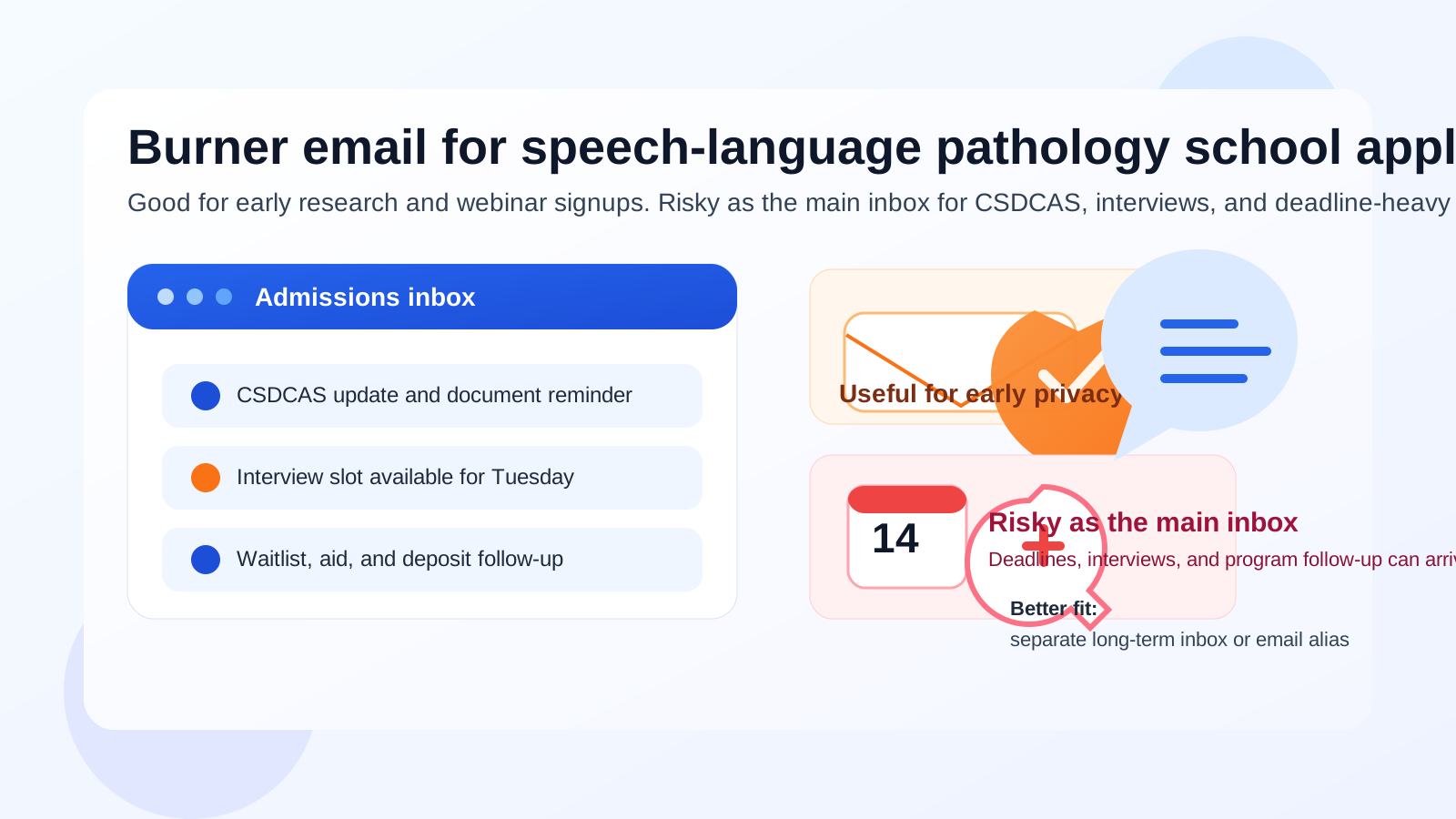
Usually no — a burner email is too risky as your main inbox for speech-language pathology school applications because important updates can arrive over weeks or months, and one missed CSDCAS, interview, or deposit message can create a real problem.
A burner address can still help during early research, webinar signups, or low-stakes downloads, but most SLP applicants should switch to a stable separate email or alias before submitting real applications.
Why this question matters for SLP school applicants
Speech-language pathology school applications generate more email than many applicants expect. You may begin with program research and CSDCAS account setup, then move into transcript coordination, recommendation requests, school-specific portal messages, interview scheduling, financial-aid updates, waitlist notices, and final enrollment steps. That is a long enough process that your email setup stops being a tiny detail and starts affecting how organized, responsive, and calm you feel during the whole cycle.
A burner email sounds appealing because it promises privacy. It can keep your personal inbox off low-trust forms, prevent random school-search tools from cluttering your daily email, and help you test resources without handing over a permanent address. Those are real benefits. The problem is that real admissions communication is not short-lived. Once your contact details are tied to deadlines, status updates, and interview invitations, reliability matters more than novelty.
What people usually mean by a burner email
People use the term a little loosely, but a burner email usually means an address you do not plan to treat as your long-term primary inbox. Sometimes it is a disposable inbox you expect to abandon. Sometimes it is a lightly monitored spare address you created mainly for privacy. Either way, the core idea is the same: you want some distance between your everyday identity and the forms you are filling out.
That instinct is understandable. School-search sites, admissions resource hubs, webinar registrations, downloadable guides, and mailing-list forms can all produce follow-up messages you do not really want long term. A privacy buffer can be useful there. But the moment the process shifts from casual research to actual applications, the same burner strategy becomes much harder to defend.
When a burner email can actually be useful
There are situations where a burner email makes sense for someone exploring speech-language pathology programs.
- Signing up for general webinars before you know which schools truly matter
- Downloading brochures, checklists, or admissions guides from third-party sites
- Testing school-search tools, ranking tools, or directory platforms
- Separating early research from your everyday inbox while you compare options
- Protecting your main address from long-term promotional lists during the browsing phase
That is where a tool like Anonibox fits naturally. If you are still gathering information, comparing programs, or checking whether a site is even worth hearing from again, using a temporary or burner-style inbox can be a simple privacy move. You get the confirmation email you need without turning one afternoon of research into months of irrelevant follow-up.
Why a burner email is usually the wrong choice for real applications
Once you begin applying for real, the tradeoff changes. Speech-language pathology admissions are not one quick sign-up. They are a deadline-heavy, document-heavy, often monthslong process. That means your main application inbox needs to be stable, searchable, and checked regularly.
1. Important messages can arrive at unpredictable times
Schools do not send updates on a neat schedule. You might hear nothing for days, then suddenly get a message about a missing document, a portal update, an interview slot, or a response deadline. If your burner inbox is not one you check consistently, you are building avoidable risk into the process.
2. CSDCAS and school-specific communication can stretch across the cycle
Even when the application platform works smoothly, the broader admissions timeline still extends far beyond the first confirmation email. Programs may contact you later about prerequisites, observation-hour questions, supplemental materials, faculty interviews, admitted-student events, or aid follow-up. A burner address that felt convenient in week one may feel flimsy by week eight.
3. Your own organization gets worse, not better
Applicants often assume a burner inbox will make things simpler. In reality, it can create fragmentation. You may end up with early research mail in one place, real application mail in another, and school portals scattered everywhere else. When you need to find an old link, compare instructions, or retrace a conversation, that split becomes annoying fast.
4. A disposable-looking address can create unnecessary friction
Most admissions offices mainly care that they can reach you, not which provider you use. Still, an obviously throwaway-looking address can feel less stable than it needs to. You do not need something fancy, but you do want an address that feels professional and dependable throughout the cycle.
What kinds of emails show up during speech-language pathology school applications?
If you are applying to SLP programs, your inbox may receive messages about:
- application confirmations and account verification
- transcript, prerequisite, or recommendation reminders
- school-specific portal setup and supplemental instructions
- interview invitations, rescheduling notes, and event logistics
- financial-aid, scholarship, or deposit deadlines
- waitlist movement and final decision notices
- admitted-student next steps after you submit a deposit
That is a lot to trust to an inbox you only intended to use as a privacy shield. The more real the stakes become, the less attractive a burner workflow looks.
Burner email vs. email alias vs. separate inbox
Burner email
Best for low-stakes exploration, quick downloads, and signups you may never care about again. Weak as the main home for a real admissions cycle.
Email alias
Often the best middle ground if you want a clean application-facing address without managing a completely separate mailbox. It can keep your main address private while still routing messages somewhere you trust and monitor daily.
Separate long-term inbox
Usually the safest default for serious applicants. A dedicated mailbox for SLP applications gives you strong separation, cleaner search history, better foldering, and less chance that admissions mail gets buried under unrelated personal traffic.
For most people, the smartest pattern is simple: use a burner inbox only during the early research phase, then move to a stable alias or separate inbox before you create or submit real application accounts.
A practical setup that works better
- Use a privacy-first inbox for browsing. If you are downloading program guides or trying third-party school-search tools, protect your main inbox early.
- Switch before real applications begin. Once you start using CSDCAS, requesting recommendations, or paying fees, move to an inbox you plan to keep active for the full cycle.
- Create folders or labels by school. That makes it much easier to spot interview details, portal links, and missing-document messages quickly.
- Check the account daily. During busy periods, check it more than once a day. Admissions timelines do not wait for convenience.
- Save critical emails outside your inbox too. If a message contains an interview date, deposit deadline, or essential portal link, back it up in your notes or calendar.
This setup gives you the spam-control benefits people want from burner email without asking a short-term privacy tool to carry a long-term admissions workload.
Common mistakes to avoid
Using one throwaway inbox for everything
If you sign up for multiple tools, guides, and programs with one burner address, it quickly becomes messy. You may lose track of which messages came from which source, which defeats the point of trying to stay organized.
Waiting too long to switch
If you decide to abandon a burner inbox after schools have already started contacting you, the transition can be awkward. It is much easier to move to a stable setup before the real application traffic begins.
Assuming every school email is low urgency
Some messages are informational. Others are time-sensitive. You do not always know which kind is arriving next, so it is safer to use an inbox built for continuity.
Treating privacy and reliability as opposites
They do not have to be. A separate mailbox or well-managed alias can give you meaningful privacy and better organization at the same time. Burner email is not the only privacy tool available.
A quick decision checklist
Before you use a burner email for speech-language pathology school applications, ask yourself:
- Am I still researching, or am I actively applying?
- Will I still need this inbox weeks or months from now?
- Could missing one message create a deadline or interview problem?
- Would an alias or separate inbox solve the same problem more reliably?
- Do I want one searchable, stable place for all admissions messages?
If you are still in the browsing stage, a burner inbox may be perfectly fine. If you are already dealing with actual schools, actual deadlines, and actual decision points, a stable inbox is almost always the better call.
Final verdict
A burner email can be useful for early speech-language pathology school research, but it is usually the wrong main inbox for real applications. The SLP admissions process lasts too long and carries too many deadline-sensitive messages to depend on an address you do not plan to treat as permanent and closely monitored.
If you want privacy, use a burner or temporary inbox at the very beginning, then graduate to a separate long-term email or reliable alias before the process becomes real. That way you protect your main address without gambling on missed updates when the stakes are higher.