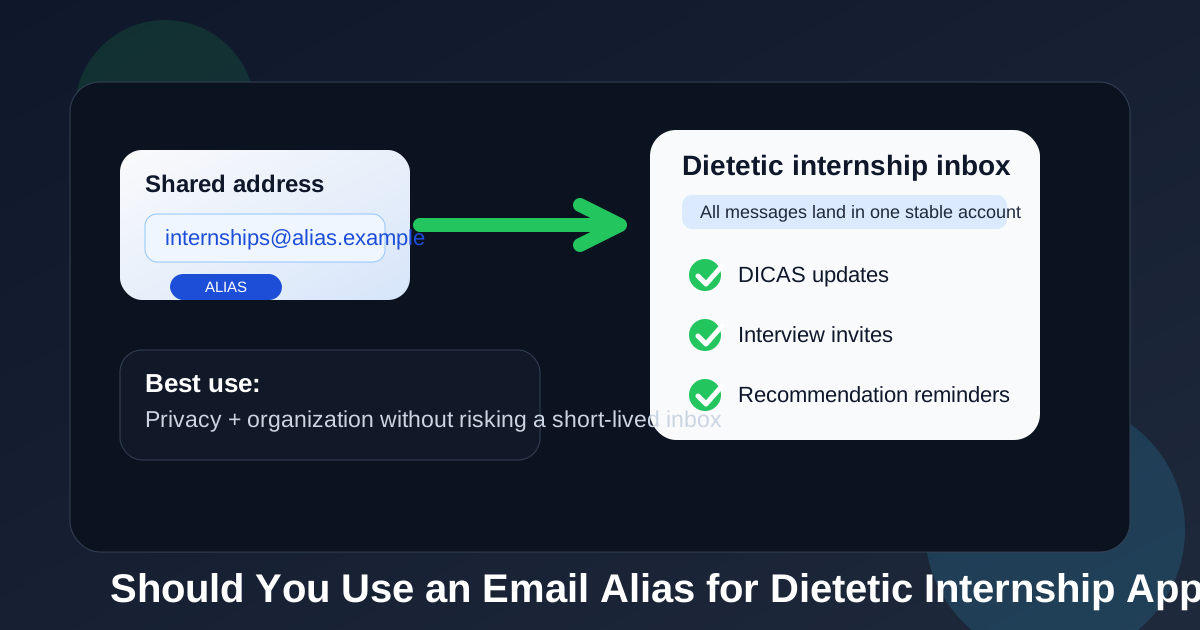
An email alias can be a smart choice for dietetic internship applications if it forwards into a stable inbox you already control and check every day.
Yes—using an email alias for dietetic internship applications usually works well when you want more privacy without risking missed DICAS updates, recommendation reminders, interview invites, or match-day follow-up.
The important part is the setup. An alias is only as reliable as the real inbox behind it. If the destination account is organized, long-term, and easy to monitor, an alias can give you cleaner boundaries than your everyday email without the fragility of a temporary address.
Why applicants ask about aliases in the first place
Dietetic internship applications are not a one-message process. You may hear from DICAS, individual programs, faculty recommenders, interview coordinators, and later onboarding contacts. Messages can arrive over weeks or months, and some of them matter a lot more than they look at first glance.
That is why many applicants do not love using their main personal inbox. A regular email account may already be full of shopping receipts, class notices, work updates, newsletters, and random signups. Important internship messages can get buried fast, especially if you are applying while finishing coursework, working part time, or juggling supervised-practice deadlines.
An alias sounds appealing because it creates a cleaner identity for the application cycle without forcing you to manage an entirely separate mailbox from scratch.
Short answer: yes, if the alias routes to a dependable inbox
For most applicants, an email alias is a reasonable middle ground. It gives you some privacy and organization benefits while still letting you receive everything in a real inbox that you expect to keep active for the full admissions cycle.
That makes an alias different from a disposable or short-lived address. A temporary inbox can be fine for low-stakes research, but dietetic internship communication is too deadline-driven to trust to something that may expire, change, or be checked inconsistently.
The safest version of an alias setup is simple: the alias points to a long-term inbox you fully control, and you test it before you use it anywhere important.
What an email alias actually helps with
An alias can be useful because it separates the address you share from the inbox where you actually work.
- Cleaner privacy boundaries: programs and signup forms do not get your main address directly.
- Better filtering: you can route alias mail into its own label, folder, or search view.
- Easier tracking: you know that messages sent to that alias are tied to this application season.
- Less inbox clutter: internship mail can stay grouped together instead of mixing with everything else in your life.
- More control: if the alias starts attracting irrelevant follow-up later, you may be able to disable or change it without abandoning your real inbox.
That last point matters. Many applicants want less exposure without making the process harder. A well-managed alias can do exactly that.
Why an alias can be better than your main everyday email
Your everyday inbox is not necessarily a bad choice. Plenty of applicants use it successfully. The problem is usually noise, not professionalism.
If your personal inbox already handles bills, travel confirmations, package notifications, social accounts, class updates, and family messages, then one important internship email can disappear in the crowd. Even if you eventually find it, finding it late is the real risk.
An alias gives you another layer of structure. The destination inbox can still be your normal long-term account, but the alias lets you treat internship communication as its own channel. That makes it easier to search, label, and prioritize without opening a completely separate account unless you want to.
When an alias is a strong fit for dietetic internship applications
An alias is usually a good option when all of the following are true:
- You already have a stable long-term inbox you trust.
- You want more privacy than sharing that raw address everywhere.
- You are comfortable testing forwarding and checking spam or filter behavior.
- You want one application identity for DICAS, program communication, and interview follow-up.
- You are organized enough to notice quickly if the alias stops forwarding correctly.
For applicants who like systems, aliases are great. You get structure without much extra friction.
When an alias is not the best choice
An alias can still go wrong if you overcomplicate it or rely on a setup you do not fully understand.
- You rarely check the destination inbox: an alias does not fix bad inbox habits.
- Your forwarding setup is untested: important messages should not be the first live test.
- You depend on aggressive filters: over-filtering can hide interview or deadline messages.
- You plan to disable the alias too early: internship communication can continue after the most obvious deadline.
- You want a throwaway solution: that is a sign you may really be looking for a temporary inbox, which is usually riskier here.
If you want the simplest, lowest-risk option, a full separate long-term inbox is still easier for many people. An alias is best when you want more control and you are confident you can manage the routing correctly.
Email alias vs. separate inbox vs. temporary email
Email alias
This is often the best middle ground. You keep one real inbox but create a distinct public-facing address for the application cycle. That helps with privacy and organization while preserving continuity.
Separate inbox
This is usually the most straightforward option. It creates hard separation and reduces the chance of forwarding mistakes. If you prefer simple over clever, a dedicated inbox is excellent.
Temporary or burner email
This is usually a poor fit for the actual application workflow. It can help with low-stakes research, webinar signups, or one-off downloads, but dietetic internship communication often lasts too long and matters too much to trust to a short-lived address.
In practice, aliases and separate inboxes are usually the two sensible choices for real applications. Temporary tools fit better earlier in the process, before you are relying on the address for critical admissions communication.
How dietetic internship timelines change the decision
This is where many applicants underestimate the problem. A dietetic internship application does not begin and end with one confirmation email. You may need the same address for:
- DICAS account notices and status messages
- recommendation reminders or clarification messages
- program-specific supplemental questions
- interview scheduling and rescheduling
- match-related updates or next-step instructions
- enrollment or onboarding communication after a decision
That long arc is why reliability matters more than novelty. An alias can absolutely handle this—if it routes into an inbox you will still be using and checking when those later messages arrive.
Best practices if you use an alias
1. Point it to a long-term inbox
The inbox behind the alias should be one you expect to keep for years, not months. Do not build an important application workflow on top of an account you may abandon after graduation or a seasonal address you rarely touch.
2. Test it before you submit anything
Send a few messages to the alias from different accounts. Confirm they arrive quickly, land where you expect, and do not get trapped in spam, promotions, or an overly strict rule.
3. Keep the alias professional
The address does not need to be fancy, but it should look normal and readable if a coordinator sees it in a thread. If possible, use a simple name-based alias instead of something jokey or cryptic.
4. Create a dedicated label or folder
One of the main benefits of an alias is easier organization. Use it. Route incoming internship mail into a label such as “Dietetic Internship” or “DICAS” so action items are easier to spot.
5. Check the underlying inbox daily during active periods
An alias is not a set-it-and-forget-it tool during deadlines or interview season. You still need the habit of checking consistently.
6. Leave the alias active after major decisions
Do not assume the process ends the moment you receive an interview invite or match result. Administrative follow-up can arrive later than expected.
Where privacy tools like Anonibox fit naturally
Anonibox makes the most sense when you want to reduce exposure during low-stakes browsing, newsletter signups, or early research. That can be useful while you compare programs, download materials, or sign up for information sessions you are not fully committed to yet.
Once you are in the real internship application flow, the goal usually changes. At that point, you are balancing privacy with continuity. A stable alias or separate inbox is often the better answer because you need something durable, searchable, and easy to monitor for months.
In other words: temporary email tools help protect the top of the funnel, while an alias helps you manage a serious ongoing process without exposing your main address more than necessary.
A practical setup that works well
- Create or choose a stable long-term inbox. This is the account that will actually receive the forwarded mail.
- Create one clear alias for the application cycle. Use it consistently across DICAS and related program communication where appropriate.
- Test forwarding, replies, and folder rules. Make sure the system works before a real deadline depends on it.
- Use labels for action items. Separate interview scheduling, recommendation follow-up, and program-specific requests if that helps you work faster.
- Keep the alias live through post-decision communication. Do not retire it early just because the busiest part feels over.
This setup gives you the privacy and organization benefits people want from an alias without introducing too much complexity.
Common mistakes to avoid
- Using an alias that forwards into an inbox you barely monitor
- Relying on forwarding without ever testing it end to end
- Applying with multiple different addresses and losing track of where messages go
- Turning off the alias too early after interviews or match results
- Assuming an alias is just as safe as a long-term setup even if the destination account is unstable
The general rule is simple: an alias works well when it reduces clutter without reducing reliability.
Final answer
Yes, an email alias for dietetic internship applications can be a very good idea if it routes into a dependable long-term inbox that you check consistently.
For many applicants, it is one of the best middle-ground options: more private and organized than using your main everyday address directly, but more reliable than a temporary inbox. If you want the cleanest result, keep the alias professional, test it before you apply, and use it only with an inbox you trust to stay active through the full DICAS, interview, and follow-up timeline.