Yes — an email alias is usually a smart choice for MBA applications if it routes to a stable inbox you check every day.
It helps you separate school outreach, interview invites, scholarship updates, and deposit deadlines from your regular mail without trusting a short-lived temporary inbox with high-stakes admissions messages.
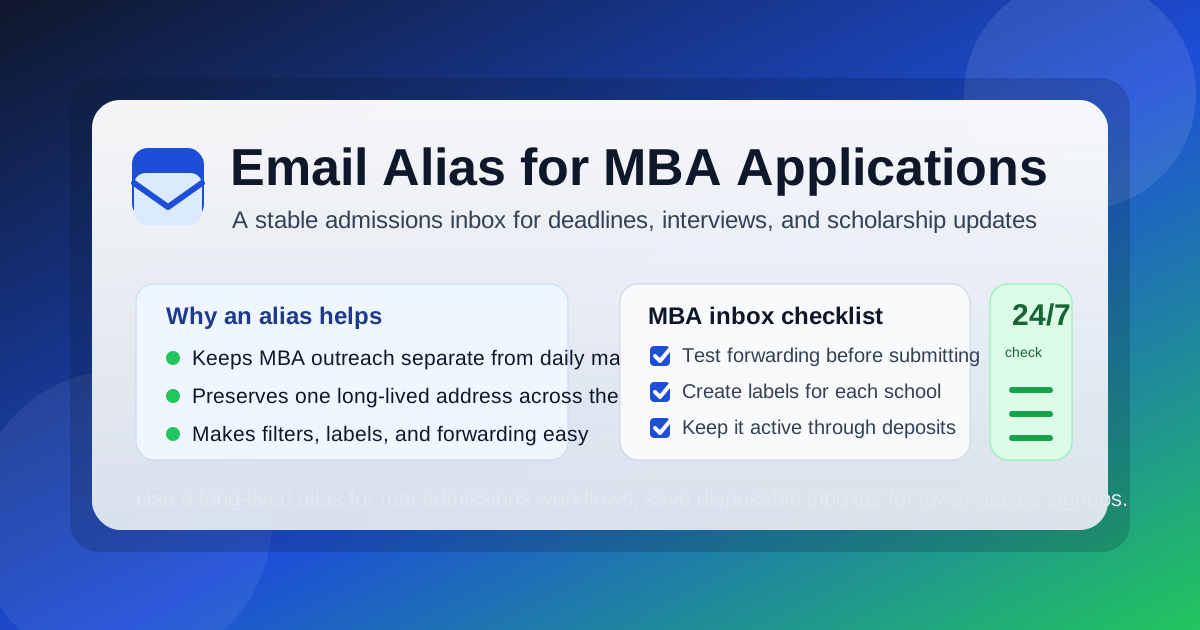
That is the practical answer behind searches for email alias for MBA applications. MBA admissions can last for months, and the communication load builds in stages. You may sign up for webinars, download brochures, talk to current students, send GMAT or GRE scores, coordinate recommendations, book interviews, compare scholarship offers, manage waitlists, and track deposit deadlines. A clean alias can make that entire process easier to manage without creating a brand-new mailbox from scratch.
What an email alias does for MBA applications
An email alias is a second address that forwards to an inbox you already control. Instead of creating a completely separate mailbox, you create a dedicated application-facing address that routes into your main account. That gives you two useful things at once: a cleaner public-facing address for admissions traffic and a stable long-term destination for every message that matters.
For MBA applicants, that balance is valuable. You want separation, but you also want continuity. If one school emails you in September, another in November, and a third moves you off a waitlist in March, you do not want those messages tied to an address you forgot to monitor or a disposable inbox that no longer exists.
Why MBA admissions are a good fit for an alias
MBA applications are not usually a one-week transaction. They are closer to a long campaign with multiple checkpoints. That is why an alias often makes more sense here than a throwaway address.
- Long timelines: MBA programs often communicate across several rounds, interview windows, and scholarship decisions.
- Multiple schools: you may be talking to several programs at once, each with its own portal messages and event invitations.
- High stakes: missing one interview invitation, recommendation reminder, or deposit notice can create real consequences.
- Ongoing follow-up: even after admission, schools may keep using the same address for events, housing notes, orientation, and enrollment tasks.
If you care about privacy but still need reliability, an alias is a strong middle ground.
Why an alias often beats a temporary or burner email for MBA applications
Temporary and burner email tools are useful in the right situations, but full MBA applications are usually not one of them. Admissions workflows are simply too long and too important.
A temporary inbox can work for something low stakes, like grabbing a brochure, testing whether a school’s webinar signup flow is noisy, or checking a one-off vendor download. A service like Anonibox can be handy for those early research moments when you want privacy before you decide which schools deserve deeper attention.
But once you start real applications, a stable alias is safer. You need an address that keeps working for recommendation reminders, interview confirmations, decision letters, financial-aid communication, and waitlist movement. Losing access to those messages because a temporary inbox expired would be a terrible trade.
Email alias vs. separate inbox for MBA applications
If you already have the separate-email MBA article open somewhere in your research, this is the useful distinction:
- A separate inbox gives you maximum separation. It is ideal if you want your MBA search totally isolated from work, personal, and side-project mail.
- An email alias gives you lighter separation with less overhead. You still use one trusted mailbox underneath, but the admissions-facing address stays cleaner and easier to filter.
For many applicants, the alias option is the sweet spot. It is less work than maintaining a whole second inbox, but still organized enough to keep your MBA application traffic under control.
When an alias is the best choice
An alias is especially practical if:
- you already have a dependable primary inbox and do not want to manage another login every day;
- you want to label, filter, and search application mail in one place;
- you expect a months-long admissions cycle and want one address to stay live from first event signup through final deposit;
- you want to share a cleaner address publicly without using your everyday personal email everywhere.
It is also helpful if you are applying while working full time. A well-routed alias lets you keep up with admissions messages without bouncing between multiple accounts during a busy week.
How to set up an email alias for MBA applications
1. Choose the inbox that will receive everything
Start with a mailbox you already trust and already monitor daily. That mailbox should have good search, reliable delivery, and a notification setup you actually pay attention to.
2. Create a simple, professional alias
Keep the alias boring in a good way. Something based on your name plus a clear application context works well. Avoid joke names, old usernames, or anything that looks temporary.
3. Test the forwarding before you submit applications
Send yourself a few test messages from another address. Confirm that the messages arrive quickly, display correctly, and do not land in spam or promotions.
4. Add labels or folders for each school
This is where the alias becomes more than just a forwarding trick. Create filters for each program, then label emails by school or stage: research, submitted, interview, waitlist, admit, scholarship, and deposit. That structure saves time later when the inbox gets busy.
5. Whitelist important senders
As soon as you start receiving real admissions mail, mark important domains and contacts as safe. Schools, admissions offices, interview coordinators, and application platforms should not be competing with newsletters and retail promos.
How the alias helps at each stage of the MBA process
Research and event signups
Schools love webinars, coffee chats, class visits, and mailing lists. An alias keeps that activity from swallowing your everyday inbox while still letting you compare programs seriously.
Application submissions
Once you begin applying, the alias gives you one consistent address for confirmations, portal messages, recommender reminders, and technical notices. Consistency matters. It is easier to troubleshoot an application if every school sees the same stable contact address.
Interview scheduling
MBA interview invitations can arrive on a tight timeline. A reliable alias routed into a monitored mailbox means you are less likely to miss a scheduling email or reply too slowly.
Scholarship, waitlist, and final decision season
This is where the long-life advantage really matters. Even after the application itself is done, schools may keep using the same address for merit aid, seat deposits, admitted-student events, and waitlist updates. An alias keeps the conversation thread intact from start to finish.
Common mistakes to avoid
- Using a disposable inbox for core admissions communication: fine for low-stakes lead capture, risky for real applications.
- Picking an alias you never check: forwarding only helps if the receiving inbox is truly active.
- Skipping filters: without labels or folders, the alias becomes just another stream of clutter.
- Changing addresses mid-cycle: schools may continue using the original address you submitted, so avoid switching unless you absolutely have to.
- Assuming all school email will be obvious: some messages come from application platforms, outside interview tools, or financial-aid offices rather than a clean admissions address.
When a separate inbox may still be better
An alias is not automatically the best answer for everyone. A fully separate inbox may be better if you want very strong boundaries between your MBA search and the rest of your life, if you are sharing a personal mailbox with too much existing clutter, or if you want to hand off access later to a spouse, coach, or consultant during decision season.
Still, for a lot of applicants, an alias offers enough separation without the maintenance burden of another account.
Quick checklist before you use an alias on MBA applications
- Does the alias forward to an inbox you check every day?
- Have you tested delivery before submitting real applications?
- Have you created labels or folders for each school?
- Are notifications enabled for important admissions messages?
- Are you planning to keep the alias active through interviews, offers, and deposits?
Final answer
Yes — for most applicants, an email alias for MBA applications is a smart setup. It keeps business school outreach organized, protects some privacy, and still gives you the stable long-term access you need for interviews, scholarship notes, waitlist movement, and enrollment steps.
If you only need a disposable inbox for early research, a temporary option can still be useful. But for the real admissions cycle, an alias is usually the safer and more practical choice. It gives you cleaner inbox control without taking chances on the messages that matter most.