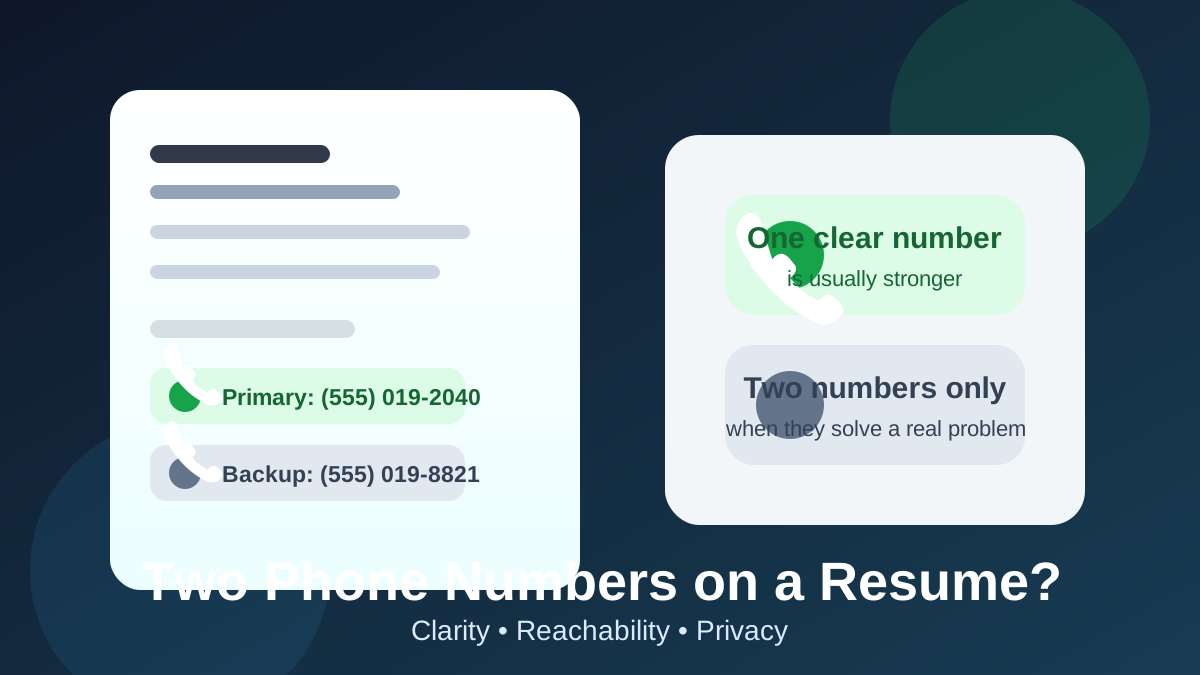
Usually no. Most resumes should show one reliable phone number, not two, because one clear contact line is easier for recruiters than a menu of options. If you have a real reason to include two numbers—such as international travel, separate voice and text coverage, or an accessibility need—label them clearly and make one the primary choice.
What matters on a resume is clarity, not maximum contact volume. Recruiters should know exactly how to reach you, which number you monitor, and whether there is any reason to use a backup line at all.
The question comes up for good reasons. Some job seekers want a personal number and a separate job-search number. Some have one number for calls and another that handles texts better. Some are moving between countries, changing carriers, or trying to stay reachable without putting their main private line everywhere. Those concerns are real.
Still, the resume itself is not the place to list every possible route to you. In most cases, one number works better than two because it reduces confusion, keeps your contact section cleaner, and limits how much personal information you spread across job boards, recruiter databases, and forwarded resume files.
Short answer: one number is usually better
For most job seekers, the best resume setup is one phone number you actually answer, one voicemail you keep professional, and one contact path that stays active throughout the hiring process. That number can be your personal mobile number, a dedicated job-search number, or another line you control. The important thing is that it is stable and easy to use.
Two numbers usually do not improve your odds. They often create a tiny moment of hesitation: which one should the recruiter use, and why are there two? That small friction is not fatal, but resumes work best when they remove friction rather than add it.
Why people consider putting two phone numbers on a resume
The idea is not strange. People usually think about listing two numbers for one of a few practical reasons:
- Privacy: they want one number for job searching and another for everyday life.
- Backup: they worry about missed calls, poor reception, or a carrier issue.
- International transition: they have one local number and one number from another country during a move.
- Accessibility or communication preferences: one number may be better for calls, relay services, or text-based communication.
- Career-change cleanup: they are trying to separate old professional contacts from a fresh job-search channel.
Those are reasonable concerns. The mistake is assuming the resume has to display both numbers to solve them. Often, the better move is to choose one number for the resume and handle backup, forwarding, or filtering behind the scenes.
Why two phone numbers can cause problems
1. They create decision friction
A recruiter scanning your resume should not have to decide between “mobile,” “personal,” “backup,” “office,” or “best after 5 PM” unless there is a truly necessary reason. When there are two numbers, some people will guess. Others will use the first one they see. Some will contact both. None of those outcomes is cleaner than one obvious choice.
2. They can split your communication history
If different employers call or text different numbers, your job-search conversations become harder to track. One voicemail ends up on one line, text follow-up lands on another, and your record of who said what gets messy fast. That is the opposite of what a good contact system should do.
3. They increase your privacy footprint
Every resume you upload, email, or attach to a form can be saved, forwarded, scraped, or stored for longer than you expect. Listing two numbers means exposing twice as much phone data to that process. If privacy matters, reducing the amount of contact information you distribute is usually smarter.
4. They can look cluttered
A contact block should be fast to read: name, city if relevant, one email, one phone number, and maybe a LinkedIn or portfolio link. Two phone numbers make the header busier without helping most employers make a better decision.
When two phone numbers might actually make sense
There are situations where listing two numbers is justified. They are just less common than people think.
- You are between countries or relocating soon: one number may be local for your target market while the other still handles current access.
- You need separate call and text access: for example, one line reliably receives SMS verification and another is the better voice line.
- You use an accessibility-related communication setup: one line may be the best contact for calls, relay services, or text-first responses.
- You have a clearly defined primary and secondary number: and there is a real chance the secondary one will be needed.
Even then, you should make the hierarchy obvious. The resume should not present two equal options with no explanation. If you truly need two numbers, one should be clearly marked as primary and the second should have a narrow reason for existing.
When one number is definitely the better choice
Use one number only if any of these apply:
- You are applying through standard online forms and want a clean, easy-to-scan header.
- You are already reachable by one dependable mobile number.
- You mainly want a second number for privacy, not because recruiters truly need it.
- You are worried about spam and want to keep your public footprint smaller.
- You are using a separate job-search email and already have enough contact separation.
That last point matters. If you already use a privacy-first email workflow with Anonibox for early applications, job-board signups, or account verification, you are already separating one part of your contact identity. In that setup, adding a second visible phone number to the resume usually creates more confusion than benefit. A better match is one recruiter-facing number paired with one controlled inbox.
A better alternative: use one dedicated job-search number
If your real goal is privacy, organization, or spam control, the strongest solution is usually not two numbers on the resume. It is one dedicated job-search number on the resume.
That gives you most of the benefits people are looking for:
- You keep your everyday personal line more private.
- You can screen recruiter calls and texts in one place.
- You can create a professional voicemail just for hiring conversations.
- You can retire or silence the number later if it starts attracting spam.
- You still present one simple contact point to employers.
In other words, a dedicated number solves the privacy problem without creating a clarity problem.
If you do list two numbers, format them carefully
If you have a genuine reason to include both numbers, make the setup unmistakable. A recruiter should know which number to use first and why the second one exists.
Good formatting usually looks more like this in plain language:
- Primary mobile: the number you want used for calls and texts
- Secondary line: only if unreachable on the primary line
What you want to avoid is dropping two unlabeled numbers side by side and hoping the employer figures it out. If both lines are equally important, that is usually a sign that your setup is not resume-friendly yet.
You should also avoid listing a work number from your current employer, a shared family line, or any number you do not fully control long-term. Resumes often stay in circulation longer than you expect, so stability matters.
Common mistakes to avoid
- Listing a personal number and a work number together: this can create privacy and employer-visibility problems.
- Using one number for calls and a different one for texts without explanation: recruiters may choose the wrong channel.
- Adding a backup number “just in case” when you rarely monitor it: a backup that you miss is worse than no backup at all.
- Trying to look extra available: more numbers do not automatically make you seem more responsive.
- Letting voicemail quality lag behind: if you want calls, your greeting should sound intentional and current.
A quick checklist before you decide
Before you put two numbers on the page, ask yourself:
- Do employers truly need both numbers, or am I trying to solve a privacy problem another way?
- Would one dedicated job-search number handle this more cleanly?
- Is one number clearly primary?
- Will both numbers stay active throughout the search?
- Am I making my resume easier to use, or just more complicated?
If your answers point toward clarity, stability, and a real use case, two numbers may be defensible. If not, one number is the better move.
Final answer
Usually no: do not put two phone numbers on your resume unless there is a specific, practical reason that clearly outweighs the extra complexity. One reliable number is cleaner, easier for recruiters, and better for privacy.
If you need separation, use one dedicated job-search number rather than two public numbers competing for attention. And if you truly need both lines, label them clearly, make one primary, and keep the rest of your contact setup simple. That gives you the reachability recruiters want without turning your resume header into a contact puzzle.