Usually no — you should not put your emergency contact on job applications unless a verified employer truly needs it later in the hiring process. For most first-round applications, an emergency contact is unnecessary, and sharing one too early exposes someone else’s personal information before there is a clear reason.
If the field is optional, leave it blank. If it is required, slow down, verify the employer, and decide whether it makes more sense to provide that information after interviews, at offer stage, or during onboarding instead of at the first point of contact.
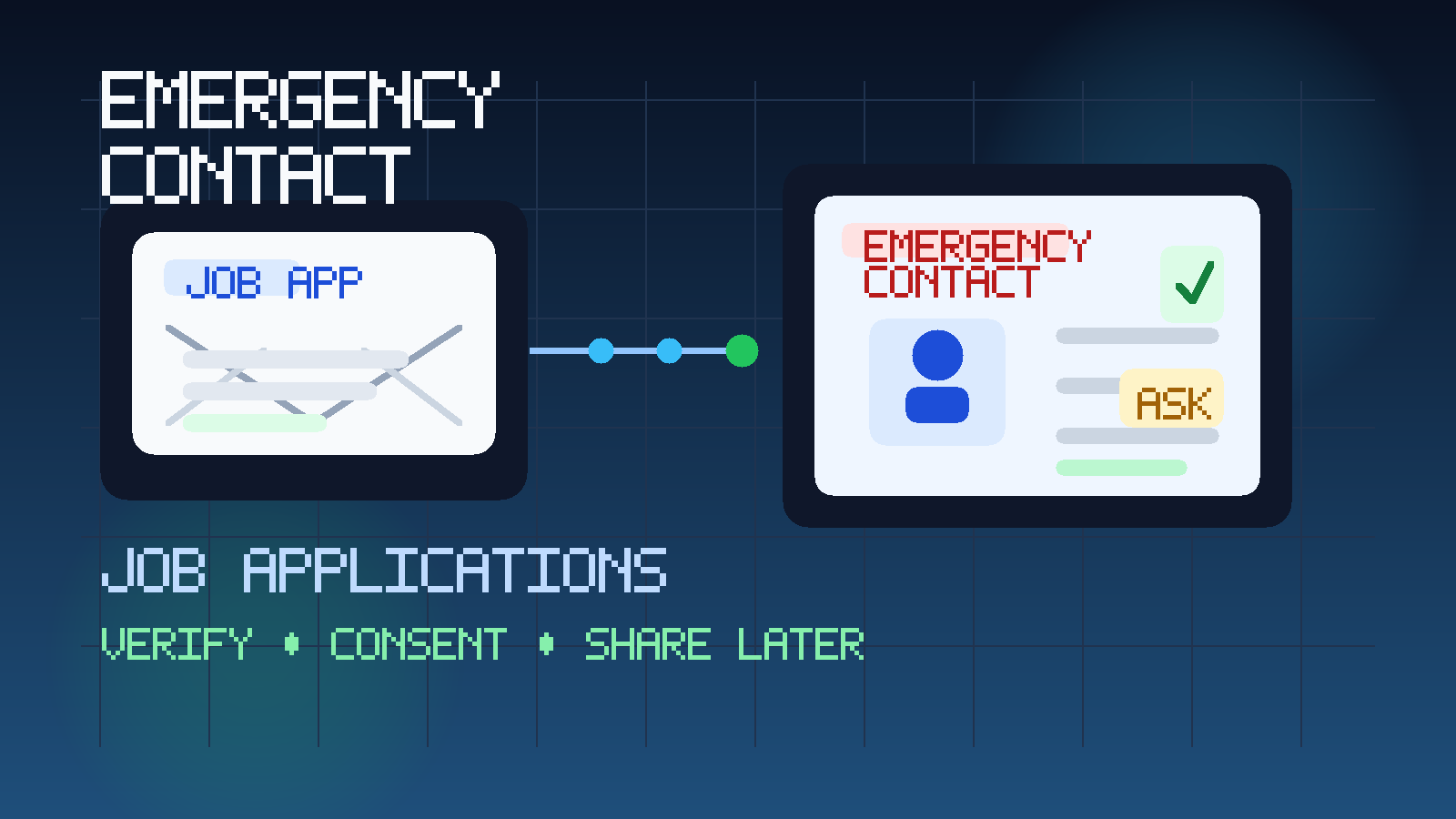
That distinction matters because an emergency contact is different from your own phone number or email address. When you share it, you are not only making a privacy decision for yourself. You are also handing over someone else’s name, relationship to you, phone number, and sometimes address. In the wrong place, that information can create unnecessary risk, confusion, or even a small social-engineering opening.
For a site like Anonibox, this topic fits naturally into the job-search privacy cluster. Job seekers already worry about whether to share their personal email on job applications, whether to disclose their Social Security number, or whether a request for bank details on job applications is legitimate. Emergency contact information belongs in the same conversation because it is personal data that many employers do not actually need right away.
Why some employers ask for an emergency contact
There are legitimate situations where an employer may eventually need an emergency contact. For example, once you are close to starting a job, working on-site, traveling for work, entering a physically demanding role, or completing final onboarding paperwork, emergency contact information can be reasonable. If something goes wrong on the job, the employer may need to reach someone quickly.
But that logic makes far more sense after a role is real than at the first application stage. A company that has not interviewed you, selected you, or onboarded you usually does not need third-party contact details just to decide whether to move you forward. That is why early requests can feel excessive even when they come from a legitimate system.
Why sharing an emergency contact too early can be a privacy problem
1. You are exposing someone else’s information
Your emergency contact did not apply for the job. They may not want their phone number stored in a recruiter database, applicant tracking system, staffing portal, or third-party hiring workflow. Even if the employer is legitimate, you should still think about consent before handing over another person’s details.
2. Early-stage applications do not usually require it
Most employers can assess your fit using your resume, answers, portfolio, and direct contact information. Emergency contact data usually adds nothing useful that early. When a form asks for it upfront, that can be a sign of lazy form design, excessive data collection, or a process that was copied from onboarding paperwork and pushed too far upstream.
3. Bad systems keep more data than they should
Not every hiring portal has great privacy hygiene. The more places you submit detailed personal data, the more places that information can sit for months or years. Even if nobody acts maliciously, overcollection creates avoidable exposure.
4. It can create social-engineering risk
If a scammer or sloppy recruiter gets enough context, they may be able to make a message sound convincing: your name, a role you applied for, your emergency contact’s number, maybe a request to “confirm details” or “complete onboarding.” That does not mean every request is a scam, but it does mean unnecessary third-party data sharing is worth avoiding.
When it may be appropriate to provide an emergency contact
There are cases where sharing this information is reasonable. In general, it becomes more appropriate when the hiring process has progressed beyond basic screening and the employer has a clear operational reason for asking.
- After you receive an offer: many employers collect emergency contact details in new-hire paperwork.
- During formal onboarding: if you are completing verified HR forms for a real start date, this is a normal place for the request.
- For jobs involving travel, field work, or safety risks: emergency contacts may be more relevant once the role is confirmed.
- Inside a verified company HR portal: if you independently confirm the employer and the stage makes sense, the request is less concerning.
The key is timing. A request that makes sense during onboarding may not make sense on a public job board, a generic candidate form, or a low-trust third-party application page.
When you should be cautious
You should slow down if any of these are true:
- the employer asks for an emergency contact on the very first application screen
- the role is posted through a vague third-party site with little company information
- the same form also asks for highly sensitive details too early
- the recruiter cannot explain why the information is needed right now
- the application process feels rushed, sloppy, or off-platform
- you have not yet confirmed that the company and role are real
Those signals do not always mean fraud, but together they can point to poor data handling or a process that is asking for more than it should. If you have already learned to be careful about recruiter outreach, suspicious portals, and oversharing in hiring emails, the same mindset applies here. Anonibox is often useful at the earliest job-search stage for keeping your own inbox separate, but it cannot solve the privacy risk of giving out another person’s contact information unnecessarily.
What if the emergency contact field is optional?
If the field is optional, the simplest answer is usually to leave it blank. A legitimate employer that truly needs it later can ask at a more appropriate point. Leaving an optional emergency contact field empty is rarely a meaningful problem in early hiring.
If you worry that leaving it blank will hurt your chances, ask yourself what the employer is realistically learning from that field. In most cases, the answer is “not much.” It is not the kind of detail that typically improves your candidacy. It is administrative, not persuasive.
What if the field is required?
If a form forces you to provide an emergency contact, do not panic — but do not autopilot either.
Step 1: verify the employer and application channel
Make sure you are on the real company careers site or a known recruiting platform tied to a legitimate role. Double-check the domain, job listing, and company presence. If the role came from an unsolicited message, verify it independently before sharing anything extra.
Step 2: decide whether the timing makes sense
If this is just a first-pass application, the request may be excessive. If you are already moving into final paperwork with a confirmed employer, it may be normal. Context matters more than the field itself.
Step 3: ask whether you can provide it later
If there is a human contact available, a simple professional question can solve the issue: “I’m happy to provide emergency contact information during onboarding. Is it necessary at the application stage?” A reasonable employer may allow it later or explain the requirement clearly.
Step 4: ask permission from the person you plan to list
Do not list someone without telling them. Let them know which employer may have their details, what role you are applying for, and whether you expect any actual contact. That is basic courtesy and better privacy practice.
How to protect your emergency contact’s privacy if you do share it
- Get consent first: make sure the person is comfortable being listed.
- Share only what is actually requested: if a phone number is enough, do not add extra details voluntarily.
- Use the most stable, appropriate contact method: avoid giving outdated or casual contact details you cannot verify later.
- Keep a note of where you shared it: if you apply to many roles, track which systems have that data.
- Avoid repeating it on low-trust portals: if the company or platform feels questionable, hold back.
That same record-keeping habit helps with your own contact strategy too. Many job seekers use a separate inbox during early applications so they can monitor opportunities without mixing everything into their everyday email. That is where a tool like Anonibox can be useful. It keeps your side of the process cleaner while you reserve more sensitive information for later, verified stages.
Red flags that should make you stop
Some requests are not just premature. They are suspicious enough to pause the application entirely.
- the employer wants an emergency contact along with SSN, bank, or ID details before any real interview process
- the recruiter refuses to use a company domain or verified company page
- the role promises immediate hiring but asks for lots of personal data upfront
- the company cannot explain why an emergency contact is required so early
- the application is full of broken language, odd formatting, or inconsistent company names
- you are pressured to hurry before you can verify the opportunity
In those cases, the emergency-contact question is usually part of a bigger pattern. Do not isolate it from the rest of the warning signs.
A quick decision checklist
Before filling out the field, ask yourself:
- Is this a real employer and a verified application channel?
- Am I still at the first application stage, or am I already in onboarding?
- Is the field optional or required?
- Have I told the person I plan to list?
- Does the employer actually need this information now?
- Does anything else about the application feel excessive or suspicious?
If the answers point to an early-stage, low-context, or low-trust request, holding back is usually the better call.
Final answer
No, you usually should not put your emergency contact on job applications. In most cases, that information is more appropriate after an offer, during onboarding, or once a verified employer has a real need for it. Early application forms rarely require it to evaluate you properly.
If the field is optional, leave it blank. If it is required, verify the employer, ask whether you can provide it later, and get the other person’s consent before sharing their details. That approach protects both your privacy and theirs without making the hiring process harder than it needs to be.