Usually, no—you do not need to volunteer your union membership on job applications unless it is directly relevant to the role or the employer clearly asks in a legitimate context. If the question is optional, it is reasonable to answer carefully or decline based on your comfort level and the trustworthiness of the application.
Union membership can be part of your work history, but it is still personal information. Share what helps your candidacy, keep sensitive details limited, and treat any broad request for extra information early in the hiring process with caution.
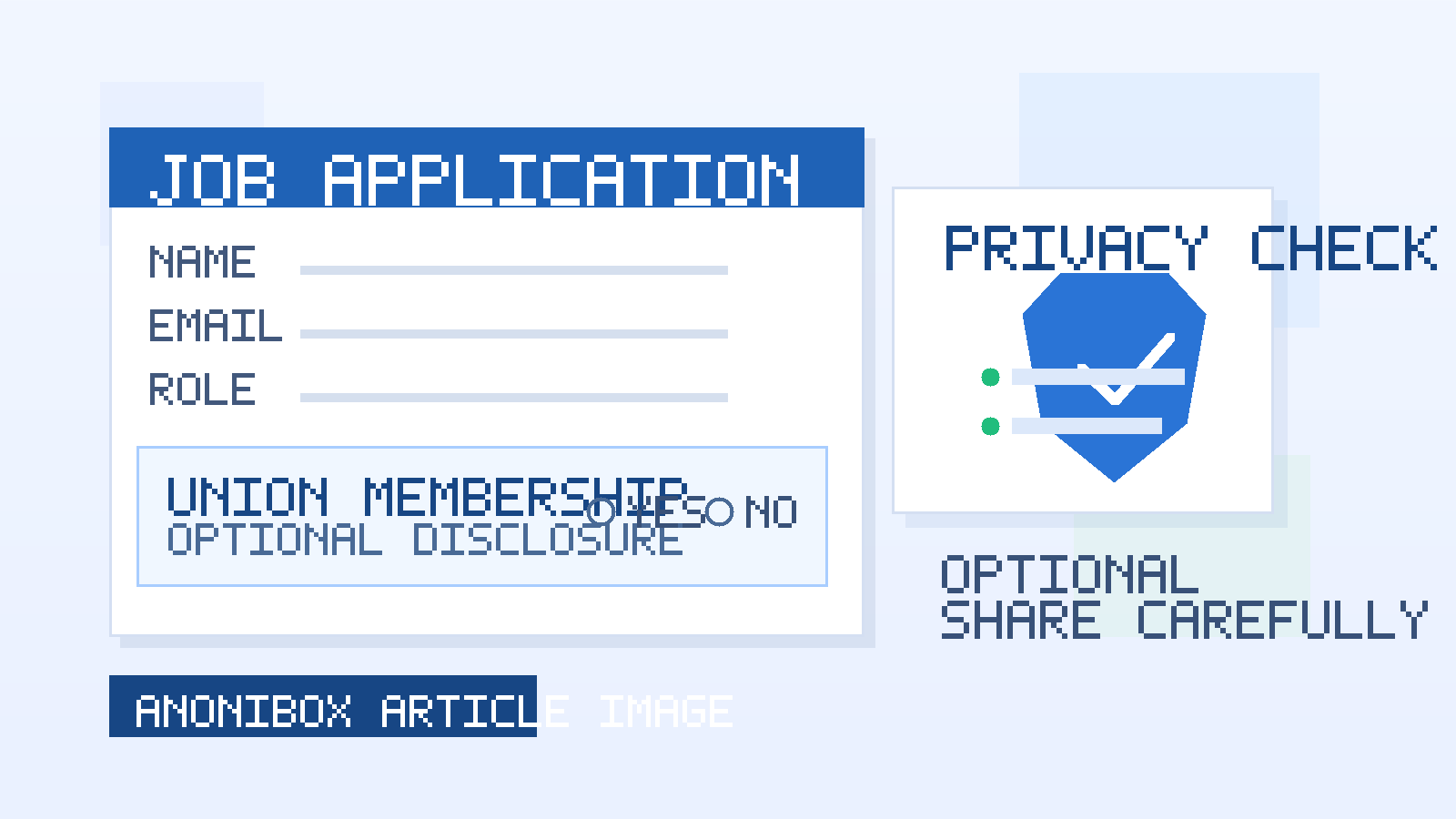
Why this question can come up
Most job applications do not need to know whether you belong to a union. Still, the question can appear in a few legitimate situations. Some employers hire into unionized workplaces and want to understand your background with collective bargaining agreements, seniority systems, apprenticeship pathways, or dues-paying trade environments. In other cases, a candidate may be applying for a role where union experience is practically relevant, such as skilled trades, transportation, construction, public-sector work, manufacturing, entertainment, or hospitality.
That said, relevant workplace experience is not the same thing as a broad request for your membership status. Employers may genuinely care whether you understand a unionized environment, but that does not automatically mean you need to hand over extra personal details at the first application stage.
Union membership is different from unionized work experience
This is the distinction that matters most. Union membership is a personal affiliation. Experience working in a unionized shop or under a collective bargaining agreement is professional experience.
If your background includes working under a union contract, following safety rules, bidding for shifts by seniority, collaborating with stewards, or completing a recognized apprenticeship, that experience may be worth mentioning when it is directly relevant to the job. It shows you understand the environment. But that is different from volunteering more information than the application actually needs about your membership status, internal role, or labor history.
In practice, employers usually learn more from your experience, certifications, and work history than they do from a simple membership label.
When it can make sense to disclose union membership
There are situations where sharing this information can be reasonable:
- The role is in a unionized workplace and the employer clearly wants to know whether you already understand that setting.
- Your union background is directly tied to your qualifications, such as apprenticeship completion, dispatch systems, safety training, or job classifications.
- The application asks in a narrow, job-relevant way rather than as a vague personal-information grab.
- You are applying through a formal process you trust, such as an employer careers page, a union hiring hall, or a verified contractor recruiting system.
- You are comfortable sharing it because you think it helps explain your experience or fit.
In those cases, disclosure can be practical. The key is that the question should feel connected to the job itself, not just to curiosity about your personal affiliations.
When you should be more cautious
There are also plenty of situations where disclosing union membership early is unnecessary or unwise:
- The employer is vague and the role description is thin, sloppy, or inconsistent.
- The application is on a third-party site where your data may be copied into multiple systems you cannot control.
- The question is optional and you do not see a clear job-related reason to answer it.
- The employer appears hostile, disorganized, or evasive about why the information matters.
- The form is collecting several sensitive details at once, such as ID documents, financial information, or unrelated demographic data before any real interview process.
Job seekers sometimes feel pressure to answer every field just to avoid looking difficult. That is understandable, but not every optional field deserves a response. If a question does not clearly help your candidacy, caution is fair.
What employers may actually need to know instead
Often, the real issue is not membership at all. Employers may simply want to know whether you can do the work in a unionized environment. If that is the case, stronger and safer details to share include:
- years of experience in unionized workplaces
- trade classifications or licenses
- apprenticeship completion
- safety credentials and site-readiness training
- experience working under collective bargaining rules
- familiarity with shift bids, call lists, dispatch, or seniority systems
Those details help an employer judge your fit without forcing you to reveal more personal information than necessary. In many cases, that is the better balance.
What you should not share too early
Even if union-related experience is relevant, be careful about providing more detail than the application stage really requires. Early in the process, you usually do not need to send:
- membership cards or union ID numbers
- dues records or internal union paperwork
- grievance history or dispute records
- personal contact details for union representatives unless specifically appropriate
- any unrelated identity or financial documents bundled into the same request
If an employer starts asking for this kind of material before screening calls, interviews, or a clearly justified onboarding step, that is a reason to pause.
Red flags to watch for
Most legitimate hiring processes ask boring, ordinary questions. Be careful when the process becomes invasive or oddly specific without a clear reason.
- The recruiter cannot explain why union membership matters to the role.
- The question appears in a suspicious form rather than on a verified employer or contractor site.
- You are asked for documents immediately, before any normal interview process has happened.
- The employer wants to move the conversation off-platform fast to text, Telegram, or another informal channel.
- The form mixes labor-affiliation questions with scam-style requests like bank details, identity photos, or fees.
None of those signs automatically prove fraud, but together they are enough to justify slowing down and verifying who you are dealing with.
Best practices if the question appears
1. Check whether the field is required or optional
If the question is optional, treat it as a real choice. Optional means you can decide whether answering helps you.
2. Answer the narrowest version of the question
If the form only needs a yes or no, do not volunteer a long explanation. More exposure rarely helps unless the details are directly useful.
3. Emphasize job-relevant experience first
Lead with apprenticeship work, certifications, safety knowledge, and experience in unionized environments. That tells employers more than a label alone.
4. Verify the employer before sharing documents
If proof is ever genuinely needed later, make sure the employer is real, the contact is legitimate, and the submission method is secure.
5. Keep your job-search communications organized
If you are applying widely, especially across job boards and recruiter forms, keeping a separate application inbox helps reduce long-term spam and makes suspicious follow-ups easier to spot. That is one reason some job seekers use a dedicated search address or a privacy-first workflow with a tool like Anonibox for early-stage applications and alerts.
Does declining to answer always hurt your application?
Not necessarily. If the field is optional and your qualifications are clear elsewhere, declining to answer may have little effect, especially when the information is not truly central to the job. What matters more is whether you still present the experience the employer actually needs to evaluate.
For example, if you are applying for a skilled-trade role, an employer may care far more about your credentials, safety record, and relevant site experience than about whether you explicitly state your membership status in an early form.
A quick decision checklist
Before answering a union-membership question on a job application, ask yourself:
- Is this a real employer or trusted hiring channel?
- Is the question clearly relevant to a unionized workplace or trade role?
- Is the field optional, required, or poorly explained?
- Would sharing this actually strengthen my application?
- Am I being asked for simple information, or for documents and details too early?
If the question is legitimate and job-related, answering may be completely reasonable. If the request feels intrusive, vague, or disconnected from the role, protecting your privacy is the smarter move.
Final answer
So, should you put your union membership on job applications? Usually only when it is clearly relevant to the role or the employer has a legitimate reason to ask. In most other cases, it is better to focus on your actual experience, training, and qualifications rather than volunteer extra personal information early.
The safest rule is simple: share job-relevant unionized-workplace experience freely, share personal affiliation carefully, and do not hand over documents or sensitive details before the hiring process truly justifies it.