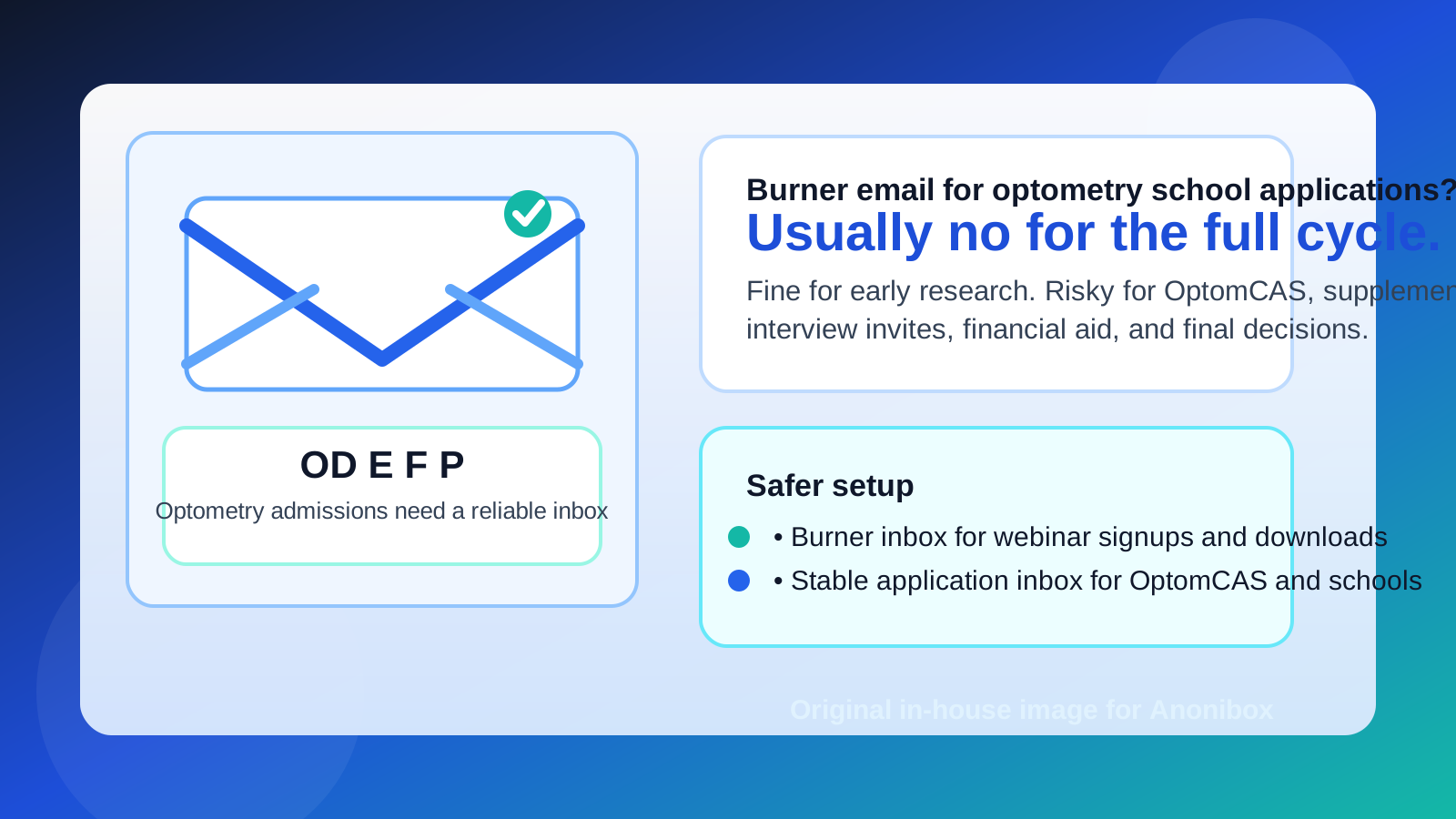
Usually no — a burner email is too fragile to be your only inbox for optometry school applications.
It can be useful for low-risk research like webinar signups, brochure downloads, or early school-interest forms, but OptomCAS updates, supplemental requests, interview invitations, financial-aid notices, and final decisions should go to a stable address you check every day.
What counts as a burner email in this context?
A burner email is an address you create for short-term use and plan to abandon later. Sometimes that means a truly temporary inbox that expires. Other times it means a throwaway account you made only for one narrow task. The main idea is the same: you do not want that address to become part of your long-term digital life.
That can be helpful when you are still exploring schools, comparing programs, or protecting yourself from unnecessary marketing. It becomes much less helpful once you move into the actual admissions process, where timing, continuity, and message history matter a lot.
Why the answer is different for optometry school than for ordinary signups
Optometry school applications are not a quick one-and-done signup. In many cases you may be juggling OptomCAS tasks, school-specific supplemental applications, interview scheduling, admissions follow-up, scholarship information, and enrollment paperwork over a long stretch of time. Missing one message can create real problems.
That is why the most important question is not “Can a burner email receive the first confirmation message?” It is “Will this inbox still be available, organized, and trusted when an important school message arrives weeks or months later?”
For that reason, a burner email is usually better for the research phase than the application phase.
When a burner email can make sense
There are a few situations where using a burner email for optometry-school-related activity is perfectly reasonable.
- School interest forms: If you are just asking for a brochure or basic program information, a burner inbox can keep your main address out of broad marketing funnels.
- Webinar and event registrations: Some schools and vendors gate recordings, PDFs, or event confirmations behind an email form.
- Download pages: Guidebooks, checklists, essay resources, and admissions tip sheets often trigger ongoing nurture emails you may not want.
- Early comparison research: If you are still deciding whether optometry school is even on your shortlist, a temporary inbox can help you browse without committing your long-term contact details yet.
In those low-risk cases, a service like Anonibox can be useful because you get the confirmation email or download link you need without turning a simple info request into months of inbox clutter.
Where a burner email becomes risky
Once you are doing anything tied to a real application timeline, the risk goes up fast.
1. OptomCAS and application account continuity
If your primary application account points to an address you stop checking, lose access to, or cannot recover, you create unnecessary friction for yourself. Even if nothing goes wrong, you add stress to a process that already has enough moving parts.
2. Supplemental application requests
Some schools send follow-up instructions, portal invitations, or missing-item notices after the main application stage. These messages may not look dramatic, but they can still affect your timeline. A burner inbox is a bad place for deadline-sensitive follow-up.
3. Interview invitations and logistics
Interview scheduling can move quickly. If you miss a message because the inbox expired, filtered something oddly, or simply fell off your radar, the cost is much higher than the value of the privacy you gained.
4. Financial-aid and scholarship communication
Admissions is not the only stage that matters. Schools may continue using the same email relationship for aid instructions, scholarship opportunities, admitted-student events, and next-step paperwork. A throwaway address can become a liability here.
5. Trust and professionalism
Most schools care more about your materials than about your email brand, but a clearly disposable-looking inbox can still create a less polished impression in some settings. That is not always decisive, yet there is little benefit in taking the chance when better options exist.
A better setup for most applicants
If privacy is your real concern, the best answer is usually not “burner inbox or nothing.” It is a two-layer setup:
- Use a burner or temporary inbox for very early research like brochure downloads, mailing-list signups, and low-stakes event registrations.
- Use a separate long-term application inbox for the real process once you create accounts, submit materials, or expect important follow-up.
That second inbox can be a normal email account you created only for applications, or an alias that routes into a mailbox you already manage well. The key is stability. You want an address you can monitor daily, search easily, and keep active through the whole admissions cycle.
Burner email vs. temporary email vs. alias vs. separate inbox
These terms overlap, but they are not identical, and the differences matter.
- Burner email: short-term by design; good for low-risk use; poor for long admissions timelines.
- Temporary email: often even more short-lived; best for one-off verifications and download gates.
- Email alias: useful when it forwards into a reliable inbox you already control; good balance of privacy and continuity.
- Separate email account: the safest option when you want clean organization across months of deadlines and school messages.
For optometry school applications specifically, the ranking is usually simple: a separate stable inbox or strong alias setup is best, temporary and burner addresses are only good for early low-risk steps.
Best practices if you still want to use a burner email somewhere in the process
If you want the privacy benefits without creating avoidable admissions headaches, use a few guardrails.
Keep the burner stage narrow
Only use it for activities where losing future access would not matter much. If a missed reply could affect your application, move that interaction to your permanent application inbox instead.
Switch before you submit anything important
Do not wait until after you have opened accounts, started supplemental forms, or joined official school portals. Switch early, before that address becomes tied to important records.
Save critical links and documents immediately
Even in the research phase, download what you need right away. Do not assume a temporary or burner inbox will always be available later.
Use one stable inbox for the real admissions cycle
Once you begin actual applications, resist the urge to scatter things across multiple disposable addresses. Centralization matters more than novelty here.
Check spam and promotions folders on the stable inbox
School emails do not always land where you expect. A tidy dedicated inbox helps, but you still need the habit of checking every folder that matters.
A simple privacy-first workflow that actually works
Here is a practical setup that protects your privacy without putting your optometry application at risk:
- Use a temporary or burner inbox for broad research and downloadable resources.
- Create one dedicated long-term inbox for optometry school applications.
- Use that dedicated inbox for OptomCAS, school portals, interviews, aid, and final decisions.
- Keep a simple folder or label structure for each school so deadlines and replies stay easy to track.
- Retire the burner inbox when the research stage is over.
This gives you the privacy benefit where it helps most and the reliability benefit where it matters most.
Red flags that tell you a burner email is the wrong choice
- You are about to submit an official application.
- You have already started receiving school-specific instructions.
- You expect interview communication soon.
- You are dealing with scholarship, aid, or admitted-student follow-up.
- You would be seriously harmed by missing one message.
If any of those are true, stop treating the email decision like a spam-control problem and start treating it like a reliability problem.
So, should you use a burner email for optometry school applications?
For the full admissions cycle, usually no. A burner email can help protect your privacy during the earliest research steps, but it is too unstable for the core parts of optometry school applications.
The safer approach is to use a burner or temporary inbox only for low-stakes exploration, then shift to a separate long-term application inbox or a strong alias setup before anything official begins. That way you keep your personal inbox cleaner without risking missed deadlines, missed interviews, or missed financial-aid messages.
If your goal is both privacy and control, that middle path is usually the smartest one.