A burner email can be smart for early recruiter outreach, but it is a bad idea if you let it expire or use it for serious interview-stage communication.
The safest answer is this: use a burner email as a privacy buffer for first contact, then move to a stable inbox once a recruiter becomes real, responsive, and worth your time.
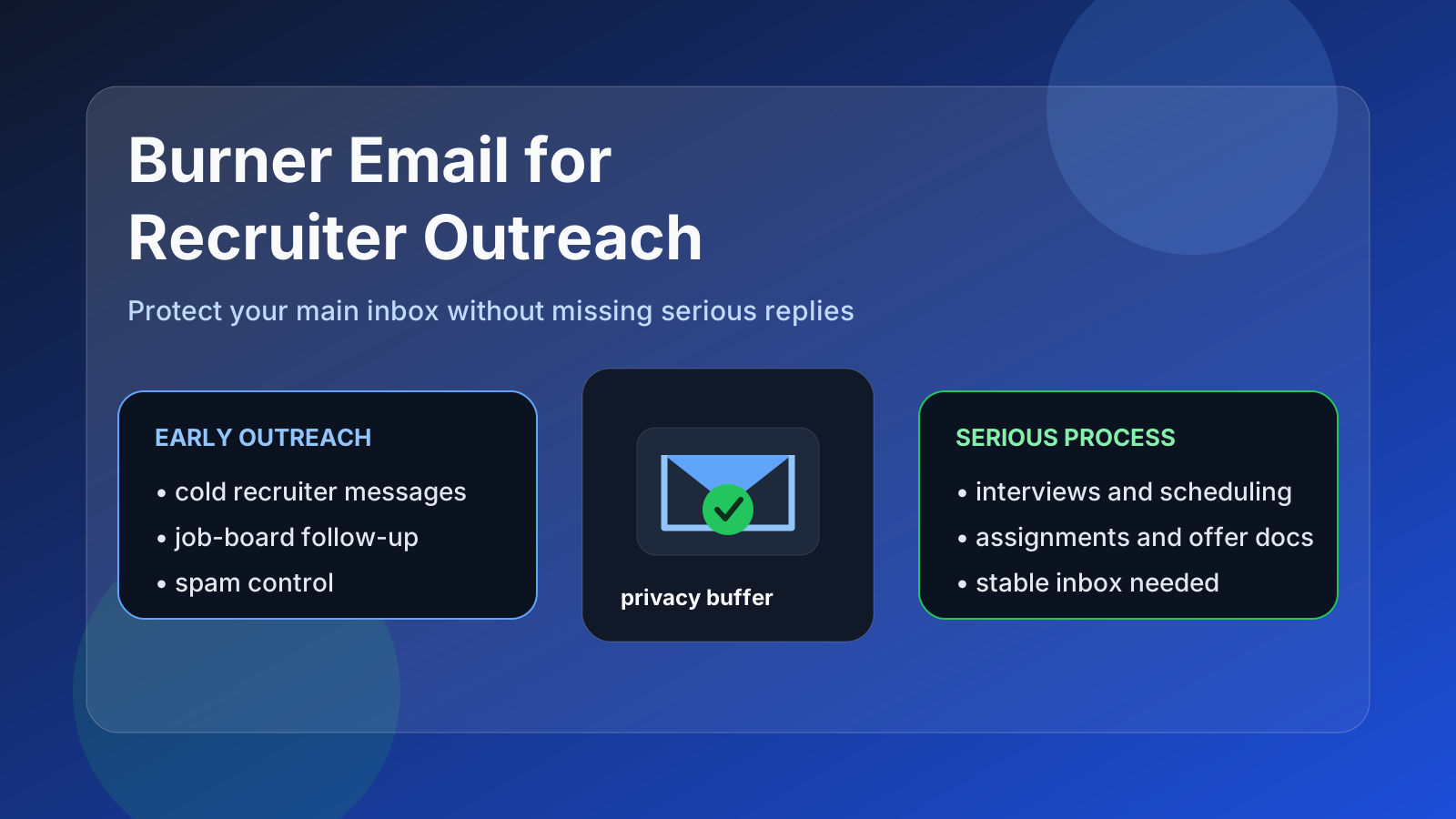
Recruiter outreach lives in an awkward middle zone. It is not as disposable as signing up for a coupon, but it is not as formal as offer paperwork either. A recruiter may send one irrelevant message and disappear, or they may come back with a screening request, a calendar link, a take-home assignment, or a referral opportunity within a day or two. That is why people start wondering whether a burner email is the right tool.
In many cases, it is useful. A burner email keeps your permanent inbox out of recruiter databases, reduces long-tail follow-up, and gives you room to judge whether the sender is legitimate before you expose the address tied to the rest of your life. But burner email works only when you treat it like a controlled contact channel, not like a joke address you forget to check.
Short answer: yes for early outreach, no for the whole process
If you want the practical answer fast, here it is: a burner email is usually fine for cold recruiter messages, talent-network signups, lower-trust job boards, and exploratory outreach. It becomes risky once the conversation turns into real scheduling, multiple back-and-forth replies, interview prep, or offer-stage logistics.
The goal is not to disappear. The goal is to stay reachable for legitimate opportunities while keeping your primary inbox from getting flooded by recruiters, staffing firms, newsletters, sourcing platforms, and future follow-ups you never asked for.
Why job seekers consider a burner email for recruiter outreach
Recruiter outreach creates a different privacy problem than direct applications. With direct applications, you usually know which employer you are dealing with. With recruiter outreach, you may be hearing from internal recruiters, agencies, sourcers, talent communities, resume-database users, and people who barely personalized the message.
That creates a few common reasons to use a burner email:
- Inbox protection: recruiter messages can keep coming for months after you ignore the first one.
- Spam control: once your email lands in multiple recruiting tools, it can spread much farther than you expected.
- Low-trust screening: a burner address lets you verify whether a recruiter is real before you expose your main inbox.
- Quiet job searching: if you are employed, you may want cleaner separation between your job search and your everyday personal accounts.
- Organization: a separate recruiting channel can make it easier to spot which conversations are worth continuing.
That logic is sound. The mistake is assuming that “burner” should mean short-lived, sloppy, or barely monitored. In recruiter outreach, those choices create friction fast.
When a burner email is a good idea
A burner email works best at the top of the funnel, when you still do not know whether the person contacting you deserves ongoing access to your real inbox.
Cold recruiter messages
If a recruiter found you on LinkedIn, GitHub, a portfolio site, or a resume database, a burner email can be a sensible reply channel. It lets you test whether the role, compensation range, and company details are actually worth pursuing.
Job-board and talent-network signups
Some recruiting ecosystems generate far more notifications than value. If you are joining a job board, talent community, or staffing database mainly to see what comes in, a burner email is a strong defensive move.
Exploratory outreach while you are still employed
If you are casually testing the market, you may not want every recruiter note landing beside family email, banking notifications, travel confirmations, and personal recovery messages. Separation alone can make the search feel calmer.
Unclear or low-context recruiter contact
Sometimes the outreach is real but thin. Maybe there is no salary range, the company is unnamed, or the description looks mass-sent. A burner email gives you room to gather more information before investing more trust.
When a burner email is a bad idea
Burner email stops being smart when continuity matters more than separation.
Interview scheduling
If a recruiter is actively coordinating screens, loops, or follow-up questions, you need a mailbox you will monitor reliably. Miss one calendar link or reschedule notice and the privacy win stops mattering.
Assignments and time-sensitive requests
Take-home tasks, coding tests, portfolio reviews, and document requests often arrive on short timelines. If your burner inbox is unstable or buried, you risk looking flaky for a preventable reason.
Offer-stage communication
Once compensation, benefits, start dates, or background-check instructions enter the conversation, the right move is usually a stable long-term inbox. Serious hiring steps need predictable access and searchable records.
Any setup you do not actually monitor
This is the biggest failure mode. A burner email that sits unchecked is not a privacy tool. It is a missed-opportunity machine.
Burner email vs temporary email vs alias vs dedicated job-search inbox
These terms get mixed together, but they solve different problems.
Burner email
Best for limiting exposure during early outreach. It is useful when you want separation and are willing to retire the address later if it becomes noisy.
Temporary email
Best for very short-lived or low-trust interactions. For recruiter outreach, fully temporary inboxes can be risky if replies arrive days later.
Email alias
Best for hiding your base inbox while preserving stable forwarding and reply continuity. In many recruiter-outreach cases, an alias is safer than a truly disposable address.
Dedicated job-search inbox
Best for active searches, multi-stage processes, and any situation where you expect real back-and-forth. It offers the strongest balance of professionalism and reliability.
If you use Anonibox, the most practical workflow is often staged: use a privacy-first address for noisy early contact, then graduate to a stable alias or dedicated inbox once the thread becomes meaningful.
Will recruiters see a burner email as unprofessional?
Sometimes they might, but not because they are offended by privacy. The real issue is whether the address looks sketchy, unstable, or hard to trust.
Most legitimate recruiters care about four things:
- Do you reply within a reasonable time?
- Does the address look calm and readable?
- Will the thread still work next week?
- Can interview coordination happen without weird friction?
If the answer is yes, many recruiters will not care that you protected your main inbox. What hurts you is an address that looks unserious, expires too fast, or forces you to keep changing channels mid-conversation.
How to use a burner email for recruiter outreach without hurting your chances
1. Keep the address professional
Avoid joke handles, slang, or anything that looks obviously disposable. A calm format based on your name, initials, or target role works better than something random and noisy.
2. Use it at the beginning, not forever
Start with the burner email when trust is low. If the recruiter proves legitimate and the role looks real, move the conversation to a more stable inbox before scheduling or offer-stage details pile up.
3. Check it like it matters
If you are open to recruiter conversations, review the inbox daily. Silence makes you look unavailable, not private.
4. Save important details outside the inbox
Do not let job descriptions, compensation notes, interview times, and recruiter names live only in a disposable mailbox. Save anything important where you control it.
5. Do not over-explain the switch
If you decide to continue from a stable inbox, you can simply say you prefer to use another address you monitor more closely. That sounds normal because it is normal.
Red flags where a burner email is especially useful
- The recruiter will not clearly identify the employer or client.
- The outreach looks mass-sent and barely relevant.
- You are being pushed quickly toward WhatsApp, Telegram, or another off-email channel.
- The sender wants personal documents before a normal screening process.
- The role promises unusually high pay with very little verification.
In those cases, a burner inbox gives you breathing room while you verify the opportunity. It is not a guarantee of safety, but it does reduce unnecessary exposure while you decide whether the conversation deserves more trust.
Common mistakes to avoid
- Using a truly short-lived inbox: recruiter replies are often delayed.
- Switching addresses too often: changing channels repeatedly can confuse people and break thread continuity.
- Replying too slowly: privacy is not helpful if it makes you miss real screens.
- Using the same burner forever: if the address gets noisy, retire it and move on deliberately.
- Assuming privacy means trust is solved: you still need to verify the recruiter and role independently.
A quick decision checklist
Use a burner email for recruiter outreach if most of these are true:
- You are still in the early, low-trust stage.
- You want to protect your main inbox from long-tail recruiter spam.
- You can keep the address active and monitored.
- You are willing to move to a stable inbox if the process becomes real.
Skip the burner approach if most of these are true:
- You are already interviewing.
- You expect time-sensitive scheduling.
- You tend to forget secondary inboxes.
- You need a long-lived record of every thread.
Final answer
Yes, you can use a burner email for recruiter outreach, and in many early-stage situations it is a smart privacy move. It helps reduce spam, keeps low-trust outreach away from your main inbox, and gives you more control over who gets your long-term contact details.
Just do not confuse a burner email with a throwaway you can ignore. Recruiter outreach can become serious quickly. Use the burner address to filter the noisy part of the process, then move to a stable inbox once the conversation is real enough that missing a reply would cost you something important.