Usually no—not for the full scholarship process. A burner email can help with low-trust scholarship newsletters or one-off information requests, but it is risky for real scholarship applications because deadline reminders, document requests, portal notices, and award updates can arrive weeks or months later.
If you want privacy without missing something important, a separate long-term email is usually safer than a disposable or burner inbox. The smartest setup is to use a burner address only for early research, then switch to a stable application email before you submit anything that matters.
Scholarship applications often look simple at first: fill out a form, upload an essay, maybe answer a few eligibility questions, and wait. In practice, though, many scholarship programs involve a longer chain of communication than applicants expect. You may get confirmation messages, follow-up questions, reminder emails, requests for transcripts, recommendations, proof of enrollment, interview scheduling, or instructions for accepting an award. That is why email reliability matters more here than it does for casual sign-ups.
So, should you use a burner email for scholarship applications? For most serious applications, the answer is probably not. But there are a few situations where a burner address can still be useful, especially in the early discovery stage. The key is understanding where privacy helps and where it starts creating unnecessary risk.
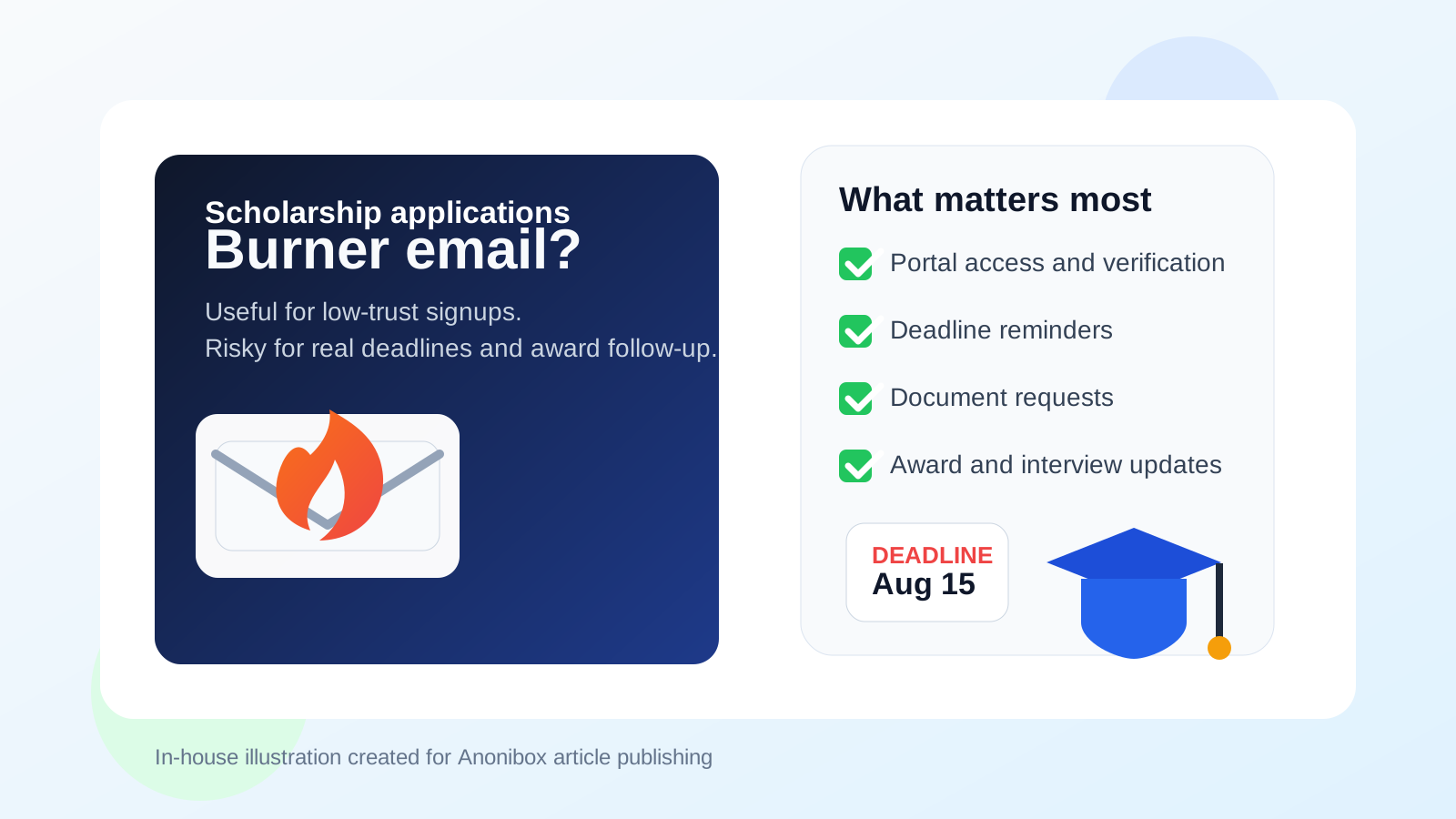
Why students consider a burner email in the first place
The motivation is understandable. Scholarship hunting can generate a lot of email from list sites, college-marketing funnels, scholarship directories, lead forms, and “student opportunity” newsletters. Some sites are helpful. Others exist mostly to collect contact information and keep sending promotional messages. If you use your main personal inbox for every scholarship-related click, your normal email can get noisy fast.
A burner email feels like an easy fix because it helps you:
- avoid long-term spam from sketchy scholarship list sites
- keep your main inbox cleaner during research
- test low-trust forms without exposing your everyday address immediately
- separate browsing activity from real applications
That logic is reasonable. The problem is that a real scholarship application is usually not just a single verification step. It is a process, and processes need continuity.
Why burner email is risky for real scholarship applications
1. Scholarship timelines are often longer than you think
Some scholarships close in a week. Others take months from submission to final decision. During that time, organizers may send reminders, eligibility checks, missing-document notices, and decisions at irregular intervals. A burner inbox that expires, becomes hard to monitor, or gets lost in a pile of other throwaway addresses can easily cause problems.
2. You may need to respond to follow-up requests quickly
Many scholarship teams do not send dozens of messages. They send one important message and expect you to see it. That could be a request for a transcript, a financial document, a recommendation letter, a short interview slot, or a clarification about your application. Miss that one message and the application can quietly die.
3. Award acceptance and verification often happen by email
Even after you “win,” the process may not be over. You may need to confirm enrollment, provide mailing details, verify bank or payment instructions through an official portal, or accept the scholarship by a deadline. A burner address is a weak place to anchor something that important.
4. Some burner addresses look unprofessional or low-trust
This is not about pretending scholarship committees are judging your worth by your inbox provider. It is about avoiding friction. If your email address clearly looks disposable, unusual, or temporary, a reviewer or administrator may wonder whether it will stay active long enough for follow-up. Even if that concern is not fatal, it can make communication less smooth.
When a burner email can still make sense
There are situations where using a burner email is practical and low-risk:
- Browsing scholarship directories: when you want to view gated lists or download a guide from a site you do not fully trust yet.
- Joining generic student offer newsletters: especially if you expect marketing-heavy follow-up.
- Testing whether a site is legitimate: before deciding whether to share your real long-term contact details.
- One-off information requests: if you are asking for a brochure or overview and not starting a real application yet.
In other words, a burner inbox can be useful for the research layer of scholarship hunting. It is much less suitable for the application layer.
What works better than a burner email?
For most students, the best compromise is a separate dedicated email address for scholarships, college funding, internships, and related opportunities. That gives you privacy and organization without the fragility of a disposable inbox.
A separate scholarship email works well because it lets you:
- keep scholarship traffic out of your main personal inbox
- monitor one place consistently for deadlines and updates
- use a professional-looking address for formal communication
- search old messages when you need portal links or prior instructions
- retain access throughout long review and payout timelines
If you like the idea of aliasing or masked addresses for privacy, those can also be safer than a pure burner inbox when they forward into an account you control reliably. The most important thing is not the branding of the address. It is whether you can count on receiving and finding important messages months later.
A practical way to use burner email without sabotaging your application
If you still want the privacy benefits of burner email, use it in stages:
Stage 1: research and filtering
Use a burner address for scholarship directories, lead-gen forms, or low-trust sites that promise “exclusive opportunities” but mostly seem built to collect student contact information.
Stage 2: legitimacy check
Before submitting any real application, verify the scholarship source. Look for a credible organization, official website, clear eligibility rules, real contact details, past award history, and a transparent process.
Stage 3: switch to a stable address before applying
Once you decide a scholarship is real and worth pursuing, move to a dedicated long-term email you check regularly. That way the important communication happens in an inbox you will still control later.
Stage 4: archive key messages
Keep a folder or label for submitted scholarships. Save confirmation emails, deadlines, portal links, and document-request messages so you do not have to dig through everything later.
This staged approach is where a tool like Anonibox can be helpful: not as the permanent home for a high-stakes application, but as a privacy buffer while you sort real opportunities from noisy ones.
Signs you should not use a burner email for this scholarship
If any of the following are true, switch to a stable email before you go further:
- the application involves essays, transcripts, recommendations, or financial documents
- the organizer may contact finalists or winners over a long period
- there is an applicant portal you may need to revisit later
- the scholarship could require identity or enrollment verification after selection
- the award is meaningful enough that missing one message would really hurt
That last point matters. If the scholarship is important to you, do not build the application around an email address designed to be temporary.
How to protect privacy without missing scholarship emails
You do not need to choose between total exposure and total disposability. A few habits give you a better middle ground:
- Use a dedicated scholarship inbox: separate from family, social, and shopping email.
- Check it on a schedule: daily during active application periods and before major deadlines.
- Create filters or labels: for “submitted,” “needs action,” “awaiting decision,” and “award follow-up.”
- Be selective with sketchy list sites: use burner email there if you want, but do not let those sites become your only record of opportunities.
- Save key dates elsewhere too: calendar reminders beat relying on email alone.
What about scholarship scams?
Privacy concerns are not imaginary. Scholarship scams and lead-harvesting sites are real, which is part of why students look for burner email solutions in the first place. Be cautious if a “scholarship” page:
- guarantees money with almost no eligibility detail
- asks for unusually sensitive information very early
- pushes you to act immediately without explaining the organization
- looks more like an ad funnel than an actual scholarship program
- buries contact details, rules, or deadlines
For those low-trust situations, a burner inbox can absolutely be useful as a first line of defense. Just do not confuse “good for screening” with “good for the full application lifecycle.”
Quick decision checklist
Before you choose which email to use, ask yourself:
- Am I only browsing, or am I starting a real scholarship application?
- Will I need this inbox in a month, two months, or longer?
- Could the organizer send important follow-up requests or award notices?
- Would missing one message cost me the opportunity?
- Would a separate long-term address give me the same privacy with less risk?
If the opportunity is real and meaningful, a stable dedicated email usually wins.
Final answer
So, should you use a burner email for scholarship applications? Usually not for the actual application itself. Burner email is best for early research, low-trust sign-up forms, and spam-heavy scholarship directories. Once a scholarship becomes real, deadlines and follow-up matter too much to depend on a temporary inbox.
The safer approach is simple: use burner email to protect your privacy while exploring, then use a separate long-term email for real submissions. That gives you better control over spam without increasing the odds that you miss a message that could affect funding, interviews, verification, or the award itself.