Usually, no—not as your only long-term inbox. A burner email can help protect your privacy early in the social work school application process, but most applicants are better off using a separate email they can keep for months.
If you use a burner address at all, use it selectively for low-stakes signups or early research. For official applications, recommendation requests, interview scheduling, financial aid messages, and decision updates, you need an inbox you can monitor reliably from start to finish.
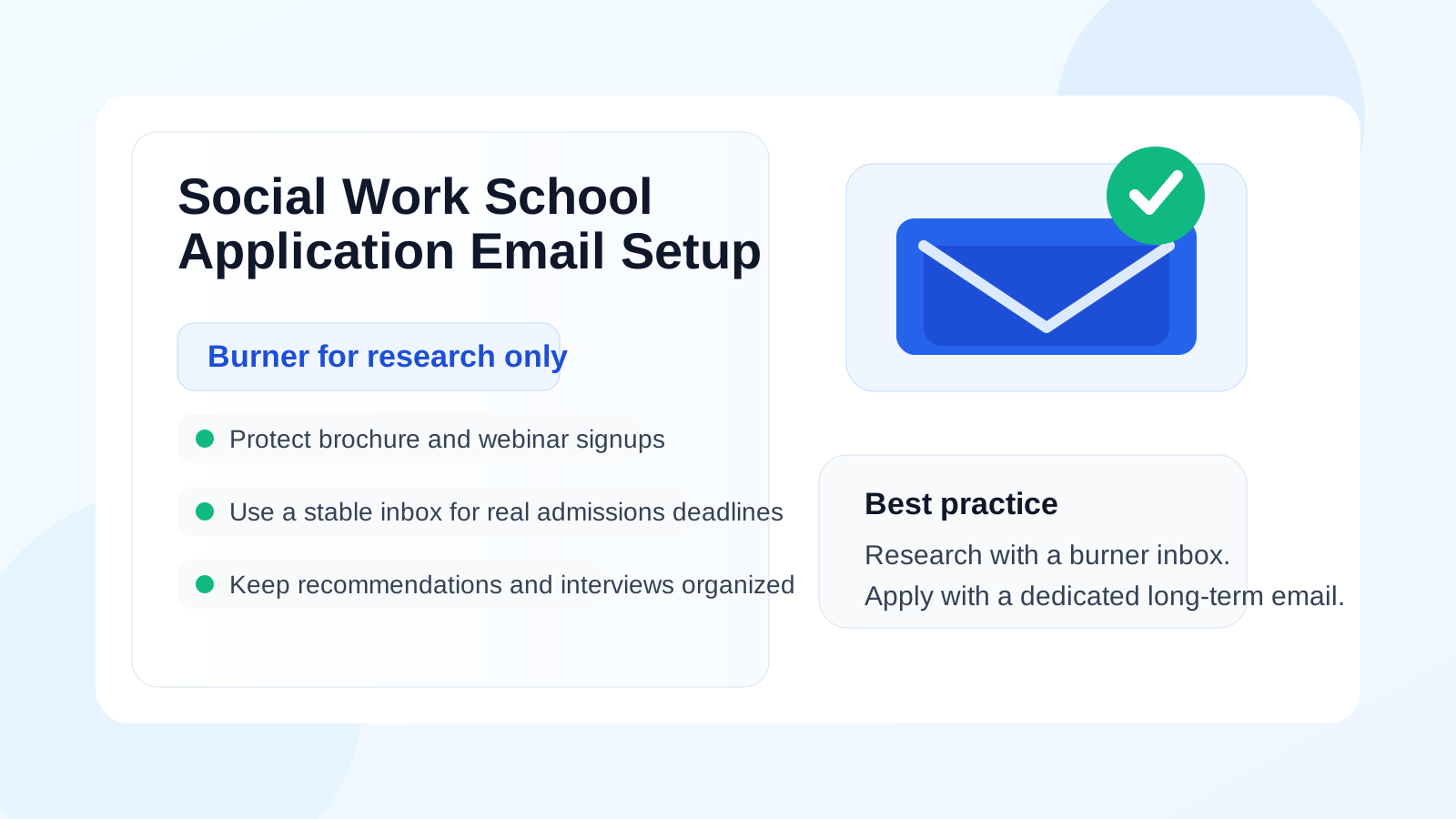
Why applicants even think about using a burner email
Social work school applications can create a lot of email traffic. You might hear from admissions offices, application portals, scholarship programs, information-session forms, test providers, recommendation systems, financial aid teams, and third-party marketing lists after downloading a brochure or attending a webinar.
That makes the privacy question reasonable. Many applicants do not want their personal inbox flooded for the next year just because they explored a handful of programs. A burner email sounds like a clean solution: protect your main inbox, avoid spam, and keep the process separate.
The problem is that social work school applications are rarely a one-day task. They usually stretch across months. That long timeline changes the answer.
Short answer: a burner email is useful for research, risky for the full application
A burner email can work well for things like:
- downloading program guides
- joining a mailing list to compare schools
- registering for a webinar or virtual info session
- testing whether a school will start heavy marketing follow-up
It becomes much riskier when you use it for:
- your main SocialWorkCAS or school-portal login
- recommendation workflows
- interview scheduling
- financial aid and scholarship communication
- waitlist, admission, and deposit deadlines
In other words, a burner email can help during the browsing stage, but it is usually a poor foundation for the formal application stage.
What can go wrong if you use a burner email for official applications?
1. You may lose access when you still need it
Many burner or disposable inboxes are designed for short-term use. That is fine for receiving a one-time verification email. It is not fine when a school sends a follow-up message six weeks later about a missing transcript, interview slot, or deadline change.
Social work admissions cycles can move slowly and then suddenly become urgent. If your inbox disappears, expires, or becomes hard to monitor, you create a problem for yourself at exactly the wrong time.
2. Recommendation and portal workflows can break down
Application systems often send important status messages to the address tied to your account. Recommenders may trigger automated notices. Schools may send portal setup links, reminders, or requests for clarification. If those messages go to an address you do not check consistently, small issues can turn into missed deadlines.
3. You can look harder to reach
Admissions staff are not usually judging applicants for protecting privacy, but they do expect applicants to be reachable and organized. A burner inbox is more likely to create friction if you forget to watch it, fail to whitelist messages, or lose track of where different schools are contacting you.
4. You may solve spam but create deadline risk
That is the real trade-off. The biggest danger is not that schools will be offended. It is that you will miss something important while trying to avoid clutter.
When a burner email actually makes sense
There are still situations where a burner email is genuinely useful.
- Early program research: You want brochures, curriculum overviews, or event reminders without committing your main inbox yet.
- One-off information forms: A school asks for an email before showing a webinar recording or downloadable guide.
- Lead-generation pages: You suspect the form is mainly for marketing follow-up rather than a real application step.
- Broad comparison shopping: You are exploring many MSW or BSW options and want to limit sales-style outreach until you narrow the list.
That is where a tool like Anonibox can be practical. It gives you a layer between your real inbox and early-stage signups, so your personal address does not immediately spread across every list you test. Just do not confuse that with the best long-term setup for submitting real applications.
What is usually better than a burner email?
For most applicants, the strongest setup is a separate dedicated email for the entire admissions cycle. That means one address used only for social work school applications and related follow-up.
This approach gives you the benefits people want from a burner email without the biggest downside:
- your personal inbox stays cleaner
- application messages stay organized in one place
- you keep access for months or years if needed
- you can search one inbox for deadlines, portal links, and scholarship notices
If your email provider supports aliases, an alias can also be useful. But even then, the key idea is reliability. You want privacy and continuity.
Burner email vs. temporary email vs. alias vs. separate email
These terms get mixed together, but they are not the same thing.
Burner email
Best for short-term or lower-stakes use. Good for protecting privacy during research. Risky for a long admissions process.
Temporary email
Usually even shorter-lived than a burner setup. Fine for verification or a quick download. Usually the worst fit for official school communication.
Email alias
Useful when you want separation without creating a totally independent inbox workflow. Often better than a burner for an extended process, as long as you manage it carefully.
Separate dedicated email
Usually the safest choice for actual social work school applications. It is stable, searchable, and easy to keep organized until every decision, scholarship notice, and enrollment task is finished.
The safest practical setup for social work school applicants
If you want a realistic balance between privacy and reliability, this setup works well:
- Use a burner address only for early research such as brochure downloads, interest forms, or webinar registrations.
- Create one dedicated long-term application email before you start submitting forms or opening official school portals.
- Use that dedicated address consistently for SocialWorkCAS, school-specific portals, recommendation requests, and aid communication.
- Check it daily during active application season.
- Create labels or folders for each school so interview and deadline messages do not get buried.
This gives you control without turning your admissions process into a scavenger hunt across multiple disposable addresses.
Good reasons to avoid a burner email for official submissions
- You are applying to multiple schools over several months.
- You expect recommendation requests and follow-up corrections.
- You may receive interview invites on short notice.
- You are waiting on scholarship or financial aid messages.
- You do not want to risk losing access to your portal or message history.
If any of those apply, a stable inbox is worth more than the extra privacy a burner address might provide.
Privacy tips if you do use a burner email during the research stage
If you still want to use a burner email for the early part of the process, a few habits make it safer and more useful:
- Do not use it for your final application account unless you are sure you can keep and monitor it long term.
- Save important information right away if you receive a useful brochure, event link, or contact name.
- Switch to your dedicated application inbox before deadlines start mattering.
- Keep a simple tracking sheet showing which schools have which address.
- Never assume silence means nothing happened; check your official inbox, spam folder, and portals regularly.
Common mistake: using one address for everything until it becomes chaos
A lot of applicants swing between two extremes. They either use their everyday personal inbox for every school, event, and scholarship form, or they go too far in the other direction and try to run a long admissions process from a disposable address.
Neither approach is ideal. The better middle ground is simple:
- use temporary or burner tools for low-stakes exploration
- use a separate permanent inbox for real application activity
That setup is boring, but boring is good when deadlines, recommendation requests, and admissions decisions are involved.
A quick checklist before you choose
- Am I just researching programs, or am I officially applying?
- Will I need this inbox months from now?
- Could I miss an interview or transcript issue if this address becomes inconvenient?
- Do I want privacy from marketing emails, or do I need a durable communication channel?
- Would a dedicated application inbox solve both problems better?
If you answer those honestly, the right choice usually becomes obvious.
Final answer
A burner email can be useful for social work school research, but it is usually not the best choice for social work school applications. The admissions process is too long, too deadline-driven, and too dependent on reliable follow-up.
If you want to protect your privacy, use a burner address for early low-stakes signups and create a separate long-term inbox for the real application cycle. That gives you the privacy benefits people want from disposable email without increasing the risk of missing something important.