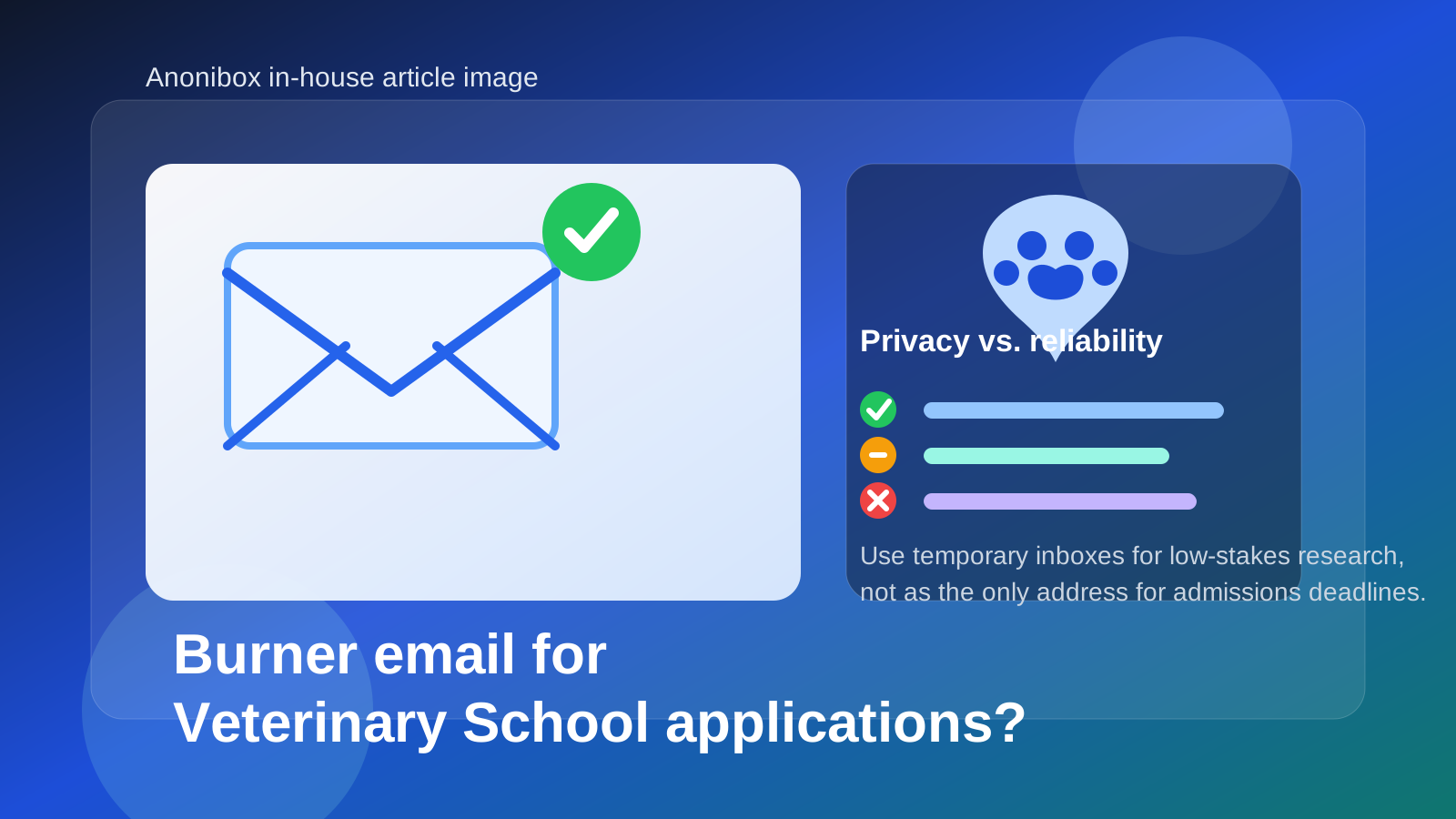
Usually, no—not as the main address on a real veterinary school application. A burner email can protect your privacy during early research, but admissions timelines are too long and too important to trust to an inbox you may lose.
For most applicants, the better move is a dedicated long-term application email or an alias you control. That gives you privacy without risking missed VMCAS updates, supplemental-application messages, interview invites, recommendation reminders, or financial-aid deadlines.
Why applicants even consider a burner email
The instinct makes sense. Applying to veterinary school often means creating accounts, requesting information, joining mailing lists, attending virtual sessions, and sending your details through multiple forms before you know which programs are serious options. If you use your everyday inbox everywhere, your address can end up in newsletter tools, CRM systems, event follow-up campaigns, and long sales-style nurture sequences that outlast the actual admissions cycle.
That is why people search for terms like burner email for veterinary school applications. They want privacy, less spam, and more control. Those are reasonable goals. The problem is that a true burner address solves the privacy problem by creating a reliability problem.
Short answer: a burner email is fine for low-stakes research, but risky for the real application
If all you are doing is downloading a brochure, registering for an information webinar, or testing whether a school keeps sending promotional messages, a burner email can be useful. It keeps that early noise away from your main inbox.
But once you are dealing with actual veterinary school applications, the cost of missing one message becomes much higher. Admissions teams may contact you about document issues, prerequisite questions, fee confirmations, interview logistics, portal access, or next-step deadlines. Those are not the kinds of messages you want tied to an address that might expire, stop receiving mail, or get forgotten because you only meant to use it temporarily.
What can go wrong if you use a burner email for the real application?
1. You miss a time-sensitive message
Application cycles move in bursts. One week may be quiet, and the next may include a portal notification, a request to correct coursework, an interview scheduling email, or a reminder to complete a school-specific form. If your burner inbox is gone, full, or no longer monitored, you may not realize anything is wrong until the deadline has already passed.
2. You create a messy identity trail
Many applicants end up juggling a centralized application account like VMCAS, school-specific supplemental portals, recommendation systems, test-score services, and sometimes scholarship or housing systems. If one part of the process uses a burner email and another uses your long-term inbox, your communications can get fragmented. That increases the odds of confusion, duplicate accounts, and missed follow-up.
3. Recovery becomes harder
Burner email sounds convenient until you need to reset a password, confirm ownership of an account, or prove that you can still access the address used to register. Admissions cycles are long. Even if the original application goes smoothly, you may later need to review older messages, reopen a portal, or verify a prior conversation.
4. It can look less stable if you rely on it too heavily
This is not about pretending schools can detect every temporary inbox. It is about professionalism and continuity. A stable contact address signals that you can reliably receive and respond to important messages over months, not just minutes. That matters more in a high-stakes process than in a casual product trial or newsletter signup.
Where a burner email is reasonable
There are still a few situations where a burner address can help without creating much downside:
- Brochure and mailing-list signups: if you want general information without giving your main inbox to every school immediately.
- Third-party event registrations: especially for one-off fairs, webinars, or list-building forms that are not part of the real application itself.
- Low-trust exploratory research: if you are checking a resource and are not yet comfortable attaching your primary long-term inbox to it.
- Early comparison work: before you have narrowed your target schools and before anything becomes deadline-critical.
Used that way, a burner email is a privacy filter, not your admissions headquarters. That distinction matters.
A better privacy setup than a true burner
If you want privacy without sacrificing reliability, the smarter option is usually a dedicated admissions inbox you control for the full cycle.
Option 1: create a separate long-term application email
This is often the best balance. You get a clean inbox reserved for veterinary school communications, but you keep permanent access to it for as long as you need. That means you can safely use it for VMCAS, supplemental applications, recommendation notices, interview scheduling, waitlist updates, and financial-aid follow-up.
Option 2: use an email alias on an inbox you already trust
If your provider supports aliases, this can work even better. You keep one reliable mailbox, but you can still route admissions mail separately and filter it cleanly. That gives you privacy, organization, and long-term control without the fragility of a burner address.
Option 3: use a temporary inbox only for the earliest outer layer
If you use Anonibox or another temporary inbox service, keep it for the low-stakes front edge of the process: brochure downloads, webinar signups, or cautious first contact. Once a school becomes a real application target, switch to a stable address you can keep.
How to manage your veterinary school application inbox well
Whether you choose a dedicated mailbox or an alias, a few habits will save you trouble:
- Check it every day during busy parts of the cycle. Admissions messages are not always dramatic, but they are often deadline-sensitive.
- Create folders or labels by school. That makes it easier to spot missing threads and compare requirements.
- Whitelist important domains. Add schools, VMCAS, and any required testing or recommendation platforms to safe senders if your provider allows it.
- Save critical emails outside the inbox. Keep a document or spreadsheet with login links, deadlines, and contact names so a single lost thread does not derail you.
- Do not keep switching addresses mid-cycle. The more stable your contact setup, the less likely you are to miss something.
Common mistakes to avoid
Using a burner for the main portal login
If the inbox disappears or stops forwarding, you may lose access exactly when you need it most.
Assuming email is only for marketing
In real admissions workflows, email is operational. It is often how schools handle corrections, interview coordination, reminders, and follow-up after a status change.
Forgetting the timeline is long
Veterinary School admissions are rarely a one-week transaction. Even after submission, the process can stretch across verification, supplemental tasks, interviews, decisions, waitlists, deposits, and program onboarding.
Treating privacy and reliability as opposites
You do not have to choose between “use my personal inbox everywhere” and “use a disposable inbox for everything.” A separate long-term inbox or alias gives you most of the privacy benefit without the fragility.
A quick checklist before you decide
- Am I still in the research phase, or is this part of the real application?
- Will I need this address months from now for login recovery or follow-up?
- Could missing one message hurt my chances or delay my application?
- Would a dedicated long-term inbox solve the same privacy concern better?
- Am I using a burner because it is convenient now, even though it may be inconvenient later?
Final answer
So, should you use a burner email for veterinary school applications? Usually not for the actual application itself. It is a decent tool for early research and low-stakes signups, but it is too fragile for a long admissions process that depends on steady communication.
If privacy matters to you, the best setup is a dedicated long-term admissions inbox or a reliable alias you control. That way you still limit spam and protect your main address, but you do not risk missing the messages that matter most.