Usually yes — a burner phone number can be useful for car dealership quotes when you want to compare prices without putting your everyday number into every dealer form on day one.
But it works best for early-stage quote shopping; once a dealership becomes a serious contender, a stable separate number is usually better than a burner you may stop checking or lose access to.
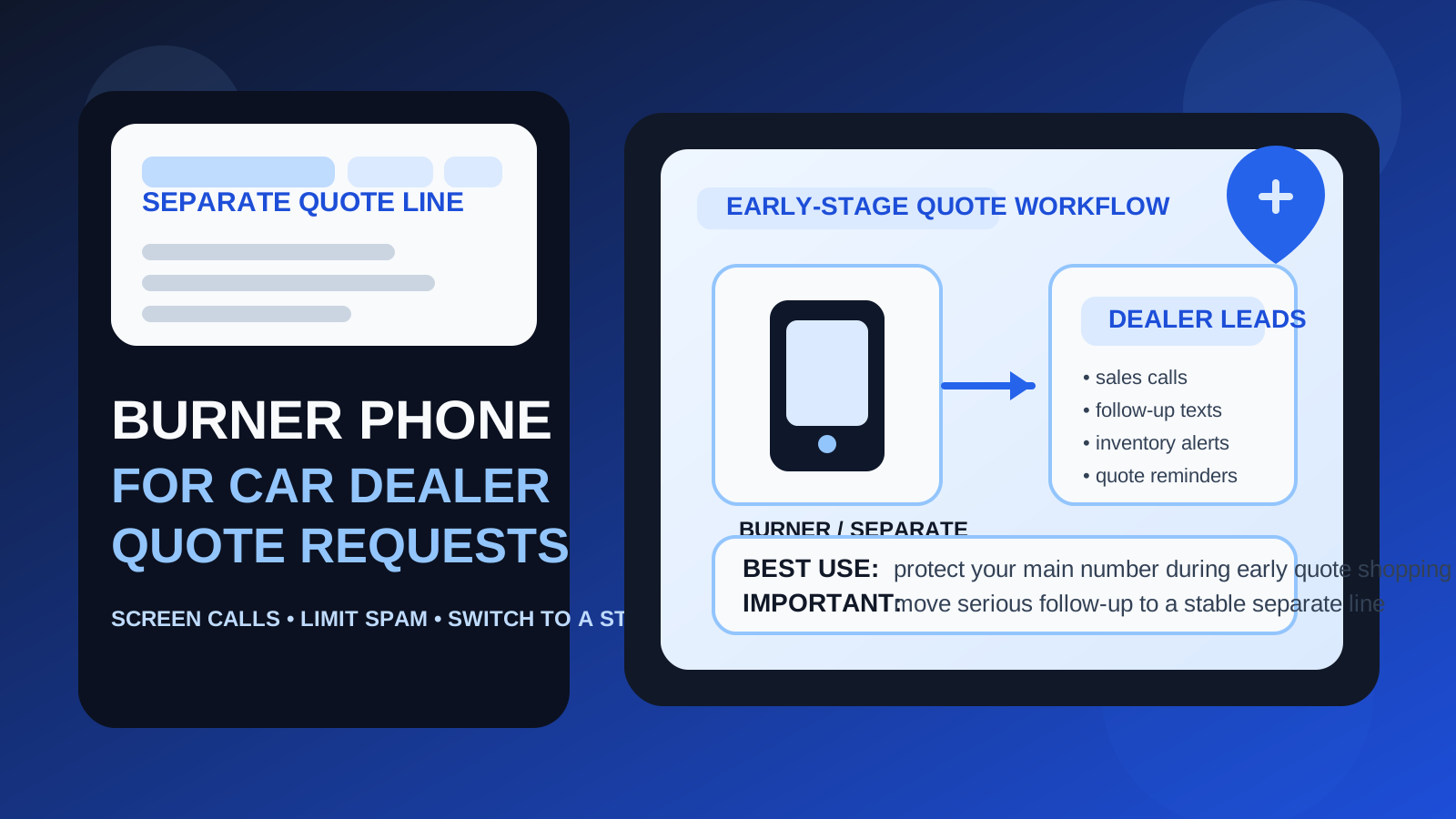
That is the practical answer behind searches for burner phone number for car dealership quotes. People are not asking because they are trying to be mysterious. They are asking because dealership quote requests often create far more follow-up than expected. One form submission can turn into calls from sales staff, automated texts, trade-in prompts, finance check-ins, appointment reminders, and “just circling back” messages that keep arriving well after the shopping phase is over.
A burner number can create a privacy buffer during that first wave. The problem is that car buying is not always a one-message interaction. If the number is too disposable, you may end up missing the exact details you actually needed: a written out-the-door price, a VIN confirmation, a callback about a car you wanted, or a text saying a dealer finally dropped an add-on fee. So the right question is not simply whether a burner number works. It is when it works, how long it stays useful, and when to move to a more durable setup.
Why car dealership quote requests create so much phone traffic
Dealerships rarely treat quote requests as quiet email-only exchanges. Sales teams often want to move quickly, qualify whether you are a real buyer, schedule a test drive, ask about a trade-in, or get you into a financing conversation. Even if all you wanted was a clear written quote, the lead system may still trigger:
- same-day sales calls
- text messages from one or more salespeople
- automated follow-up sequences
- inventory alerts for similar cars
- end-of-month “special offer” messages
- callbacks after you have already bought elsewhere
That does not automatically mean anything dishonest is happening. It is simply how a lot of dealer lead funnels are built. The privacy issue is that your personal number can stay in those systems much longer than your actual interest in any one quote request.
Short answer: yes, but mostly as an early-stage tool
If you are contacting several dealerships and want to keep the first round of outreach contained, a burner phone number can absolutely help. It lets you screen dealer traffic, avoid tying every inquiry to your main line, and decide which stores are worth deeper conversation.
Where people get into trouble is assuming the most disposable number is always the smartest number. It usually is not. The minute the conversation shifts from broad comparison to real shopping, continuity matters. A number that disappears, forwards unreliably, or falls out of your routine can cost you useful follow-up. In other words, a burner helps most when you are still testing the waters, not when you are trying to close on a vehicle.
When a burner phone number makes sense for dealership quotes
1. You are blasting out early quote requests
If you plan to contact five, eight, or twelve dealerships to compare pricing, your phone can get noisy very fast. A burner number creates separation before the noise starts. That alone can make the whole process less irritating.
2. You are using lower-trust lead forms or marketplaces
Sometimes the quote request is on a marketplace, listing aggregator, or third-party form instead of a dealer site you already trust. In those cases, using a burner number for the first interaction can be reasonable. It limits how much early exposure your main line gets while you figure out whether the responses are useful or just pure sales pressure.
3. You mainly want written responses first
A lot of shoppers would rather start with text or voicemail and decide later who deserves a real conversation. A burner number can help you collect those first responses without giving every store equal access to the number you use for family, work, two-factor codes, and everyday life.
4. You want a cleaner exit later
Dealer follow-up does not always stop when your search stops. A burner-style number makes it easier to walk away from the noise than reclaiming your main line after weeks of price-shopping.
Where a burner phone number can backfire
It can be too temporary for a real purchase process
The best quote is not always the first reply. A dealer may text a revised price two days later, call back when a manager approves a discount, or send a reminder before a test drive. If you are using a number you barely monitor or plan to abandon quickly, you may miss the good part of the process.
Useful details often arrive by text
Many shoppers focus on avoiding calls, but texts matter too. A salesperson may send stock numbers, appointment details, fee clarifications, or “that car just came back on the lot” messages by text. A number that is too disposable can make those details harder to track.
It can add friction once a dealer becomes serious
If you have identified two real finalists and are comparing out-the-door pricing, trade-in numbers, or timing, you probably want a channel that feels dependable. That does not have to be your main personal number, but it should be a number you expect to keep using throughout the rest of the process.
Not all burner setups are equally reliable
Some people say “burner number” when they really mean a stable secondary number. Others mean a short-lived disposable line they might never check again. Those are very different tools. For dealership quotes, the more fragile version is often the wrong one.
Burner number vs separate number vs Google Voice
This is where the choice becomes clearer.
Burner phone number
Best for broad early-stage comparison, low-trust forms, and keeping the first wave of outreach off your main line. Good for screening. Less ideal for ongoing negotiation if it is truly disposable.
Stable separate number
Usually the best overall option if you already know you will spend a week or two seriously comparing vehicles. It gives you privacy and organization without the continuity problems that a short-lived burner can create.
Google Voice or similar virtual number
Often the sweet spot for many shoppers. It can feel separate enough for privacy while still being stable enough for calls, texts, voicemail, and follow-up. If you expect real interaction beyond the first round of quotes, this type of setup is often stronger than a pure burner.
Your personal number
It works, but it usually offers the least control. Once it is in multiple dealership systems, you may be dealing with texts and callbacks long after the search is over. For wide quote shopping, that is usually more exposure than you need.
A practical workflow that keeps you protected without missing the good replies
1. Start with a separate number before sending any quote requests
The privacy gain is strongest if you set the boundary at the beginning. If three dealers already have your main number, switching later still helps a bit, but not as much.
2. Use the burner for the first wave only if the shopping is broad or low-trust
If you are just testing dealer responsiveness, a burner makes sense. Think of it as a buffer for the comparison stage rather than a permanent identity for the whole transaction.
3. Save useful details immediately
If a dealer gives you a real quote, a breakdown of fees, a VIN, or an appointment time, document it somewhere outside the number itself. That way you are not depending on one channel to remember everything for you.
4. Move serious contenders to a stable line
When one or two dealerships become real finalists, switch to a dependable separate number if needed. A stable number is better for negotiation, scheduling, and any back-and-forth that could matter over several days.
5. Pair phone separation with email separation
Phone privacy is only half the story. Dealership quote requests often create email follow-up too. If you want the cleanest setup, use a separate inbox alongside the separate number. Some shoppers use Anonibox for early quote forms or lower-trust dealership lead pages so their main inbox does not collect price alerts, inventory updates, and sales drips from every store they contact.
That combination works well: a separate number for calls and texts, and a separate email strategy for everything else.
Red flags a burner number can help you manage
- the dealer refuses to answer basic pricing questions without repeated calls
- multiple salespeople from the same store start contacting you immediately
- the messages shift from useful information to generic pressure
- you get pushed toward a visit before anyone will confirm fees, add-ons, or actual availability
- you receive aggressive contact through several channels after one simple quote request
A burner number does not solve bad dealership behavior, but it gives you breathing room to notice the pattern without letting it take over the phone line you rely on every day.
When a burner phone number is probably the wrong tool
- you are already negotiating seriously with a specific dealership
- you expect appointment reminders and follow-up texts to matter
- you want one dependable channel for the next week or two
- the number is so temporary that you may lose access before the quote cycle ends
- you know you will not actually monitor the burner closely
In those situations, a stable separate number usually beats a burner. The goal is not maximum disposability. The goal is controlled exposure with enough continuity to shop effectively.
A quick decision checklist
- Am I still in broad comparison mode, or am I down to serious finalists?
- Will I actually monitor this number for calls, texts, and voicemail?
- Do I mainly need a privacy buffer, or do I need reliable continuity now?
- Is this inquiry going through a trusted dealership site or a lower-trust lead form?
- Do I also have a separate email strategy for dealership follow-up?
If your answers point toward early exploration and noise control, a burner phone number is a reasonable tool. If they point toward active negotiation and scheduling, a stable separate number is the better fit.
Final answer
Yes, you can use a burner phone number for car dealership quotes, and it is often a smart move for the first round of outreach. It helps you screen dealer follow-up, protect your everyday number, and keep price-shopping from spilling all over your personal phone life.
Just do not mistake “burner” for “best forever.” Once a dealership becomes a serious option, a reliable separate number is usually better than an ultra-disposable one. The smartest setup is usually layered: use a burner or light-touch number to explore, use a stable separate number for real follow-up, and keep your main number out of the process until you are comfortable giving it more access.
That way, you stay reachable for useful quotes without turning your personal phone line into the long-term storage bin for every dealership you contacted during the search.