Usually no. A burner phone number can reduce exposure, but employment verification usually goes more smoothly with a stable, monitored number you control.
Use a burner only if it can stay active long enough to receive callbacks, texts, and voicemail without creating delays; otherwise, a separate long-term number is the better privacy choice.
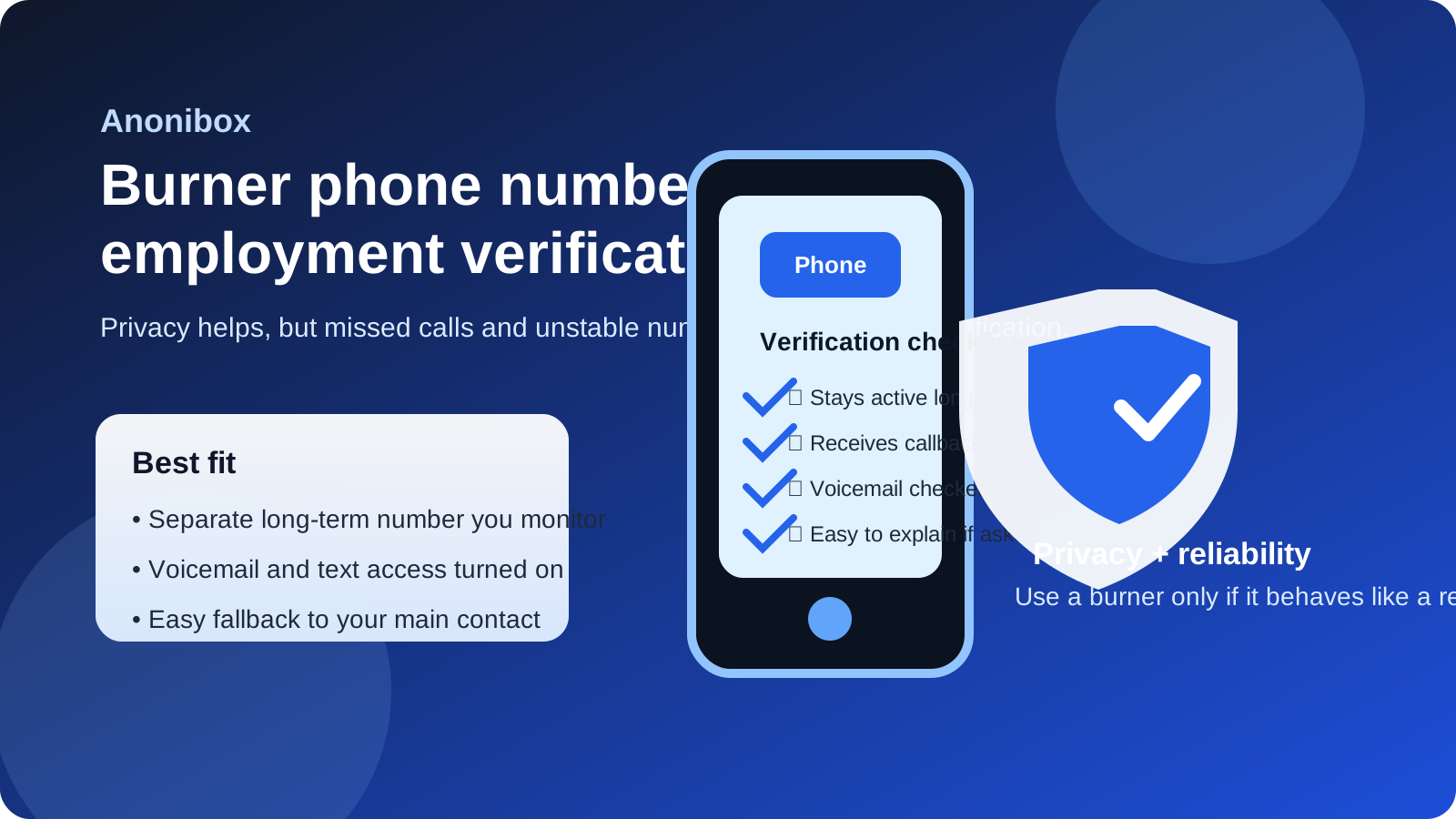
Why this question matters later in the hiring process
Employment verification happens closer to the finish line than most job-search contact decisions. By this stage, an employer, recruiter, background-check provider, staffing agency, landlord, or lender may be trying to confirm dates, titles, or employer details quickly. That means the contact method you share needs to do two jobs at once: protect your privacy and still work reliably when someone legitimate needs to reach you.
A burner phone number sounds appealing because it creates distance between your everyday life and job-search activity. That instinct is not wrong. Many candidates are already trying to keep recruiters, third-party systems, and old application portals away from their main inbox and primary line. But employment verification is not the same as browsing job boards or testing a low-trust listing. At this stage, missed calls, blocked texts, and expired numbers can slow down something that is supposed to confirm a real opportunity.
What employment verification usually involves
Employment verification is not always a long back-and-forth conversation, but it can involve more moving pieces than people expect. Depending on the employer and the verifier, the process may include:
- confirming your current or previous employer
- verifying job title and dates of employment
- matching your contact details to an application or background-check record
- returning a missed call from a recruiter, HR team, or third-party screener
- receiving a scheduling or follow-up text when timing matters
Some verifications happen entirely by email. Others do not. If your number cannot accept calls consistently, hides messages behind app notifications, or disappears before the process ends, you create friction at exactly the moment when you want clean, boring reliability.
Why people consider a burner phone number here
The appeal is easy to understand. Your phone number is personal data, and once it lands in recruiter systems, staffing databases, or outsourced screening tools, it can stay there. People consider a burner because they want more control over who can call later and how much of their real identity trail they expose during a job search.
A burner number can feel useful when you want to:
- avoid giving your main personal number to every hiring-related form
- separate job-search communication from family, friends, and daily life
- limit spam calls and scam texts after a search ends
- keep your current employer or unrelated third parties away from your primary line
Those are reasonable goals. The problem is not the privacy instinct. The problem is using a number that behaves like a short-term trick during a stage that often needs continuity.
When a burner phone number can work
A burner phone number can work for employment verification if it is not truly disposable in practice. In other words, it needs to act like a real contact channel for as long as the verification window stays open. If you control it directly, keep it active, check it every day, and know it can receive legitimate calls and texts, it may be fine.
It is most defensible when:
- the number will stay active for weeks, not hours
- you can reliably receive voicemail and text messages
- you are comfortable answering or returning calls from that line promptly
- you have a clear fallback if a verifier cannot reach you there
- you are trying to protect your main number without disappearing behind a dead end
At that point, you are not really using a burner as a throwaway. You are using it as a controlled secondary number. That is an important distinction.
When a burner phone number is a bad fit
Usually, this is where burner numbers start to fail. Employment verification is often time-sensitive, and a weak phone setup creates avoidable headaches.
1. The number expires too soon
Verification does not always happen on the same day you expect it. An employer can pause internally, a background-check provider can retry later, or HR can come back after a delay. If your burner disappears before that happens, you look harder to reach than you intended.
2. Calls or texts do not arrive consistently
Some temporary or app-based numbers are fine for casual use but unreliable for real-world follow-up. Notifications can be missed, text delivery can vary, and voicemail can be weak or confusing.
3. You stop monitoring it closely
The biggest failure mode is simple: a burner only works if you treat it seriously. If you check it less often than your main phone, forget to return calls, or silence notifications, you trade privacy for delay.
4. The number makes you harder to verify
Sometimes the issue is not suspicion but practicality. A verifier may call twice, leave a message, and move on if the line feels unstable. That can create follow-up friction even when nobody actively objects to the number itself.
Burner number vs. virtual number vs. separate long-term number
This is where many people blur important categories.
- Burner phone number: best thought of as short-life, limited-exposure, and potentially disposable.
- Virtual phone number: can be stable and useful if you control it long term and monitor it like a real line.
- Separate long-term number: usually the safest privacy option for serious hiring steps because it gives you separation without sacrificing continuity.
If your real goal is privacy during employment verification, a separate long-term number is usually better than a true burner. You still keep your main personal line out of more databases, but you do not create the risk that a verifier reaches a number you already stopped caring about.
Practical signs you should not use a burner here
You should probably avoid a burner phone number for employment verification if any of these apply:
- you do not know how long the verification process will take
- the number cannot reliably receive text messages or voicemail
- you only plan to keep it active for a few days
- you already know the employer or screening provider may contact you more than once
- you would be embarrassed or confused if the verifier asked for a better callback number
That last one matters. A privacy setup should make you feel more in control, not less prepared.
How to protect your privacy without breaking the process
If you are privacy-conscious, there are better ways to handle employment verification than relying on a fragile burner.
Use a separate number you actually plan to keep
This gives you distance from your main line without creating a disappearing endpoint. For many people, that is the sweet spot.
Pair it with a separate email workflow
Phone privacy works better when the rest of your contact strategy is organized too. If you are already using a dedicated job-search inbox or a privacy-first tool like Anonibox for early-stage forms and low-trust signups, a separate number complements that setup well. The key is to avoid turning either channel into something so temporary that you miss real hiring communication.
Keep voicemail professional
A plain greeting with your name is enough. If a recruiter, verifier, or HR contact leaves a message, it should be obvious they reached a monitored line.
Respond fast during the verification window
If you choose a secondary number, treat it like your primary line until verification is over. Check missed calls, texts, and voicemail daily.
Red flags that are separate from the burner question
Sometimes people reach for a burner because something about the process feels off. That instinct can be useful. If the employer or recruiter will not identify themselves clearly, wants sensitive documents by text, pressures you to move off official channels immediately, or asks for one-time verification codes, the problem is not just what number you are using. The problem may be that the contact is not legitimate.
No phone setup fixes a scam. A burner might limit exposure, but it does not make unsafe requests safe.
A simple decision framework
Before you give a number for employment verification, ask:
- Will this number still work if verification happens later than expected?
- Can it receive real calls, texts, and voicemail consistently?
- Do I monitor it as closely as I monitor my main phone?
- Am I using it for controlled privacy, or just because it feels easier than planning a better long-term setup?
If the number fails any of those tests, it is probably the wrong tool for this stage.
Bottom line
Usually, you should not use a true burner phone number for employment verification. The privacy benefit is real, but this stage of the hiring process depends on continuity more than distance. A number that expires, gets ignored, or behaves unpredictably can slow down a real opportunity for no good reason.
If you want privacy, the better answer is usually a separate long-term number that you control and monitor carefully, plus a clean email strategy for hiring-related communication. That gives you the protection you want without making yourself harder to verify when the process becomes real.