Usually only if the burner phone number is stable, monitored, and professional enough to handle real follow-up. A truly disposable number is often a poor fit for informational interviews if it can expire, drop voicemails, or make you look hard to reach.
For most people, a separate long-lived job-search number works better than a throwaway line. It gives you privacy without losing the networking value that informational interviews are supposed to create.
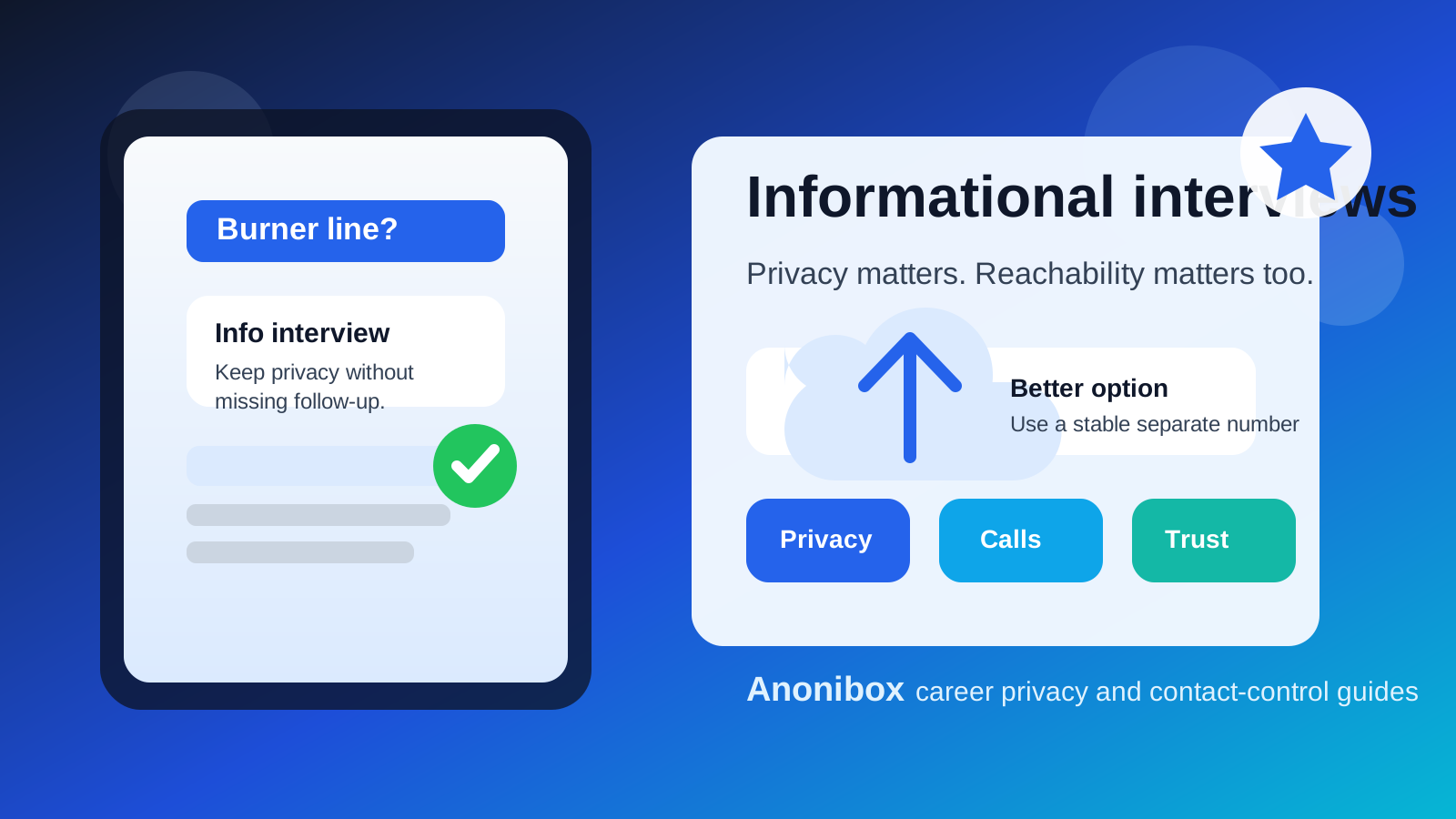
That tension is the real answer behind this question. Informational interviews are not formal job interviews, but they are still professional conversations. You might be talking with an alum, a hiring manager, a recruiter, a founder, or someone in a role you want to move into. The conversation can stay casual, or it can quietly turn into a referral, an introduction, or the first step toward a real opportunity.
Because of that gray area, privacy-minded job seekers often wonder whether a burner number is the safest way to stay in control. The instinct makes sense. You may not want your main personal phone number circulating through cold outreach, networking calls, calendar invites, or professional contacts you barely know. But a burner number only helps if it still lets you communicate like a serious person. If it creates friction, confusion, or missed follow-up, it can work against the whole point of the conversation.
If you already use Anonibox or another privacy-first workflow to keep networking and job-search email separate from your main inbox, the same logic applies here too: separation is useful, but not if it becomes so temporary that you lose important messages or relationships.
Why people consider a burner number for informational interviews
Informational interviews often happen earlier and more broadly than formal interviews. You may reach out to many people over a few weeks while exploring a new industry, testing a career change, or networking quietly while still employed. That creates a few understandable concerns.
- You may not know the contact well: some conversations start with alumni groups, LinkedIn outreach, online communities, or introductions from loose mutual contacts.
- You may be exploring privately: if you are still employed, you may not want your everyday number tied to every networking thread.
- You may be contacting a lot of people: even legitimate outreach can create call and text clutter if every conversation lands on your main line.
- You may want easier boundaries: a separate number can help you decide when to answer, when to pause, and when to retire the line later.
Those are all valid reasons to want distance between your personal life and your career exploration. So the idea of a burner number is not strange. The more important question is what you mean by burner.
Not all burner numbers are the same
People use the phrase burner phone number for different setups, and the difference matters a lot.
- Truly disposable number: a number you expect to abandon quickly after a short campaign or a few signups.
- Temporary secondary line: a number you control for a few weeks or months during a job search.
- Dedicated privacy buffer: a separate number used only for networking, recruiters, and job-search logistics.
The first version is the riskiest for informational interviews. The second and third can work well. Informational interviews do not always end when the call ends. A helpful contact may message you later with a referral, a resource, or a note that a role has opened. If the number disappears too soon, you cut off the benefit of the relationship you just spent time building.
When a burner-style number can be a smart move
There are situations where using a separate privacy-focused number for informational interviews is perfectly reasonable.
You are networking while employed and want more separation
If you are exploring options discreetly, a second number can keep job-search activity off the same line friends, family, banks, and existing work contacts use. That separation can reduce stress and make your search feel more controlled.
You are doing broad outreach
If you are scheduling several conversations across alumni groups, recruiters, hiring managers, and industry contacts, it can be useful to funnel those calls and texts into a dedicated number instead of your daily personal line.
You want cleaner boundaries after the search
Sometimes the main value is not secrecy but cleanup. A dedicated job-search number is easier to mute, filter, or retire later if it starts attracting recruiter spam or stale follow-up.
You are pairing it with a separate email workflow
Some people already keep networking outreach in a separate inbox. A controlled second number can fit naturally into that same system, especially for early-stage conversations where you want organization without oversharing.
When a burner number becomes a bad idea
The biggest problem is not professionalism theater. It is reliability. Informational interviews may look low-stakes, but they often create long-tail follow-up.
- The number expires too quickly: a contact reaches back out a month later and the line is gone.
- Voicemail does not work well: missed calls become dead ends.
- Texts are easy to miss: you forget to monitor the line because it is not your everyday number.
- The setup feels sketchy: some disposable-number tools create trust friction if the contact notices odd voicemail, unstable caller ID, or broken replies.
- You are using it beyond the stage it fits: once a conversation turns into a real referral or hiring lead, a fragile number starts becoming a liability.
That is why a truly throwaway number is usually the wrong model for informational interviews. Unlike a one-time website signup, a professional conversation can generate value over time. If you make yourself too temporary, you undercut the point of networking.
Informational interviews are different from formal interviews
This is where people sometimes apply the wrong rule. A formal job interview often involves tighter timing, more direct scheduling, and greater pressure to be instantly reachable. Informational interviews are usually lighter, but they are also more relationship-based. That means the follow-up window may actually be longer.
A recruiter might need to reach you tomorrow for a real interview slot. An informational contact might not reach back out for three weeks, then send an introduction that matters a lot. A disposable number that feels “good enough for one call” may fail exactly when the relationship starts paying off.
So the standard here is not just Can I receive the first call? It is Will this contact method still make sense if the conversation continues?
A better answer for most people: a stable separate number
If your goal is privacy, the strongest middle ground is usually a separate number that you plan to keep active throughout the search, not a number you expect to burn immediately.
That gives you most of the benefits people want from a burner line:
- less exposure for your main personal number
- cleaner separation between job search and daily life
- easier tracking of calls and texts tied to networking
- the option to step away from the line later if it becomes noisy
But it avoids the biggest downside of a truly disposable setup: lost continuity. You stay reachable long enough for introductions, follow-up questions, scheduling changes, and delayed opportunities.
How to use a burner-style number professionally
If you do use one, a few habits make the setup far more effective.
Keep a real voicemail greeting
A short greeting with your name is enough. If the voicemail is blank, broken, or obviously temporary, the number can feel less credible than it needs to.
Check it consistently
A separate number only works if you treat it as a live communication channel. Missed calls and ignored texts make you look disorganized, even if the privacy logic behind the setup is sound.
Use email first when possible
Many informational interviews can be arranged over email without sharing a phone number immediately. If the contact suggests a call, you can provide the number once the conversation is clearly legitimate and worth continuing.
Move strong opportunities onto durable contact details
If the conversation turns into an active referral, interview process, or longer professional relationship, do not stay stuck in a disposable mindset. It is fine to keep using the separate number if it is stable, but you should be ready to use contact details that will still work later.
Do not use text as the place for sensitive documents
A phone number is for coordination, not for sending personal paperwork, identity details, or anything you would regret leaving in a casual message thread.
When you may not need to share any phone number yet
Another useful answer is that you do not always need to provide a number at the start. Many informational interviews begin perfectly well with email only. If you are cold-emailing someone for a 15-minute chat, you can suggest a time window, exchange a meeting link, and keep the early contact simple.
Phone sharing becomes more reasonable when:
- the person prefers a normal call over video
- you want easier same-day coordination
- the relationship has become credible and ongoing
- there is a real chance the conversation will lead to referrals or hiring follow-up
If none of those apply, email-first is often enough. Privacy is not only about choosing the right number. Sometimes it is about realizing you do not need to share one yet.
Red flags and trust signals to watch
Because informational interviews are looser than formal hiring, you should still pay attention to who is asking for your number and why.
- Good sign: a clearly identified professional contact wants an easier way to coordinate a call.
- Neutral sign: a recruiter asks for a number after a normal email exchange.
- Warning sign: someone pushes hard to move off-platform immediately without giving clear identity details.
- Warning sign: the conversation shifts from advice to pressure, urgency, or unusual requests for personal data.
- Warning sign: the contact wants sensitive documents before any real context is established.
A burner-style number can reduce exposure, but it does not solve trust problems by itself. If the interaction feels off, the answer may be to slow down, verify the person, or keep the conversation on email rather than handing over any number at all.
A quick decision checklist
- Do I know who this contact is and why they want my number?
- Am I trying to protect privacy, reduce spam, or both?
- Is this number stable enough to stay active if the relationship continues?
- Will I actually monitor calls, texts, and voicemail on it?
- Would a separate long-lived number serve me better than a truly disposable one?
- Could I simply keep this conversation email-first for now?
If your honest answers point toward reliability and intentional use, a burner-style number can work. If the setup is flimsy or you know you will stop checking it in a week, it is probably the wrong tool.
Final answer
Yes, you can use a burner phone number for informational interviews, but it is only a good idea when the number behaves like a dependable professional line rather than a one-time throwaway. Privacy matters, especially when you are networking broadly or searching quietly, but so does staying reachable after the first conversation.
For most people, the best choice is a stable separate number instead of a truly disposable one. That approach protects your main phone from unnecessary exposure while preserving the real value of informational interviews: relationships, follow-up, and opportunities that may appear later.