Usually no. A burner phone number is rarely the best choice for job referrals because referrals depend on continuity, quick callbacks, and a number you can keep active through interviews and follow-up.
If privacy matters, a separate long-term number you control is usually better than a short-lived burner line, especially when a referrer is putting their reputation behind your introduction.
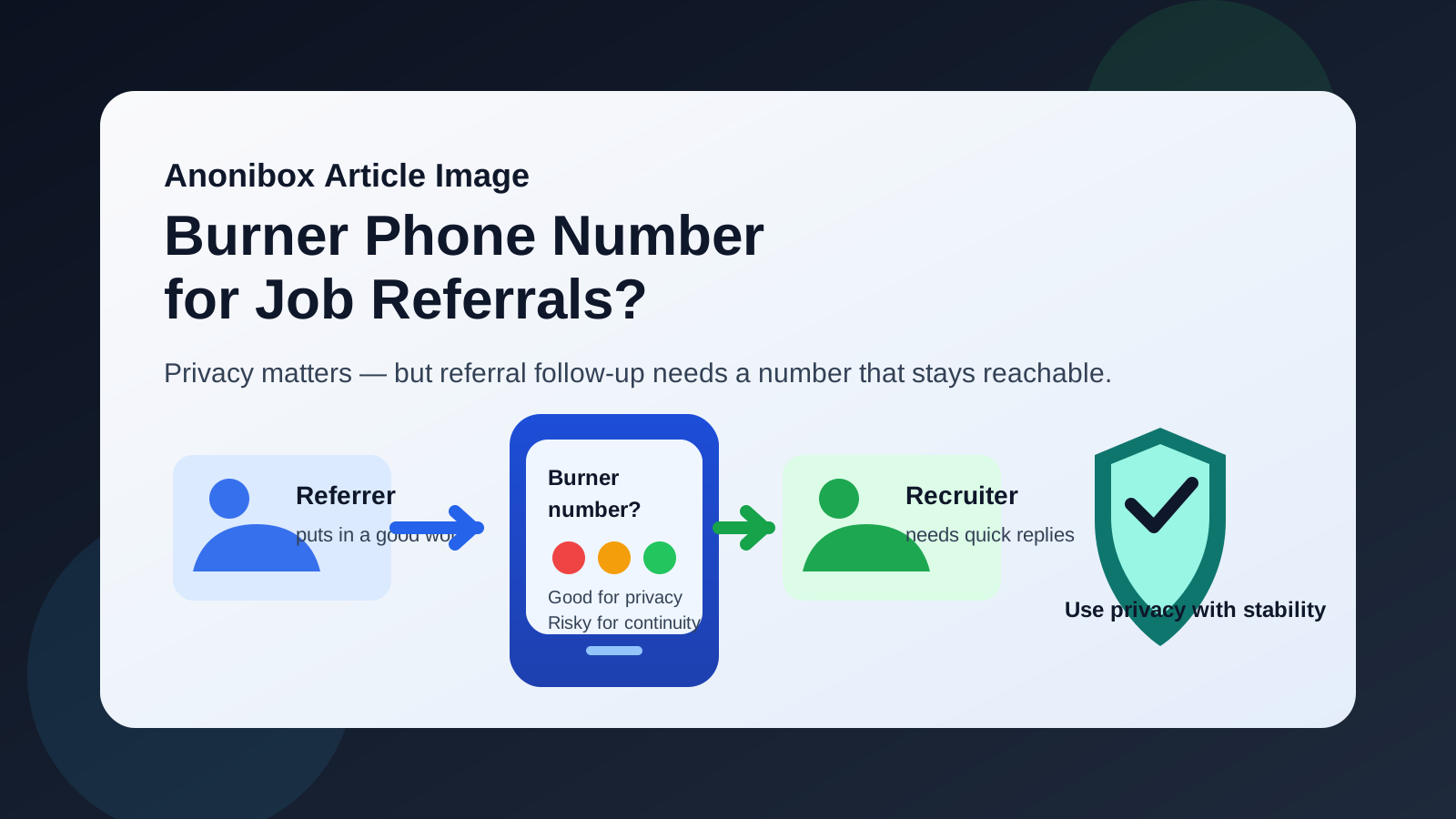
A referral is not the same thing as a cold application on a crowded job board. When someone refers you, there is usually a real person connecting you to a recruiter, hiring manager, or internal team. That changes the stakes. The contact details you share need to support trust, fast communication, and enough stability to survive the next few steps in the hiring process.
That is why the answer to should you use a burner phone number for job referrals is usually more cautious than the answer for early-stage privacy tactics. A burner number can reduce exposure, but it can also create avoidable friction at exactly the moment you want to look organized and easy to reach.
Why referrals are different from ordinary applications
With a public job-board application, you may be trying to limit spam, protect your main contact details, or separate serious leads from low-trust listings. Those are sensible goals. But a referral is already a warmer interaction. Someone is effectively saying, “Talk to this person.”
Once that happens, the company may move quickly. A recruiter might call the same day. A hiring manager may want to confirm your availability. An internal employee who referred you may send a last-minute note asking whether a call came through. If your number stops working, does not accept voicemail, or changes halfway through the process, the problem does not stay private. It spills into the referral itself.
In other words, referrals reward privacy with continuity, not privacy at any cost.
Why people think about using a burner number
The idea is understandable. Job searching can create a lot of phone noise:
- spam calls from résumé databases and scraped profiles
- aggressive third-party recruiters who keep calling after you lose interest
- scam texts pretending to be employers
- concerns about giving your main number to people you do not know well yet
For that reason, some job seekers look at burner numbers the same way they look at temporary email. They want a layer between their personal life and job-search activity. That instinct is not wrong. The problem is that a referral usually is not a one-time verification event. It is the start of an ongoing thread.
That is also where the comparison to email matters. A temporary inbox tool like Anonibox can be useful when you are filtering low-trust signups or keeping early inbound clutter away from your main inbox. A job referral phone number has a different job. It needs to keep ringing, keep taking messages, and keep working when the process becomes more serious.
Where a burner phone number can backfire
1. The number may expire too soon
This is the biggest issue. Many burner-style services are designed for short-term use. That may be fine for a one-off marketplace listing or verification flow. It is a bad fit for a hiring process that can stretch across days or weeks. A referral can turn into a screening call, an interview sequence, a reschedule request, or an offer discussion. If the number disappears before that chain finishes, you create unnecessary risk.
2. Voicemail and callback quality may be weak
Not every alternate number behaves like a stable everyday line. Some have unreliable voicemail, poor call routing, weak text support, or awkward audio quality. Recruiters may only try once before moving back to email or, worse, assuming you are unresponsive.
3. You can look harder to reach than you intended
Most employers will never know that a number is technically “burner.” But they will notice the practical symptoms: full voicemail, messages that never get returned, inconsistent caller ID, or a number that suddenly changes. Those details make you look less available, even if your real goal was simply privacy.
4. Your referrer can get dragged into the confusion
Referrals are relational. If a company cannot reach you, they may go back to the person who referred you. That is awkward. It forces your referrer to troubleshoot your availability instead of simply supporting your candidacy.
5. High-trust opportunities deserve a stable record
Even if most of the process moves by email, phone communication still matters for fast clarifications, schedule changes, and urgent follow-ups. A stable number helps create a consistent trail. A short-term number creates one more thing that can fail.
When a burner number might be acceptable
There are a few situations where a burner-style number can be reasonable, but they are narrower than many people expect.
- You are at the very earliest stage and do not fully trust the source yet.
- You control the number yourself and can keep it active for the entire referral process if needed.
- The line handles calls, texts, and voicemail reliably.
- You are ready to move the conversation to a more permanent number before the process becomes interview-heavy.
Even then, “acceptable” does not mean “ideal.” It just means the risk may be manageable. If the referral is from someone credible and the role looks real, a more durable setup is usually the smarter move.
Better alternatives than a true burner number
Use a dedicated job-search number
This is often the best middle ground. A dedicated number gives you privacy without sacrificing continuity. It can be a second SIM, a long-term virtual number, or another lawful phone setup you fully control. The key is that it should stay active for as long as the hiring process might last.
Use a reliable secondary line with professional voicemail
If you want separation, make the line feel like a real contact channel. Set up voicemail with your name, test inbound calls and texts, and check it consistently. A secondary line that behaves like a normal professional number is far safer than a line you barely trust yourself.
Keep phone privacy separate from email privacy
You do not have to solve every privacy problem with the same tool. Many job seekers benefit from a separate email strategy for early signups and a separate phone strategy for direct communication. The best setup often mixes tools according to risk instead of forcing one disposable solution onto everything.
Best practices if you want privacy during referral conversations
- Test the line before sharing it: call it, leave yourself a voicemail, and send a text.
- Keep it active longer than you think you need: referrals can move slowly, then suddenly speed up.
- Use a clear voicemail greeting: your name is enough.
- Reply quickly when a referral lead reaches out: warm introductions lose momentum fast.
- Tell your referrer if your contact method changes: avoid leaving them in the dark.
- Watch for scams anyway: privacy tools reduce exposure, but they do not replace basic verification.
What not to do
- Do not use a number that may vanish before interviews start.
- Do not rely on a line with weak voicemail or inconsistent text support.
- Do not treat a referral like a throwaway interaction you can revisit later.
- Do not assume privacy is helping if it makes you harder to reach.
A quick decision checklist
Before you share any alternate number for a referral, ask:
- Can I keep this number active through interviews, reschedules, and possible offer follow-up?
- Will it reliably accept calls, texts, and voicemail?
- Would I feel comfortable if a recruiter tried to reach me on short notice?
- If something goes wrong, will it reflect badly on the person referring me?
- Would a stable separate number solve my privacy concern better than a disposable one?
If the number fails any of those tests, it is probably the wrong tool for the job.
Final answer
So, should you use a burner phone number for job referrals? Usually no. It can protect your main number, but referrals depend on continuity, responsiveness, and trust more than one-off anonymity.
If you want privacy, use a separate number that you control long term rather than a short-lived burner line. That approach gives you the boundary you want without making recruiters, referrers, or hiring teams wonder whether they can reliably reach you when it matters most.