Usually, no — a truly short-lived burner phone number is not the best contact number to put on your resume, even if you care about privacy. A resume often circulates for weeks or months, so employers need a number that stays active, sounds professional, and is easy for you to monitor.
If you want more separation from your personal line, the better move is usually a stable job-search number rather than a disposable one. Here is when a burner number can help, where it goes wrong, and what to use instead.
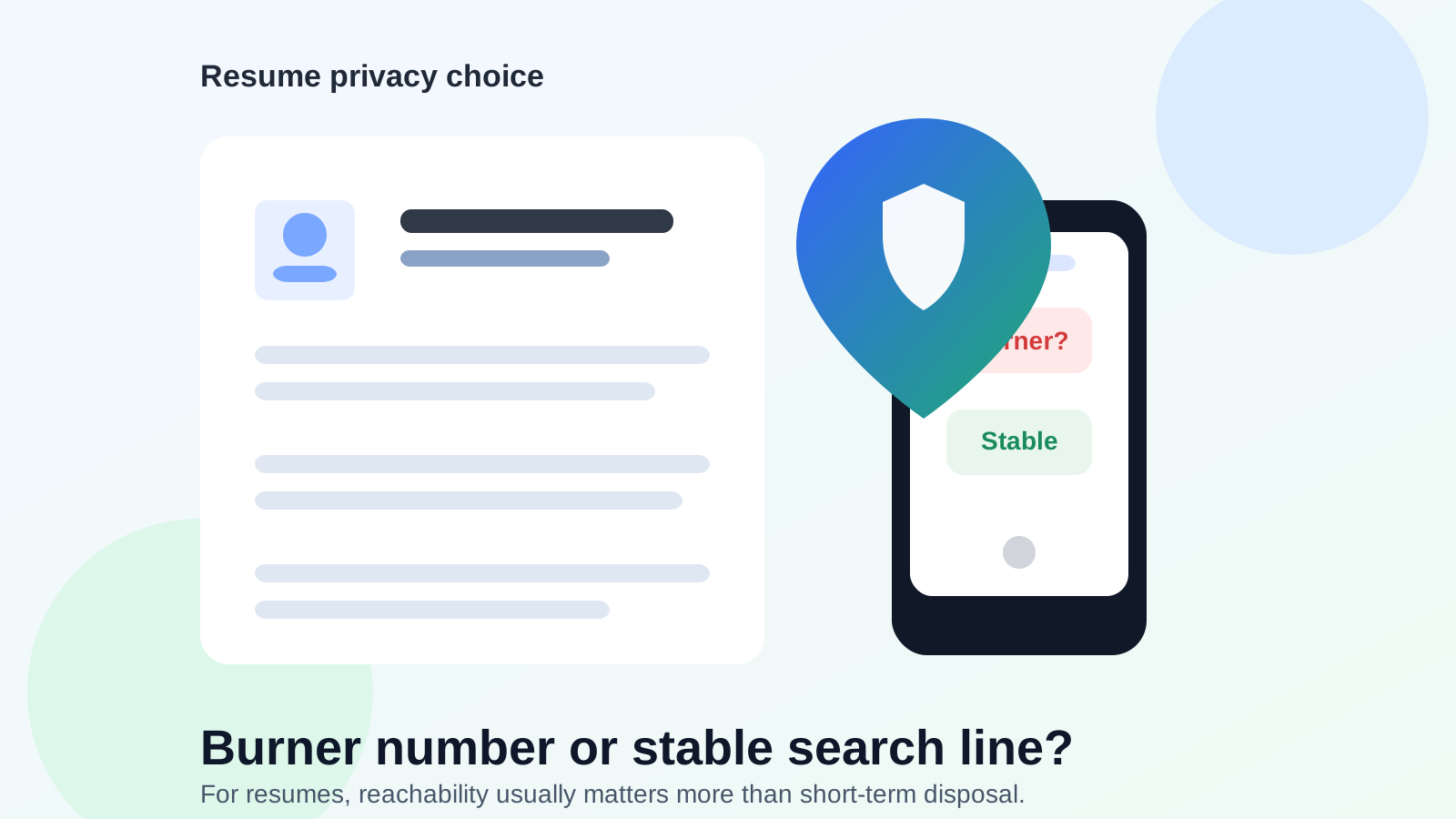
Why this question matters on a resume
A resume is not a one-time message. It gets uploaded to job boards, attached to application forms, saved in applicant tracking systems, forwarded between recruiters, downloaded by hiring teams, and sometimes reopened long after you sent it. That longer life changes the risk calculation.
A burner phone number sounds attractive because it creates distance between your job search and your everyday life. If you have ever dealt with spam calls, vague recruiter texts, or random follow-ups from jobs you already forgot about, the appeal is obvious. But privacy only helps if it does not break reachability.
That is the real tradeoff. Employers do not care that you used a “privacy-first” workflow. They care that when they call to schedule an interview, the number works, the voicemail sounds credible, and you respond like someone who is ready to move forward.
What people usually mean by a burner phone number
In practice, most people use burner phone number to mean a temporary or semi-disposable number they do not plan to keep forever. That could be a prepaid line, a short-term virtual number, or another secondary number they intend to discard after a narrow use case.
That definition matters because a resume needs more stability than a one-off form or quick inquiry. A number that is perfect for screening a few marketplace calls or verifying a single account may be a bad fit for a hiring process that stretches across several rounds, reschedules, and follow-up questions.
Why a burner number feels appealing in a job search
- Privacy: you do not want your main number spread across job boards, recruiters, staffing firms, and third-party application systems.
- Spam control: you want random calls and texts to land somewhere other than your primary personal line.
- Clearer boundaries: some people do not want job-search traffic mixed with family, banking, medical, or two-factor authentication calls.
- Easy cleanup later: a temporary number sounds convenient if you want to shut the door on recruiter noise after the search ends.
Those are all reasonable goals. The problem is not the desire for separation. The problem is using a number that may disappear too soon or look unreliable at exactly the moment a serious opportunity appears.
Why a burner phone number on your resume often creates problems
1. Your resume may outlive the number
This is the biggest issue. You may send a resume today and get a response six weeks later. Recruiters revisit old candidates. Hiring managers reopen searches. Internal teams pass documents around. If your number is already inactive, you may never know an employer tried to reach you.
Email can usually absorb some delay because messages wait for you. Phone outreach is different. A missed call might lead to voicemail, a text, or no second attempt at all. If the number no longer works, the opportunity can vanish quietly.
2. A disposable number can look disorganized
Most employers will not know you are using a burner number on purpose, but they will notice the practical effects of a weak setup: missed calls, no voicemail, generic voicemail, delayed replies, poor call quality, or texts you do not check often. Those small signals can make you look less reachable than another candidate who is simply easier to contact.
3. It adds one more thing to forget
Job searches already require tracking applications, inboxes, interview times, deadlines, and follow-ups. If your temporary number is not forwarded properly, not logged into on every device, or not checked consistently, it becomes another failure point. Privacy tools only help when your workflow is tighter, not looser.
4. Some hiring steps are time-sensitive
Not every employer communicates slowly. A recruiter may call to confirm a time slot, ask whether you are still interested, or move you into the next round quickly. If your number is unstable, muted, or half-abandoned, you may miss the narrow window when they are actively scheduling.
5. You may solve the wrong problem
Many job seekers do not actually need a disposable number. What they need is a separate number. Those are not the same thing. Separation helps you protect privacy while staying reachable. Disposal helps you cut off access quickly, which is useful later, but risky too early.
When a burner number can work
A burner number can work if you are using the term loosely and the number is still stable for the full expected job-search period. For example, it may be good enough when:
- you plan to keep the number active for the entire search, not just a few days;
- it supports reliable voicemail and text messages;
- you monitor it as carefully as your main line;
- you are using it mainly to protect your primary number from broad resume distribution;
- you can keep it alive through interviews, rescheduling, and offer-stage follow-up if needed.
At that point, though, the number is acting less like a true burner and more like a dedicated job-search line. That is usually the better way to think about it.
Better alternatives than a disposable burner line
Use a stable separate number
The best option for many people is a dedicated secondary number that you control long-term for the duration of your search. It keeps recruiter traffic off your main line without risking that the number disappears before someone serious calls back.
Use a reputable virtual number you plan to keep active
A long-term virtual number can be practical if it handles calling, voicemail, and texts cleanly. The key is not whether it is “virtual.” The key is whether it is dependable and whether you will still be checking it when your resume resurfaces later.
Pair number separation with email separation
Phone privacy works best when it is part of a bigger job-search organization system. If you are already keeping job applications out of your personal inbox with a dedicated email workflow or an Anonibox address for early-stage signups and lower-trust forms, pairing that with a dedicated phone line makes your whole search easier to manage.
Use your main number if your search is narrow and low-risk
If you are applying only to a few known employers and not posting your resume broadly, your normal number may be completely fine. You do not need a second system just because one exists.
How to decide whether a burner number is too temporary
Ask yourself these questions before you put the number on your resume:
- Will this number still be active in two or three months?
- Can it receive both calls and texts reliably?
- Do I have a professional voicemail set up on it?
- Will I notice a recruiter message quickly?
- Am I using this for privacy separation, or because I plan to abandon it soon?
If your honest answer is that the number may disappear, may go unchecked, or is only meant for a very short burst of activity, it probably does not belong on a resume.
Best practices if you still use one
If you decide to use a burner-style number anyway, make it behave like a professional contact line:
- Keep it active for the full search. Do not shut it down the week after sending applications.
- Record a simple voicemail greeting. Your name and a polite callback prompt are enough.
- Check texts and missed calls daily. Especially during active interview periods.
- Forward or sync it properly. If the number lives in an app, make sure notifications actually reach you.
- Test it yourself. Call it, text it, leave a voicemail, and confirm everything works before using it on a resume.
Those habits matter more than the label. A “burner” number that is stable, monitored, and polished is far safer than a casual secondary number you barely remember to open.
Red flags that mean you should not use a short-lived number
- You are applying broadly and expect replies to arrive over several months.
- You are working with multiple recruiters who may contact you unpredictably.
- You are entering final-round interviews, reference checks, or offer-stage logistics.
- You already know you will stop paying for or checking the number soon.
- You need one contact line that employers can trust for the full process.
In those situations, a short-term burner line creates more risk than benefit. The privacy gain is real, but the missed-opportunity risk is bigger.
A quick example
Imagine two candidates who both want privacy. One uses a true burner number for a week, then stops checking it after sending twenty resumes. The other uses a separate long-term search number with voicemail and text notifications. Three weeks later, a recruiter calls both. One candidate never sees the message. The other gets the call, returns it the same day, and schedules a screen. That is the difference between disposal and dependable separation.
Final answer
Using a burner phone number on your resume is usually not the best move if the number is genuinely temporary. A resume can keep circulating well past the moment when a disposable number feels convenient, and missed calls or dead lines can cost you real opportunities.
If you want privacy, the smarter approach is usually a stable separate job-search number paired with good voicemail, regular monitoring, and a clean email workflow. That gives you the boundary you want without making yourself harder for legitimate employers to reach.