A custom domain email can be a strong choice for recruiter outreach if you own it, keep it stable, and use a simple address recruiters can trust at a glance.
Yes — for many job seekers, a custom domain email is a smart middle ground between giving out a primary personal inbox everywhere and relying on a temporary address that is too disposable for real recruiter conversations.
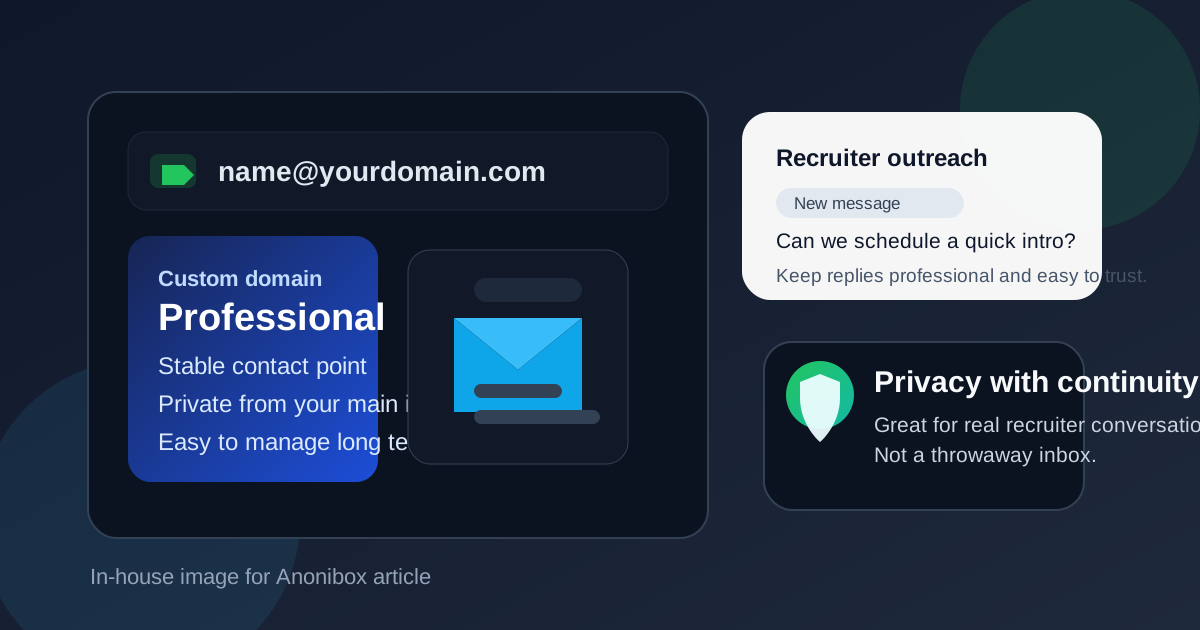
That balance matters because recruiter outreach sits in an awkward space between low-trust cold contact and high-stakes career communication. Some recruiter messages are thoughtful, relevant, and worth answering quickly. Others are broad sourcing blasts, thinly described contract roles, or messages that feel more like database churn than a real opportunity. If you are open to opportunities, you need a contact method that feels professional, protects your privacy, and stays dependable long enough for a real conversation to develop.
A custom domain email can do that well. It gives you more control than a years-old all-purpose personal inbox, but it still looks stable enough for screening calls, scheduling threads, résumé follow-up, and serious replies. The catch is that it only helps if the setup is clean. If the domain feels gimmicky, the forwarding is fragile, or the address is tied to a side project that confuses people, the same tool that should make you look organized can create unnecessary friction instead.
Why this question matters specifically for recruiter outreach
Recruiter outreach is different from applying directly on a company careers page. When you apply yourself, you usually know the employer, the role, and the form you are filling out. When a recruiter reaches out first, the trust level is often lower. You may not know whether the person is an internal recruiter, an agency recruiter, or someone working from an old résumé database. You may not know how widely your email will circulate after the first reply either.
That creates three common problems:
- Inbox spread: once one recruiter has your address, more recruiter traffic often follows.
- Mixed quality: good opportunities and low-quality outreach land in the same channel.
- Long-tail follow-up: even after you stop looking, recruiter messages can keep resurfacing for months.
A custom domain does not solve all of that by itself, but it gives you a dedicated professional lane for that kind of traffic. That alone can make recruiter outreach easier to manage.
What recruiters actually notice about a custom domain email
Most recruiters do not care that you use a custom domain because it is technically fancy. They care about simpler things:
- Does the address look like it belongs to a real person?
- Is it easy to read and reply to?
- Does it feel stable enough for ongoing communication?
- Will replies, calendar links, and attachments reach you without trouble?
- Does the domain create trust or confusion at first glance?
If your custom domain passes those tests, it will usually be fine. If it fails them, the fact that you own the domain does not rescue it.
When a custom domain email is a strong choice for recruiter outreach
1. You want a separate recruiter-facing inbox without looking disposable
This is the biggest advantage. A custom domain can give you a clean separation from your daily personal inbox while still looking permanent and intentional. That matters if you are currently employed, passively open to opportunities, or simply tired of recruiter traffic living next to receipts, family messages, and account security alerts.
2. You expect recruiter volume over a long search
If you are on LinkedIn, in talent communities, or visible in several hiring databases, recruiter messages can pile up fast. A custom domain address lets you contain that activity in a dedicated inbox that still works for months, not just for one signup.
3. You care about long-term control
One of the best parts of a custom domain is portability. If you ever change mailbox providers, the visible address can stay the same as long as you still control the domain. That continuity can be genuinely useful during a job search. Recruiters do not have to relearn a new address just because you changed the underlying service.
4. Your address looks clearly human and professional
A simple format such as your name on a personal domain can feel calm and credible. It is not about impressing recruiters. It is about removing friction. The more ordinary and readable it looks, the better it usually works.
When a custom domain email is the wrong default
It is tied to your current employer or client work
If the domain belongs to your current company, your freelance business, or a brand identity you actively use with clients, it is often the wrong choice for recruiter outreach. You do not want to blur your private job-search channel with infrastructure that serves another role in your life.
It looks like a side hustle, joke, or brand pitch
Recruiters should not have to wonder whether they are emailing a candidate, a startup founder, or a newsletter operator. A domain that reads like branding rather than personal contact can distract from the conversation, even if the setup is technically solid.
The forwarding setup is fragile
Custom domains often rely on forwarding, aliases, or third-party mailbox hosting. That is fine when tested properly. It is a problem when replies arrive late, land in spam, or break threading. Recruiter outreach can move quickly, especially when someone wants to book a screening call or confirm availability. Reliability matters more than elegance.
The spelling is awkward
If you have to spell the domain letter by letter on every call, you are creating friction for no real gain. Recruiter communication works best when the address is boring in the best possible way.
Custom domain email vs. Gmail, Outlook, aliases, and temporary email
Versus Gmail or Outlook
Mainstream providers win on familiarity. Recruiters recognize them instantly, applicant systems rarely question them, and deliverability is usually straightforward. A custom domain gives you more control and more separation, but only if you keep the setup just as dependable. If your custom setup is experimental, the mainstream option is safer.
Versus a separate personal inbox
A dedicated Gmail, Outlook, or Proton Mail account for recruiter outreach is already a strong option. A custom domain mainly adds ownership and portability. That can be worthwhile, but it is not mandatory. If the custom domain adds stress, the simpler separate inbox may be better.
Versus an email alias
An alias can solve many of the same privacy problems with less visible complexity. If reply handling stays clean and you control the underlying inbox well, an alias can be a great fit. A custom domain becomes more attractive when you want a stable long-term identity that is visibly yours, not just a hidden forwarding layer.
Versus temporary email
Temporary email has a different job. It is helpful when trust is low and you mainly need to unlock a form, download a guide, or test whether a platform is going to flood you with messages. A service like Anonibox fits that early privacy-buffer stage well. Real recruiter outreach is different. If a conversation might lead to a screening call, résumé update, or salary discussion, you usually want a durable inbox — not one that feels disposable a week later.
Best practices if you use a custom domain for recruiter outreach
Choose a simple address
Use a name-based format if possible. Clear beats clever. Recruiters should be able to copy it into their systems without wondering whether they typed it wrong.
Test sending, receiving, and replies before using it publicly
Do not wait for a recruiter to discover that reply threading is broken. Send messages from several common providers, reply to them, and make sure the visible sender stays consistent.
Keep the domain renewed and monitored
If you own the domain, then you also own the maintenance risk. Make sure renewal is handled, mailbox storage is not full, and you actually check the inbox often enough to catch time-sensitive replies.
Use labels or folders from day one
A dedicated recruiter inbox works even better when you separate internal recruiters, third-party recruiters, active roles, and obvious low-value outreach. The point is not to build a complicated system. It is to keep real opportunities easy to spot.
Do not switch contact methods mid-conversation unless necessary
If a recruiter has already started using one address successfully, changing it in the middle of scheduling can create confusion. Pick a reliable address up front and stick with it whenever possible.
Red flags that mean your custom domain setup needs work
- Messages sometimes arrive only after a long delay.
- Replies expose a different underlying address than the one you intended recruiters to use.
- Your domain name looks more like a company or project than a personal contact identity.
- You only check the inbox occasionally.
- You are not sure whether important mail is being filtered correctly.
If any of those are true, fix the setup before you rely on it for a live search. Privacy is not worth much if it causes missed recruiter replies.
A practical decision checklist
Before you use a custom domain email for recruiter outreach, ask yourself:
- Do I personally control this domain and plan to keep it active?
- Does the address look like a real person’s mailbox?
- Is the setup stable enough for ongoing back-and-forth, not just one verification email?
- Would a recruiter feel comfortable replying to this address immediately?
- Would a simpler dedicated inbox work better for me right now?
If the answer to most of those is yes, a custom domain email can be an excellent recruiter-facing address. If several answers are no, a standard separate inbox may be the more practical choice.
Final answer
Yes — a custom domain email can be a very good choice for recruiter outreach. It can give you cleaner boundaries, better long-term control, and a more deliberate professional identity than using your oldest all-purpose personal inbox everywhere.
But the win comes from reliability and clarity, not novelty. If the domain is simple, stable, and easy for recruiters to trust, it works well. If it is branded, confusing, or technically fragile, it can create more friction than privacy. Keep it boring, keep it monitored, and use temporary inbox tools only for the low-trust early steps that do not need a lasting conversation.