Yes, a separate calendar for alumni networking can be a smart idea if you regularly attend alumni events, schedule coffee chats, and need clearer boundaries around follow-up.
It is most useful when alumni outreach creates enough meetings, reminders, and scheduling noise that you no longer want it mixed into your main personal or work calendar.
Why this question matters
Alumni networking sounds simple until it starts creating real scheduling overhead. One chapter event turns into three follow-up emails. A casual panel leads to two coffee chats. Someone offers to introduce you to another graduate next week, then asks you to send availability. Before long, your calendar includes registrations, reminders, prep blocks, travel time, and a trail of “follow up in five days” tasks that did not exist a month ago.
That is why this question is practical, not obsessive. A separate calendar is not about pretending alumni networking is a full-time job. It is about deciding whether your current scheduling setup makes that activity easier or messier. For some people, one calendar is fine. For others, a dedicated layer keeps career-related relationship building from swallowing the rest of their life admin.
The right answer depends on volume, privacy needs, and how you already manage scheduling. If alumni networking is occasional, a new calendar may be overkill. If it has become a regular part of your career exploration, mentorship, or job-search strategy, a dedicated calendar can be surprisingly helpful.
Short answer: usually yes if alumni networking is active and ongoing
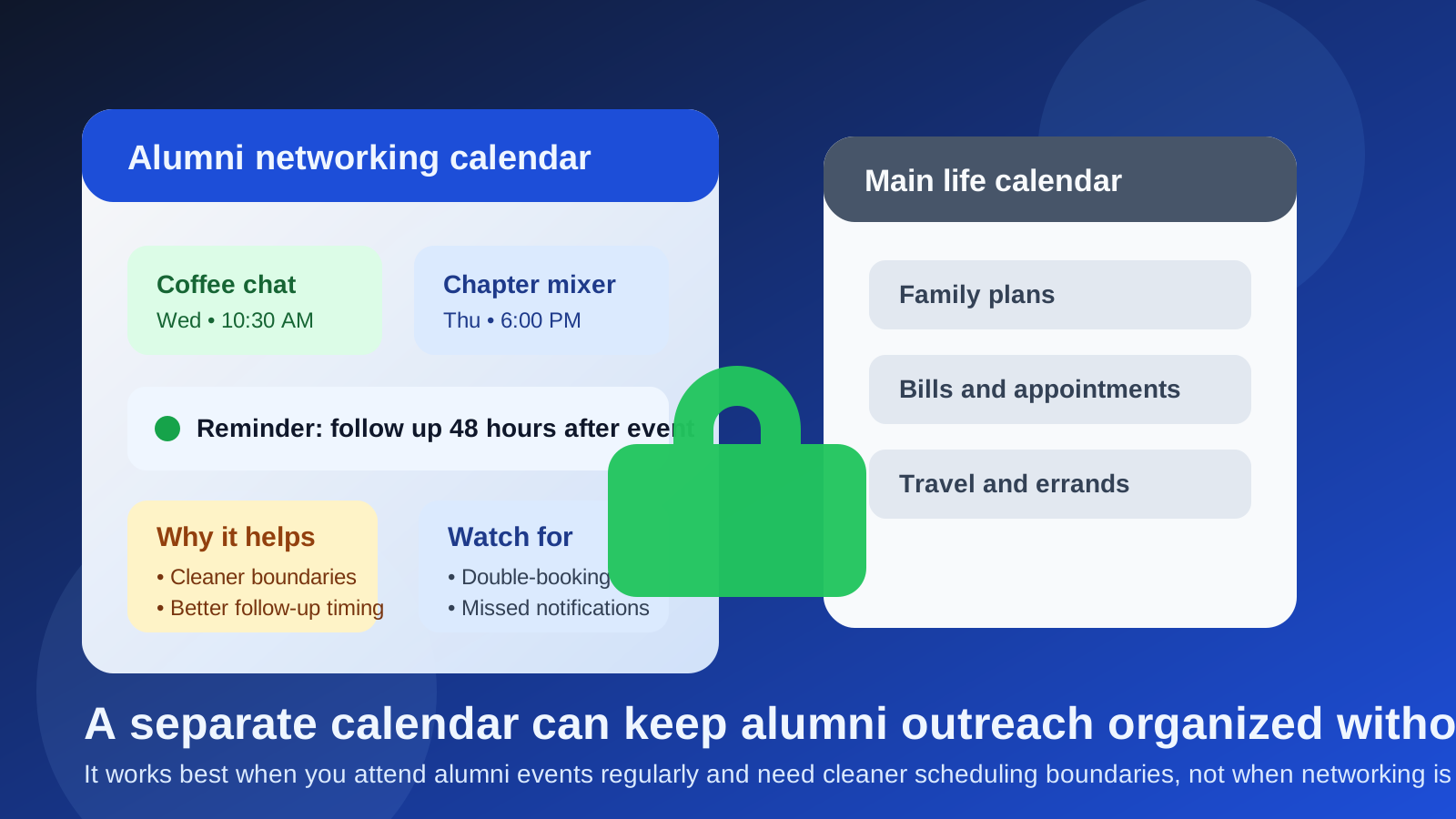
A separate calendar usually makes sense when alumni networking is frequent enough to create real scheduling clutter. It helps you track events, reminders, coffee chats, mentor calls, and follow-up windows without mixing all of that into family plans, medical appointments, household tasks, or work meetings.
If you only reach out to alumni once in a while, you probably do not need a whole new calendar. But if your alumni outreach is tied to job referrals, industry switching, graduate networking, local chapter events, or regular informational conversations, the separation can improve both organization and privacy.
What a separate calendar helps with
1. It keeps alumni activity from taking over your main view
Networking often creates more calendar items than people expect. You may have the event itself, the reminder to send a thank-you note, the coffee chat that follows, and a follow-up task for two weeks later. When all of that sits next to birthdays, travel, childcare, workouts, bills, and doctor appointments, your main calendar gets noisy fast.
A separate calendar lets you keep alumni activity visible when you need it and quieter when you do not. You can still see it alongside everything else when planning the week, but you are not forced to look at every outreach reminder every time you check whether Saturday is free.
2. It creates cleaner privacy boundaries
Calendar entries often reveal more than people think. Event titles, location notes, video links, invite lists, and description fields can expose a lot about what you are doing. If your main calendar is shared with a partner, family member, assistant, or another device ecosystem, you may not want every alumni coffee chat or mentoring conversation mixed into that environment.
A separate calendar does not magically make networking private, but it gives you more control. You can decide which calendar gets shared, which notifications appear where, and which items stay out of a broad default view.
3. It improves follow-up timing
Good alumni networking depends on timing. If someone offers advice at a mixer, a well-timed message two days later is often better than one sent three weeks later after you forgot. A separate calendar makes it easier to set follow-up reminders that do not get buried under everything else.
This matters because alumni networking is not just about showing up. It is about maintaining momentum without becoming pushy. A clean scheduling system helps you remember when to send a thank-you message, when to reconnect, and when to let a conversation breathe.
4. It supports a more intentional outreach workflow
When alumni networking becomes active, you start benefiting from lightweight systems. A dedicated calendar can hold chapter events, coffee chats, application deadlines tied to alumni referrals, and reminders to review notes before a conversation. That structure makes the whole process feel less random.
It also pairs well with other simple boundaries. Some people keep a separate networking inbox. Some keep contact notes in a lightweight document. Some use Anonibox only for low-stakes alumni event registrations or newsletter-heavy signups, then move real conversations into a stable long-term email address. A separate calendar fits naturally into that broader “keep it organized without making it complicated” approach.
When a separate calendar is probably worth it
- You attend alumni panels, chapter meetups, or industry mixers regularly.
- You are scheduling recurring coffee chats or mentorship calls.
- You want networking-related reminders out of your main personal calendar.
- You share your main calendar and want better privacy around career exploration.
- You are balancing alumni outreach alongside a job search, school transition, or industry change.
- You keep missing follow-up windows because networking tasks are getting lost.
In those situations, a separate calendar is not just neatness for its own sake. It solves a real coordination problem.
When you probably do not need one
- You only attend alumni events a few times a year.
- You already have a calm, well-managed calendar and do not mind mixing categories.
- You rarely need reminders beyond the event itself.
- You are likely to forget a second calendar even exists.
A second calendar only helps if you actually use it. If extra structure makes you less reliable rather than more organized, the simpler setup is better.
Separate calendar vs your main personal calendar
Your main personal calendar is familiar, convenient, and easy to keep in view. That is a real advantage. You are more likely to notice conflicts when everything sits in one place.
The downside is noise and spillover. If alumni networking is becoming a meaningful part of your life, your main calendar can start carrying a lot of career-related activity you do not necessarily want mixed into everyday planning. A separate calendar helps when that tradeoff becomes annoying enough to matter.
Many people land on a middle ground: keep the dedicated alumni calendar visible by default, but color-code it separately. That preserves conflict awareness without losing the boundary.
Separate calendar vs work calendar
This comparison is easy: alumni networking usually should not live on your work calendar. Work calendars are employer-controlled, often more visible than people realize, and tied to a context you may specifically want to separate from career exploration or private mentorship conversations.
Even if your alumni outreach is not strictly job hunting, using a work calendar can still create unnecessary visibility and awkwardness. A personal calendar or a separate private calendar is almost always safer.
Common mistakes when people set up a separate calendar
Forgetting to keep it visible
The biggest mistake is creating a second calendar and then never checking it. If the notifications are off, the color is too subtle, or the calendar is hidden most of the time, you may miss the very reminders you created it to manage.
Making the system too complicated
You do not need five networking calendars, twelve categories, and an elaborate tag structure. Usually one dedicated alumni networking calendar is enough. Clean and boring beats clever and fragile.
Failing to block prep and follow-up time
People often calendar the event but not the work around it. For alumni networking, the surrounding steps matter. Blocking ten minutes to review notes before a call or fifteen minutes to send follow-up messages afterward can make the difference between a useful connection and a missed opportunity.
Using the wrong calendar for sensitive details
If your main calendar is broadly shared, avoid dumping all networking notes there out of habit. The whole point of a separate calendar is better control over context and visibility.
How to set up a separate alumni networking calendar well
1. Keep the name obvious
Use a simple label like “Alumni Networking” or “Career Networking.” The goal is immediate clarity, not creativity.
2. Use it for events and follow-up, not just meetings
Add the chapter event, but also add the reminder to follow up in two days. Add the coffee chat, but also add a short prep block. Alumni networking works better when your system supports the conversation before and after the actual meeting.
3. Make notifications realistic
If every item sends three alerts, you will start ignoring them. Use enough reminders to stay reliable without training yourself to dismiss everything automatically.
4. Check cross-calendar conflicts
A separate calendar should not mean a blind calendar. Keep enough visibility to avoid double-booking with your personal life, work, or family plans.
5. Pair it with a stable communication channel
A calendar helps with timing, but people still need a reliable way to reach you. For actual alumni conversations, that usually means a stable email address or phone strategy you control. Temporary inboxes can still be helpful for low-stakes registrations, but long-term follow-up needs something more durable.
A quick decision checklist
- Am I attending enough alumni events or chats that scheduling has become cluttered?
- Do I want career-related activity separated from my everyday calendar view?
- Does my main calendar have privacy or sharing concerns?
- Will I actually monitor a second calendar reliably?
- Would better follow-up timing help me maintain alumni relationships more consistently?
If most of those answers are yes, a separate calendar is probably worth trying.
Final answer
Yes, you should consider a separate calendar for alumni networking if the activity is active enough to create real scheduling clutter or privacy friction. It can make chapter events, coffee chats, mentorship calls, and follow-up reminders easier to manage without mixing every networking step into the rest of your life.
If alumni outreach is only occasional, your main calendar may be enough. But if networking is becoming a meaningful part of your career strategy, a separate calendar is a simple, human-scale way to stay organized, protect boundaries, and follow up more reliably.