Yes, a separate calendar can be a smart choice for networking events if you want clearer boundaries, less schedule clutter, and a lower chance of mixing career follow-up with your personal life.
It is most useful when you attend conferences, career fairs, meetups, alumni events, or industry mixers regularly; if networking is only occasional, your main calendar may still be enough as long as you manage it carefully.
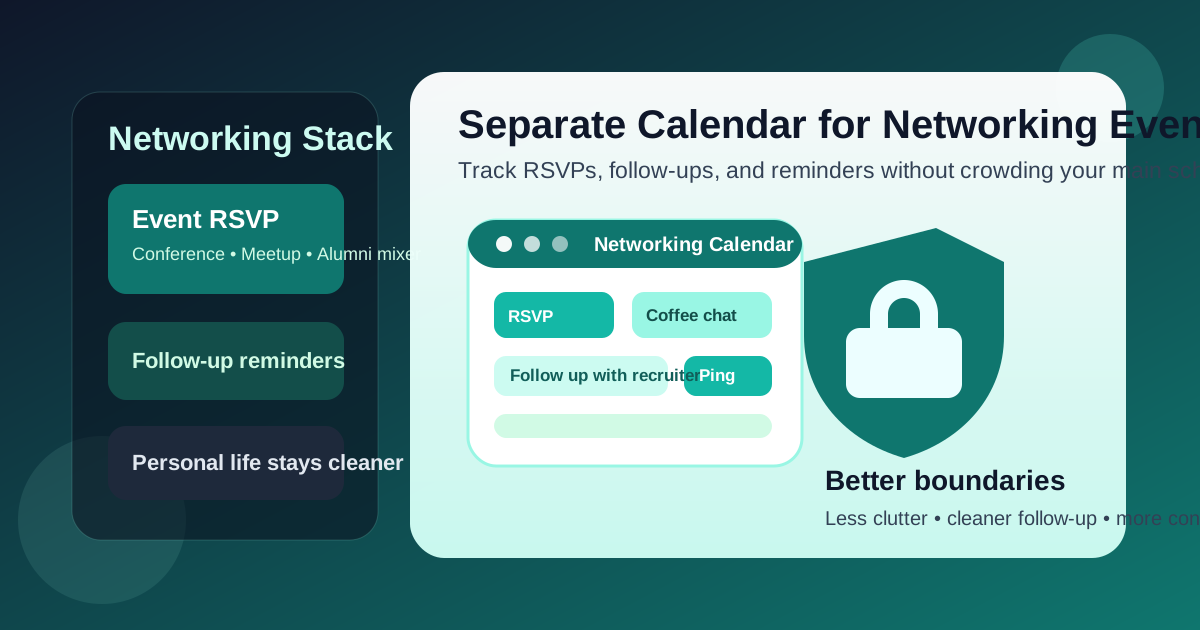
That is the practical answer behind searches for should you use a separate calendar for networking events. The question matters because networking does not end when the event ends. You may register with Eventbrite, accept invites, add panel sessions, schedule coffee chats, follow up with recruiters, block travel time, and set reminders to reconnect with people later. All of that can become surprisingly messy if it lands in the same place as birthdays, family plans, bills, doctor appointments, and everything else in your normal life.
A separate calendar is not a magic privacy shield, and it is not necessary for everyone. But it can be a very practical organizational boundary. It helps you control visibility, reduce confusion, and keep networking-related activity from overwhelming your main calendar. For people who are actively job hunting, exploring a career change, attending multiple events per month, or trying to keep professional outreach a little more compartmentalized, that boundary can be worth a lot.
Why networking events create calendar clutter faster than people expect
Networking events look simple on the surface: you sign up, show up, and meet people. In reality, they often create a chain of related scheduling activity.
- You register for the event itself.
- You may add breakout sessions, mentor slots, or side meetings.
- You may follow up with new contacts for coffee chats or short calls.
- You may schedule reminders to reconnect a week or two later.
- You may need travel, prep, and post-event admin time around the event.
That chain is where a separate calendar starts to make sense. The event is not just one time block. It is often the beginning of several small scheduling commitments. If you are doing this often, the networking layer can crowd your main calendar fast.
What a separate calendar helps with
1. It keeps networking activity from taking over your main view
If your personal calendar already contains family plans, household tasks, appointments, and recurring routines, adding every networking RSVP and follow-up reminder can make the whole thing feel noisy. A separate calendar lets you keep that extra layer visible when you need it and quieter when you do not.
This is especially helpful if you like to review your week at a glance. You can toggle the networking calendar on when planning and off when you want a cleaner personal view.
2. It creates a useful privacy boundary
Calendar entries can reveal more than people expect. Event names, attendee lists, notes fields, meeting links, and location details sometimes expose more of your professional activity than you intended. A separate calendar does not make those risks disappear, but it gives you more control over where that information lives and how it is organized.
That matters even more if you share parts of your main calendar with a partner, family member, assistant, or another device ecosystem that you do not want filled with every networking detail.
3. It makes follow-up easier to manage
Good networking is mostly follow-up. If you promise to send a resource, reconnect next week, or schedule a short chat, a separate calendar can act like a lightweight pipeline. You can add reminder blocks and follow-up windows without burying them among unrelated personal commitments.
4. It helps if networking is tied to a job search
When networking is part of a job search, things can escalate quickly. One conference can turn into three recruiter conversations, two informational chats, and a handful of follow-up reminders. Keeping that activity on a separate calendar can make the process feel much more deliberate and much less chaotic.
When a separate calendar makes the most sense
A separate calendar is usually worth considering when:
- You attend networking events regularly: not just one-off meetups, but recurring conferences, webinars, mixers, and alumni events.
- You are actively job hunting: because networking often leads to follow-up calls, referrals, and interview-adjacent conversations.
- You want cleaner boundaries: especially if you do not want every career-related plan mixed directly into your home-life calendar.
- You manage multiple communication channels: such as event platforms, LinkedIn Messages, email follow-up, and phone scheduling.
- You already feel calendar overload: and need a simpler way to separate commitments by context.
In those situations, the separate calendar is less about being secretive and more about being organized.
When your main calendar is probably enough
You do not need a separate calendar just because the option exists. For some people, a single well-managed calendar is simpler and better.
Your normal calendar may be enough if:
- You attend networking events only occasionally.
- You rarely schedule follow-up beyond one or two conversations.
- You are already good at using categories, colors, and reminders inside one calendar.
- You do not share your calendar with anyone and do not mind mixing contexts.
- You know that maintaining a second calendar would become another thing you forget to check.
A separate calendar only helps if it reduces friction. If it adds confusion, it is the wrong tool.
Separate calendar vs. separate account
This is an important distinction. Sometimes people say they want a separate calendar when what they really mean is a separate calendar account. Those are related, but not identical.
A separate calendar inside your existing account can be enough if your main goal is visual organization. You keep one login, one app, and one notification system, but you can isolate networking events as their own layer.
A separate account can be more useful if your concern is stronger separation, especially when networking is part of a sensitive job search or you do not want event activity tied closely to your main identity ecosystem. The trade-off is that a second account can be harder to maintain if you forget to check it or fail to sync reminders properly.
In other words, if the problem is clutter, a separate calendar may solve it. If the problem is identity separation, a separate account may make more sense.
Best practices if you use a separate calendar for networking events
Choose a calendar you will actually monitor
The biggest mistake is creating a beautifully separate system and then ignoring it. If event confirmations, follow-up calls, or reminder blocks live in a calendar you never check, the privacy benefit will not matter because you will miss useful opportunities.
Keep entries clear but not over-detailed
You do not need every entry to contain a full biography of the person you met. A short, useful label plus the needed logistics is usually enough. That keeps your schedule usable without turning every event into a mini dossier.
Use reminder blocks for follow-up
The real value often comes after the event. Add follow-up reminders for sending a message, sharing a resource, or checking back in. Networking is much more effective when the calendar supports action instead of just attendance.
Color-code it consistently
If your calendar tool supports colors, use them well. One color for event attendance and another for follow-up conversations can make the whole system easier to scan quickly.
Do not let it become a graveyard
If you create a separate networking calendar, review it weekly. Archive stale invites, remove duplicate holds, and keep only the reminders that still matter. A second calendar that fills up with old noise loses the exact clarity it was supposed to create.
How it fits with email and privacy strategy
Calendar decisions are rarely isolated. They connect to how you register for events, which email address you use, where confirmations arrive, and what follow-up channel you give new contacts.
That is why a separate calendar often works best alongside a thoughtful email setup. For example, if you do not want every RSVP, speaker promo, and sponsor follow-up landing in your main inbox, using a separate email workflow can complement the calendar boundary nicely. A tool like Anonibox can help on the email side when you want cleaner separation during early-stage signups and event registrations, while a separate calendar keeps the scheduling side organized.
The point is not to make networking disposable. The point is to avoid giving every event and every new contact permanent access to your main personal systems before that level of access feels earned.
Common mistakes to avoid
- Creating a second calendar and forgetting it exists: if you miss confirmations or reminders, the setup is failing.
- Duplicating everything across multiple calendars without a plan: that can create more confusion than one calendar ever did.
- Using a work calendar for personal networking: that can create visibility and boundary issues if your employer controls the account.
- Adding too much detail to every event: clarity matters more than over-documentation.
- Assuming a separate calendar solves trust problems: it organizes scheduling, but it does not make low-quality contacts more legitimate.
Should you use your work calendar for networking events instead?
Usually, that is not the best default unless the networking is directly part of your current job. A work-managed calendar may be visible to coworkers, synced across employer-controlled devices, or retained under company policies you do not fully control. If the networking is part of a private job search, side-career exploration, or external relationship building that you want to keep more separate, your work calendar is often the wrong place for it.
A personal calendar or separate personal calendar is generally safer for that kind of boundary.
A practical setup that works for most people
If you want a simple approach without overengineering it, this is a good starting point:
- Create one dedicated networking calendar inside the system you already use reliably.
- Put event registrations, RSVPs, and actual event blocks there.
- Add short follow-up reminders after meaningful conversations.
- Keep it visible during active networking weeks and hidden when you want a cleaner personal view.
- Review it once a week so it stays useful.
That setup gives you most of the benefit without forcing you into a complex multi-account workflow.
Final answer
Yes, you should consider using a separate calendar for networking events if you attend them often, want cleaner boundaries, or need a more organized way to manage follow-up. It can reduce clutter, help protect your privacy, and make it easier to keep networking-related scheduling from spilling into the rest of your life.
If networking is only occasional, your main calendar may be enough. But if event registrations, follow-up chats, and reminder tasks are starting to pile up, a separate calendar is a simple, practical upgrade. Done well, it does not make you less reachable. It just gives you more control over how networking fits into the rest of your schedule.