Yes — using a separate email for career fairs is usually a smart move, especially if you want recruiter follow-up without mixing it into your personal inbox. A dedicated address helps you stay organized, protect your privacy, and handle the spike in scans, signups, and mass recruiter outreach that often follows a fair.
That does not mean you need a disposable inbox for every booth. The best setup is usually a stable career-fair email you can monitor for a few months, with temporary inbox tools like Anonibox reserved for low-trust downloads, one-off vendor lists, or signups that do not need long-term follow-up.
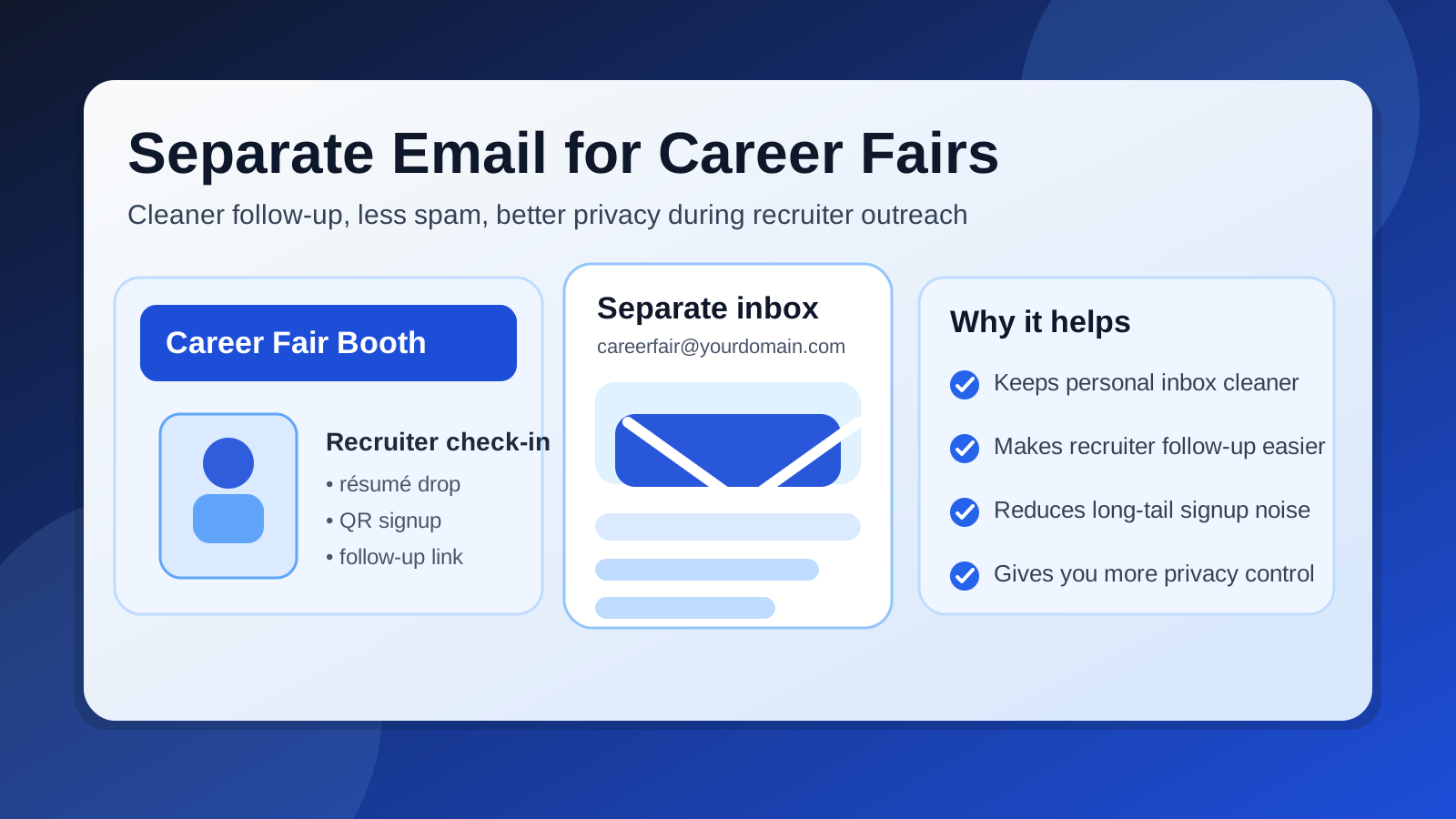
Why career fairs create more inbox exposure than normal applications
Career fairs compress a lot of outreach into a short window. In one afternoon, you might hand your résumé to ten employers, scan a handful of QR codes, join “talent communities,” register for employer follow-up sessions, and sign up for job alerts you barely remember by the time you get home.
That is very different from applying directly to one company at a time. At a career fair, your contact information can spread through recruiter workflows, campus event tools, mailing lists, and applicant tracking systems much faster. Most of that is normal, but it also means your primary inbox can get cluttered quickly with:
- follow-up emails from recruiters you met briefly
- newsletter-style talent network messages
- event recaps and webinar invitations
- promotional campaigns from employers you are not seriously considering
- duplicate reminders to complete full applications later
A separate email gives you a buffer. Instead of letting all of that land in the inbox you use for everyday life, bills, travel, personal conversations, and important logins, you channel fair-related communication into one controlled place.
When a separate email for career fairs makes the most sense
Using a dedicated address is especially helpful if any of these apply:
- You plan to talk to many employers in one day. The more booths you visit, the more follow-up volume you should expect.
- You are a student or recent graduate. Career fairs often generate a mix of real opportunities, generic nurture emails, and campus recruiting blasts.
- You want better privacy. A separate address limits how widely your main personal inbox gets shared.
- You are changing industries or testing the market quietly. Keeping outreach contained makes the process easier to manage.
- You want cleaner organization. Having one inbox for fairs, recruiter follow-up, and résumé traffic makes it much easier to search later.
If you are only attending a tiny niche event with two or three target companies, a separate address may feel optional. But for most campus fairs, hiring expos, tech meetups, and large recruiting events, it is a practical upgrade.
What kind of email should you use?
The best answer is usually a stable, professional separate email, not a throwaway address that disappears too soon. Career fairs often lead to delayed follow-up. A recruiter may email the next day, but they also might circle back two weeks later after reviewing candidates internally. If your inbox vanishes before then, you can miss a real opportunity.
A good career-fair email should be:
- easy to spell and say out loud
- professional enough to put on a résumé or badge QR page
- stable for at least a few months
- separate from your main personal inbox
Something simple such as your name plus a job-search marker is usually fine. The goal is not to look mysterious. The goal is to stay reachable while keeping fair-related traffic organized.
Separate email vs temporary email vs burner email vs alias
This is where people often overcorrect. A career fair is not the same as grabbing a one-time coupon or downloading a random gated PDF. You may actually want a recruiter to contact you again. That is why the best tool depends on the situation.
Separate email
Best for real recruiter conversations, résumé drops, company follow-up, and full applications after the fair. It gives you structure without cutting off legitimate contact.
Temporary or disposable email
Best for low-trust signups, one-off downloads, event platforms you do not plan to reuse, or booth QR codes that clearly lead to generic marketing material. This is where a temporary inbox service such as Anonibox can make sense. It is useful when you need access to a link or file but do not want long-term mailing-list noise tied to your main address.
Burner email
A burner-style address can work if you want more separation, but it should still be stable enough to monitor during the follow-up window. If it is too disposable, it becomes risky for real hiring conversations.
Email alias
An alias can be a solid middle ground. It keeps your main mailbox hidden while still routing replies somewhere you check. Just make sure replies work cleanly and that you will still recognize messages when recruiters respond.
For most job seekers, the safest default is simple: use a dedicated but stable email for the fair itself, and save true disposable inboxes for low-value or low-trust signups around the edges.
How to set up a career-fair email the right way
1. Create it before the event
Do not wait until you are standing in line at a booth. Set up the address ahead of time so you can add it to your résumé, event profile, and QR code materials.
2. Keep the name professional
Use a clean format based on your real name. Avoid jokes, random numbers, or anything that makes the inbox look temporary in a bad way.
3. Turn on basic organization
Create a couple of simple labels or folders such as “Career Fair,” “Need to Apply,” and “Recruiter Follow-Up.” You do not need a complicated system. Even light organization helps when twenty messages hit at once.
4. Add a clear signature
Include your name, target role or field, and a link to your LinkedIn profile or portfolio if relevant. This makes fast follow-up easier when recruiters revisit their notes later.
5. Check it consistently for a while
The biggest mistake is creating a separate address and then forgetting to monitor it. For the first two weeks after a fair, check it daily. After that, keep an eye on it for at least the active hiring window tied to the event.
How to use it at the event
A separate inbox only helps if you use it consistently. At the fair, try this approach:
- Use the same career-fair email on your résumé and signup forms.
- When scanning QR codes, decide whether the destination seems worth a stable address or only a temporary one.
- If a recruiter wants you to apply later, use your stable separate email so the thread stays connected.
- If a booth is mostly collecting names for a future mailing list, you can be more cautious.
That last point matters. Not every contact at a fair is equal. Some are high-intent hiring conversations. Others are just lead collection. Treat them differently.
Common mistakes to avoid
- Using your main personal inbox everywhere by default. It works, but it gives up a lot of control.
- Using an inbox that expires too quickly. Missing recruiter follow-up is worse than deleting a few extra marketing emails.
- Switching between multiple addresses randomly. Consistency helps recruiters and helps you.
- Failing to reply from the same address. If you start with one email and answer from another, you can create confusion.
- Ignoring suspicious follow-up. Career fairs still attract generic recruiting spam and occasional scams. Verify unexpected outreach before sharing more information.
What if a recruiter asks why you use a separate email?
In most cases, they will not ask or care. Recruiters mainly want a reliable way to contact you. A clean, professional address does not raise eyebrows. If it ever comes up, the simplest explanation is also the best one: you use a dedicated inbox to keep your job search organized.
That sounds normal because it is normal. Plenty of job seekers separate search-related communication from everyday life for the same reason people keep separate folders, résumés, and calendars during a hiring process.
A quick decision checklist
Before the fair, ask yourself:
- Will I be sharing my email with lots of employers in a short period?
- Do I want to keep recruiter traffic out of my personal inbox?
- Do I need a stable address for follow-up over the next few weeks or months?
- Would a temporary inbox be better only for one-off booth downloads or low-trust signups?
If the answer to the first three questions is yes, then a separate email is probably the right move.
Final answer
So, should you use a separate email for career fairs? In most cases, yes. It is one of the easiest ways to stay organized, reduce inbox clutter, and keep more control over your privacy while still looking professional and remaining easy for recruiters to reach.
The key is choosing the right level of separation. Use a stable, professional email for real recruiting follow-up, and use temporary or disposable tools more selectively for low-value signups that do not need a long relationship. Done well, that approach gives you the benefits of accessibility and follow-up without turning one career fair into months of unnecessary inbox noise.