Yes — usually you should use a separate email for employment verification, as long as it is a stable inbox you control and check often.
A dedicated address keeps hiring paperwork out of your main inbox without the reliability problems that come with a truly temporary or disposable mailbox.
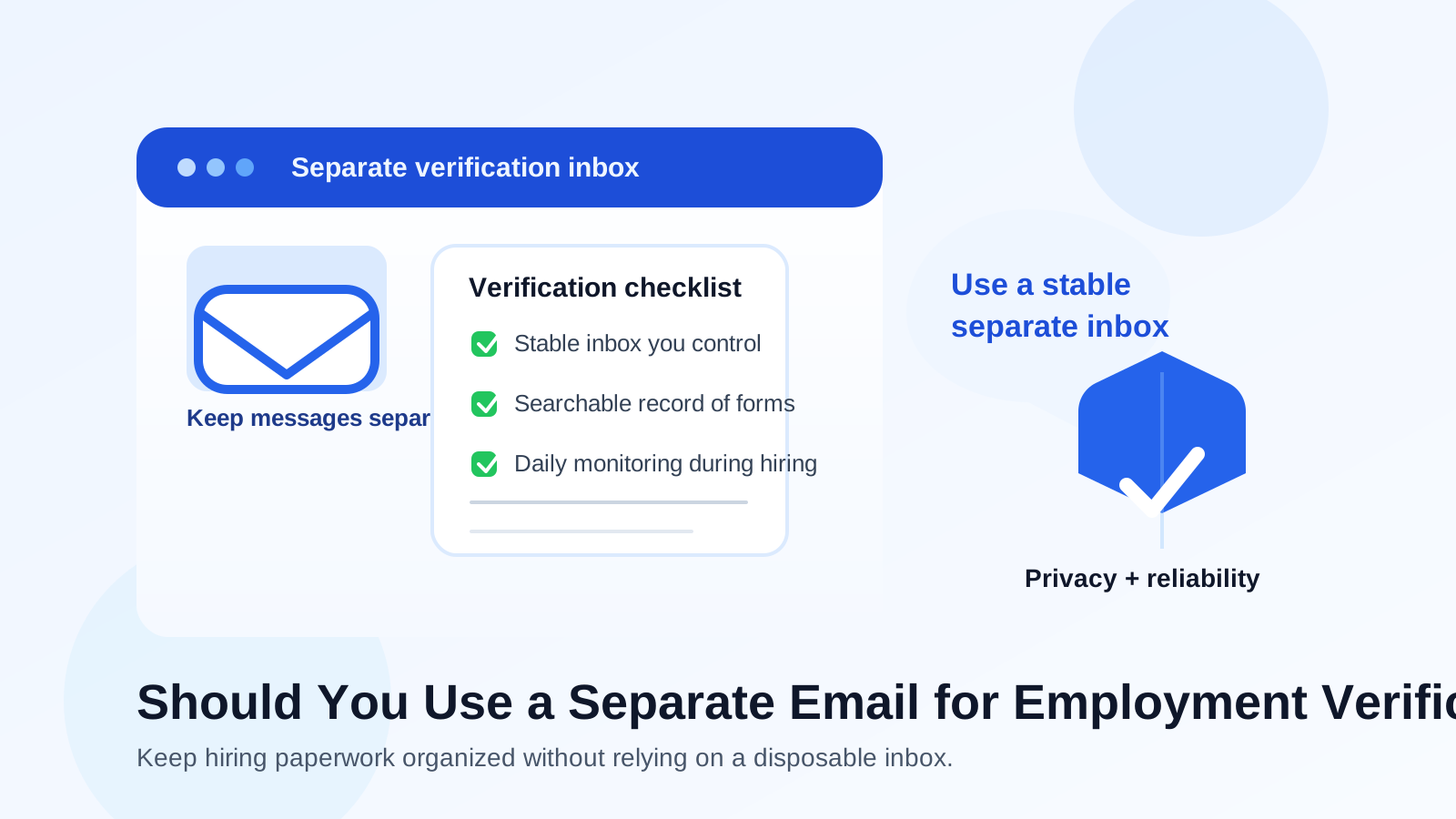
That short answer covers most real-world cases, but the details matter. Employment verification sits in a strange part of the hiring process: it is more serious than an early application, but it still involves multiple people, outside vendors, reminders, document requests, and timeline changes. Because of that, the best email choice is not always your everyday personal inbox, and it is almost never your current work email.
A separate inbox often gives you the cleanest balance of privacy, organization, and reliability. You can keep verification messages contained, respond quickly, and avoid mixing sensitive hiring communication with newsletters, online shopping, bills, or social accounts. The key is that the inbox must be durable. This is not the stage where you want an address that disappears after a few hours or one you forget to monitor for a week.
Why employment verification is different from earlier job-search email
Early in a job search, people often use a separate or even disposable inbox to reduce spam from job boards, resume tools, recruiter lists, and low-trust signup forms. That can be sensible. Employment verification is different because the communication is narrower, higher stakes, and more time-sensitive.
You may receive:
- Consent forms from a background screening or verification vendor
- Portal invitations tied to your candidate record
- Requests to confirm exact employment dates, job titles, or manager details
- Messages about missing documents or mismatched information
- Reminders tied to deadlines that affect your offer or start date
Those messages are not just nice-to-have updates. They can directly affect how quickly your file moves forward. That is why reliability matters more here than it does during broad top-of-funnel outreach.
Why a separate email often makes sense
1. It keeps sensitive hiring paperwork organized
Employment verification can overlap with offer letters, onboarding forms, benefits communication, background-check updates, and recruiter follow-up. If all of that lands in your main personal inbox, it can get buried fast. A dedicated address gives you a single place to watch for anything related to that hiring process.
2. It limits unnecessary exposure of your primary personal address
Your main personal email is usually tied to years of accounts, contacts, receipts, travel, subscriptions, and logins. There is no rule that says every employer, recruiter, and third-party screening vendor needs that same address. A separate inbox reduces how widely your primary identity address gets circulated.
3. It gives you a cleaner paper trail
If something gets delayed, disputed, or resent, having all verification messages in one place makes it much easier to search the thread, confirm dates, and find exact instructions. That is especially helpful if an employer says a form was never completed or a vendor says they already sent the portal link.
4. It helps you switch roles or hiring tracks without confusion
Some people are interviewing with multiple employers at the same time. Others are handling contractor paperwork, internal transfers, or a late-stage offer while still fielding other outreach. A separate email can keep one hiring track from getting mixed into everything else.
What kind of separate email should you use?
The best separate email for employment verification is not fancy. It just needs to be:
- Stable: you should expect to keep it active for months, not hours
- Searchable: you may need to find old forms, reminders, or portal links later
- Monitored: check it regularly while the hiring process is active
- Professional enough: the address should look neutral and easy to recognize
- Under your control: avoid using an employer-owned address for outside hiring steps
A separate long-term inbox works well. So does a reliable alias that forwards into a mailbox you already monitor carefully. What usually does not work well is a short-lived disposable mailbox that might expire before the next reminder or correction request arrives.
When a separate email is better than your personal email
A separate email is especially useful when:
- You want hiring-related messages out of your everyday personal inbox
- You are dealing with a third-party verification vendor and want tighter message control
- You are interviewing with several employers and want a more organized workflow
- You are privacy-conscious and do not want your oldest personal address shared widely
- You expect the process to stretch across background checks, onboarding, and start-date coordination
In those cases, a separate email is not just a privacy play. It is also an organization tool. It lowers the chance that you miss a deadline because the message was sitting between unrelated personal mail.
When your personal email may still be fine
If your personal inbox is already well managed, your address is professional, and you do not mind using it for serious hiring communication, it can still work. Many people complete employment verification without any problem using a normal personal Gmail, Outlook, iCloud, Fastmail, or other personal account.
The question is not whether a personal inbox is allowed. It is whether it is your best option. If your main inbox is already crowded, connected to years of spam, or something you would rather not hand to more vendors, a separate address is usually smarter.
Why your current work email is usually a bad idea
One of the biggest mistakes job seekers make late in the process is using a current employer’s email for outside hiring steps. Employment verification may involve sensitive timing, future plans, and messages you do not want tied to a monitored company account.
A work inbox can create several problems:
- Your employer may retain or review account activity according to company policy
- You could lose access if you leave suddenly or if your account changes
- The address may make it harder to separate personal job-search communication from current employment
- It can create awkward visibility if notifications appear on managed devices
If you need privacy and continuity, a separate personal inbox is a much better fit than a current work address.
Why a truly temporary email is usually the wrong tool here
Temporary email can be useful earlier in the funnel, especially when you are testing low-trust signups or trying to cut down on spam. That is where a service like Anonibox can help: it gives you a clean privacy buffer before you decide which opportunities deserve long-term contact access.
Employment verification is later-stage, narrower, and more dependent on continuity. At that point, the problem is not just receiving the first message. The problem is keeping a reliable record of follow-up, reminders, corrections, and vendor communication. A mailbox that is designed to be disposable can work against you once the process becomes time-sensitive.
How to set up a separate email for employment verification
Use a neutral address format
Keep it simple and readable. Your name plus a light professional modifier is fine. Avoid joke names, cluttered numbers, or anything that looks like a throwaway account.
Turn on basic security
Use a strong password and enable two-factor authentication if your provider offers it. Verification emails can contain personal details and links to sensitive forms, so account security matters.
Check it daily while the process is active
A separate inbox only helps if you actually watch it. During a live verification window, check it at least once or twice a day.
Save important messages locally if needed
If a portal invite, consent form, or supporting-document request looks important, save a copy or note the details somewhere safe. That makes recovery easier if the thread later gets messy.
Use the same address consistently once verification starts
If possible, avoid switching halfway through the workflow. Consistency reduces the chance of broken threads or vendor confusion.
Red flags that matter more than the email choice itself
Even with a separate email, you still need judgment. Be careful if:
- The sender domain does not match the employer or a recognizable screening vendor
- The message asks for unrelated sensitive information immediately
- You are pressured to click a link without any job context
- The recruiter cannot explain who the verification provider is
- The process suddenly moves to random messaging apps instead of normal hiring channels
A separate inbox helps with control and organization, but it does not replace verification. If a request looks suspicious, confirm it independently before you upload documents or enter personal details.
Common mistakes to avoid
- Using your current work email: it creates privacy and access risks.
- Using a disposable mailbox too late in the process: you may miss reminders or lose history.
- Forgetting to monitor the inbox: a separate address only works if you check it.
- Switching addresses midstream without warning: that can cause delays and duplicate requests.
- Assuming every “verification” email is real: scammers know job seekers are motivated to respond quickly.
A simple decision checklist
If you are not sure what to do, ask yourself:
- Do I want hiring and verification messages separated from my everyday personal inbox?
- Can I keep this separate address active and monitored for as long as the process lasts?
- Am I avoiding my current work email?
- Do I need a searchable paper trail for forms, reminders, and corrections?
- Would using a temporary mailbox create more risk than convenience at this stage?
If your answers point toward privacy plus stability, a separate email is probably the right move.
Final answer
Yes — in most cases, a separate email is a smart choice for employment verification. It gives you better privacy and better organization without sacrificing the continuity that this stage of hiring requires.
Just make sure the address is a real, stable inbox you control, not a short-lived throwaway. That way you get the benefit of separation without increasing the chance of missed forms, lost links, or avoidable delays right before the job becomes real.