Yes—usually. A separate email is often the best default for grant applications because it keeps the process organized and more private without risking missed deadline notices, portal resets, reviewer questions, or award updates.
If you want less inbox clutter but still need reliable long-term access, a dedicated grant-application inbox is usually a smarter choice than using your main email or a disposable one.
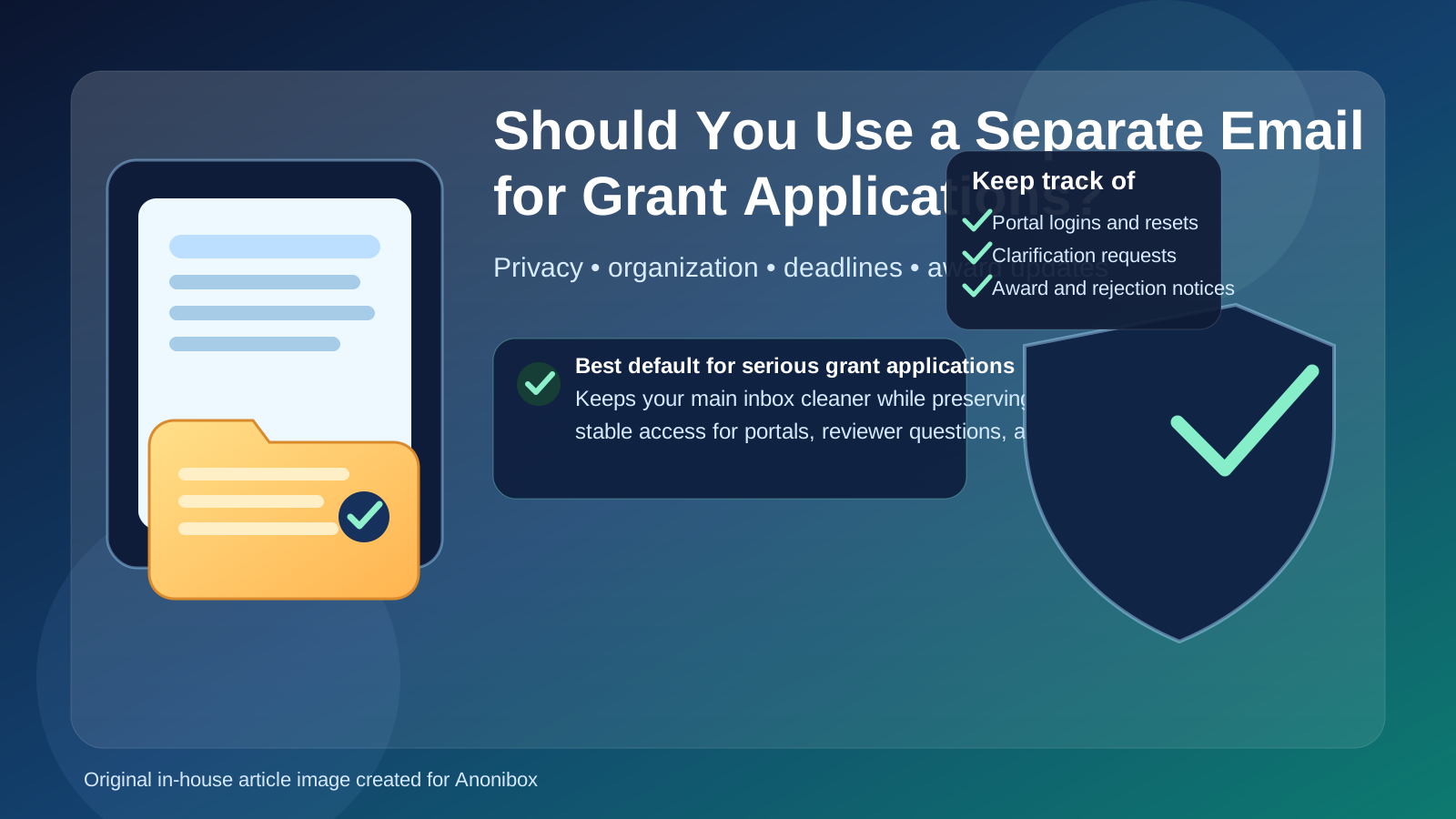
Why this question matters for grants
Grant applications can start small and become complicated fast. At first it may look like just one form, one proposal, and one decision. In reality, many grant workflows involve guideline downloads, eligibility clarifications, letters of support, portal accounts, budget revisions, milestone questions, and follow-up emails that can arrive weeks or even months after you submit.
That makes email strategy more important than people expect. If you use your everyday inbox, the process can disappear under normal work and personal mail. If you use a throwaway address, you risk losing access to messages that matter later. A separate email sits in the middle: private enough to reduce clutter, stable enough to support a real application lifecycle.
What “separate email” means in practice
A separate email does not have to be fancy. It simply means an address you dedicate to grant-related activity instead of mixing everything into your main personal or work inbox.
That address might be:
- a second mailbox you control long term,
- a dedicated application account used only for grants, scholarships, or fellowships, or
- an alias setup that forwards into a stable inbox you check consistently.
The key is durability. For grants, the address should still be available and monitored when someone asks for a missing attachment, requests a budget clarification, or sends an award decision much later than expected.
Why a separate email is often the best option
1. It keeps your grant workflow organized
Grant applications create their own administrative trail: confirmations, document checklists, uploads, reference instructions, webinar reminders, portal links, revisions, and decisions. Keeping all of that in a dedicated inbox makes it easier to search, flag, and review later. You are less likely to lose a critical message in a crowded primary inbox.
2. It reduces exposure of your main address
Not every funding opportunity is equal. Some grant programs are highly credible and well run. Others rely on third-party portals, mailing lists, or broad promotional funnels that may keep emailing you long after one application cycle ends. A separate email creates a privacy boundary without forcing you into disposable-inbox territory.
3. It gives you continuity across long timelines
Many grants move slowly. A message that feels unimportant today can become essential six weeks later. If the same inbox stays active through the full process, you avoid scrambling for old links, reset emails, or prior correspondence when a new step appears unexpectedly.
4. It helps you separate research from serious submissions
Grant seekers often review multiple opportunities at once. A separate inbox lets you collect newsletters, calls for proposals, and early-stage inquiries without contaminating your everyday email. At the same time, it remains professional and stable enough for the applications you genuinely pursue.
Why not just use your main personal or work email?
You can, and sometimes that is perfectly fine. But it creates tradeoffs.
Using your main personal inbox may expose an address you want to keep quiet for other parts of your life. Using your main work inbox can be awkward if the grants relate to a side project, nonprofit work, research plans, or opportunities you do not want mixed with employer communications.
A separate inbox gives you more control. It keeps grant communication easy to find, while preserving distance from the addresses you use for everything else.
Why a separate email is usually better than a temporary or burner inbox
This is where many people make the wrong trade.
A temporary or burner inbox can help during very early research, especially when you are not sure whether a website, lead form, or gated resource is worth trusting. A tool like Anonibox can be useful there because it lets you inspect the first messages without immediately giving away your main address.
But grant applications themselves are usually a poor fit for a disposable mindset.
- Deadlines can shift: you may receive updates or clarifications after the first submission.
- Portals may matter later: password resets and status links are often tied to the original email.
- Review cycles are long: decisions may come much later than you expect.
- Follow-up can be meaningful: some programs ask for revised files, interviews, or supporting documents.
So if the opportunity is real, the safest pattern is usually this: use temporary privacy tools only for low-trust exploration, then move to a stable separate address before you start an actual application.
When a separate email makes the most sense
A dedicated inbox is especially useful when:
- you are applying to several grants at once,
- the process may include revisions or follow-up questions,
- you expect a long review period,
- the application is tied to a side project, nonprofit effort, creative work, or research track you want to keep separate,
- you want to protect your main inbox from newsletters, announcements, and future funding-cycle mail.
That covers a large share of real-world grant applications, which is why the separate-email approach is often the strongest default.
When a separate email may be less necessary
If you are submitting one highly trusted application through a familiar institution, and you already manage similar work through an existing professional inbox, a separate address may not be necessary. The issue is not that every grant requires a separate email. It is that a separate email often gives you better organization and privacy with very little downside.
In other words, this is usually an optimization, not a legal or universal rule.
Best practices for setting up a grant-application inbox
Use an address you can keep for the full cycle
The inbox should still exist months from now. Avoid anything you plan to abandon quickly.
Pick a professional-looking address
Grant reviewers are usually focused on your proposal, not your email aesthetics, but a clean and ordinary-looking address still helps. You want something easy to recognize and easy to trust.
Create folders or labels immediately
Simple organization pays off fast. Useful labels might include:
- Active grants
- Submitted
- Need reply
- Awarded or declined
- Newsletters and future cycles
That structure makes later follow-up much easier.
Save deadlines outside the inbox too
Email is not a project-management system. Put submission dates, webinar times, supporting-document deadlines, and decision windows into a calendar or task list you trust.
Check spam and promotions tabs
Portal mail and automated notices do not always land where you expect. A separate inbox only helps if you actually monitor it.
A practical workflow that works well
- Use a privacy buffer for low-trust discovery. If a generic directory or resource gate wants your email before you know whether the opportunity is real, it can make sense to use a temporary solution first.
- Switch to your separate stable inbox before applying seriously. As soon as you create a portal account, request clarification, or start a real submission, use the dedicated inbox you plan to keep.
- Keep one address per serious grant lane. Do not keep changing addresses midway through the process unless absolutely necessary.
- Archive cleanly after each cycle. Once a grant cycle ends, move it out of the way but keep the records searchable.
This is usually the best balance between privacy, organization, and reliability.
Common mistakes to avoid
- Using a disposable inbox for a real application. It feels tidy early on, then becomes a problem when follow-up arrives later.
- Mixing everything into one personal inbox. Important grant messages can get buried under daily life.
- Using a work email for personal or independent funding plans. That can create unnecessary visibility or confusion.
- Failing to monitor the separate inbox consistently. Separation only helps if the inbox is still part of your routine.
- Thinking privacy means invisibility. A separate email improves control, but it is not a magic shield or guarantee.
What about aliases?
An email alias can be a strong alternative if it forwards into a stable inbox you already control well. In some cases, that is even better than creating a fully separate mailbox, because it combines privacy with easier daily monitoring. The important part is not the specific technology. It is whether the address remains reliable, searchable, and active for the whole grant process.
If you are comparing options, the same logic seen on adjacent Anonibox topics like separate email for fellowship applications and separate email for scholarship applications applies here too: long timelines favor stable inboxes.
Quick decision checklist
- Will this grant process likely continue for weeks or months?
- Could I receive follow-up questions, revisions, or decisions later?
- Do I want to keep my main inbox away from grant newsletters and outreach?
- Would I regret losing access to this address later?
- Do I need privacy without sacrificing reliability?
If the answer to most of those is yes, a separate email is probably the right move.
Bottom line
So, should you use a separate email for grant applications? Usually yes. It is often the cleanest way to protect your main inbox, stay organized across long review cycles, and keep grant communication easy to manage without the fragility of a temporary or burner address.
Use temporary inboxes only for low-trust exploration if you need them. For real applications, a stable separate email is usually the more practical choice. It gives you privacy, structure, and continuity—the combination that matters most when deadlines, documents, and funding decisions are all moving through the same communication channel.