Yes — a separate email is usually a smart choice for salary negotiations if it is professional, stable, and checked often. It gives you more privacy and organization than a crowded main inbox, without the trust problems that come with a temporary address or an employer-owned work account.
That does not mean you need a disposable inbox or a complicated setup. The goal is simple: use one reliable email address you control for compensation conversations, offer documents, scheduling notes, and follow-up questions, so nothing important gets buried or exposed in the wrong place.
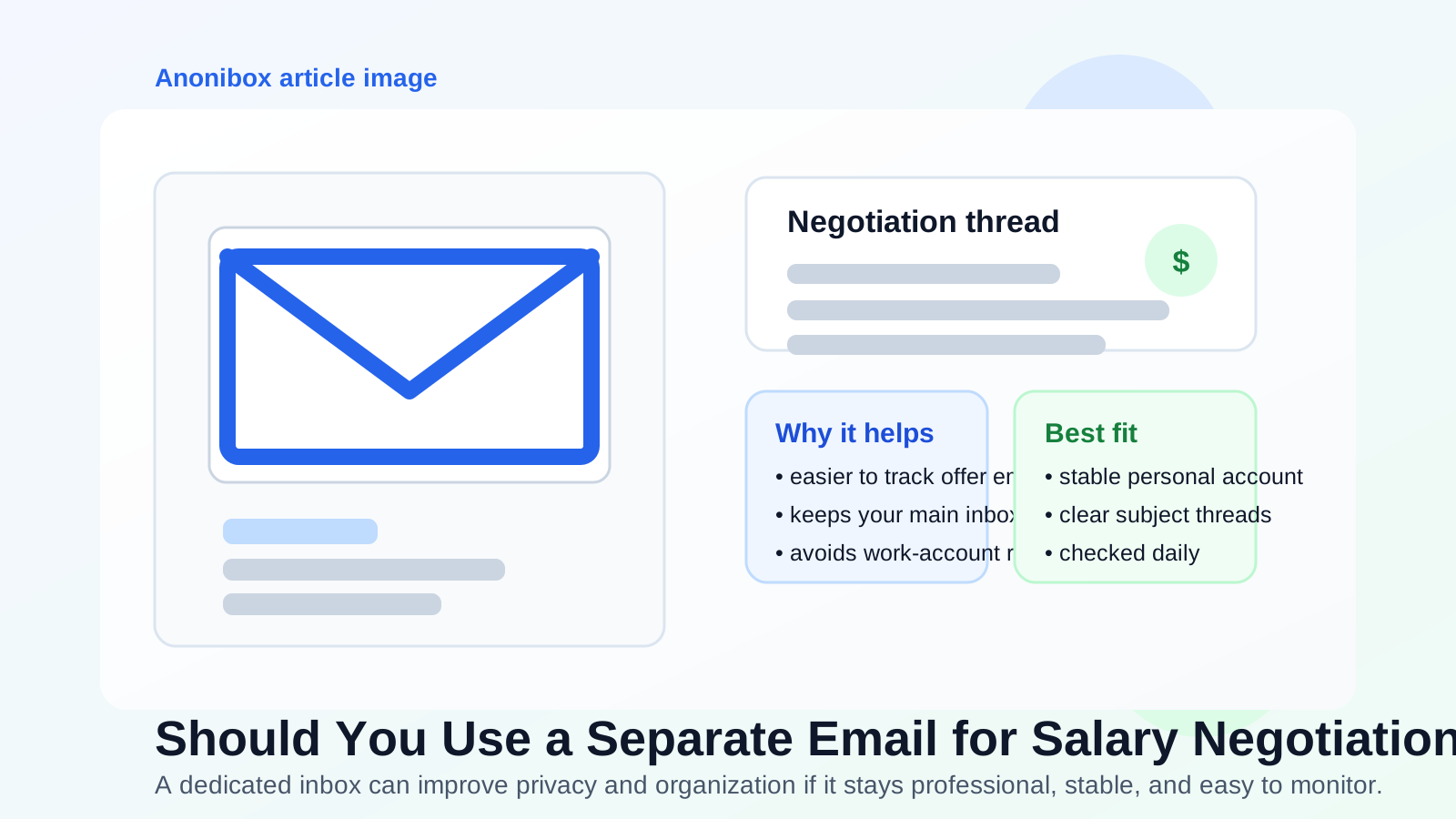
Short answer: usually yes, if the inbox is stable
Salary negotiations are not the same as early-stage job-board browsing. By the time compensation talks begin, the conversation usually includes sensitive details: pay ranges, counteroffers, benefits summaries, bonus structure, stock information, relocation support, start-date discussions, and formal offer letters. Keeping that material in a separate inbox can make the process calmer and easier to manage.
The important qualifier is stable. A separate email for salary negotiations should feel like a serious long-term contact method, not a throwaway address. If a hiring team sends an updated offer letter, a benefits PDF, or a deadline reminder, you do not want to lose access to it because the address was temporary or rarely checked.
Why a separate email can help during salary negotiations
1. It keeps the negotiation thread easy to find
Compensation discussions tend to stretch across several messages. You may get an initial range, reply with questions, receive a revised package, discuss timing, and then review the final paperwork. If those emails land in an inbox already full of newsletters, family messages, receipts, and unrelated work, details can disappear fast.
A separate inbox makes the thread easier to scan and reduces the chance that you miss a deadline, overlook an attachment, or reply from the wrong address.
2. It gives you more privacy than your everyday inbox
Many people use one personal address for everything: banking alerts, retail accounts, travel receipts, newsletters, and job search activity. A separate negotiation inbox limits how much your compensation conversation is mixed with the rest of your digital life. That can be useful if you share devices, keep multiple browser sessions open, or simply prefer less overlap between personal admin and career decisions.
3. It helps you avoid using a work-owned account
If you are negotiating with a new employer while still employed somewhere else, using your current company email is usually a bad idea. Work accounts are owned, logged, and retained by the employer. Even if nobody is actively monitoring your messages, the account is still not truly yours. A separate personal inbox avoids that risk and keeps the conversation under your control.
4. It creates a cleaner record
When negotiations get complicated, having a neat message history helps. You can search one inbox for salary numbers, benefits details, bonus terms, or promised follow-up items without sifting through unrelated mail. That is useful not just during the negotiation, but also later when you want to confirm what was discussed before you sign.
When a separate email makes the most sense
A dedicated negotiation inbox is especially useful when:
- you are interviewing with multiple employers at the same time
- you expect several rounds of compensation discussion
- you want more privacy than your main everyday address offers
- you are leaving a current employer and want strict separation from your work account
- you want one clean place for offer letters, benefits summaries, and recruiter follow-up
It is also helpful if your main inbox is noisy. A lot of candidates do not realize how easy it is to miss an important recruiter message until it is buried under automated alerts and mailing-list clutter.
When a separate email is probably not necessary
You do not need to overengineer this. If your main personal inbox is already professional, well organized, and easy for you to monitor, it may be perfectly fine to use it for salary negotiations. The benefit of a separate email is control and clarity, not complexity for its own sake.
In other words, a separate inbox is helpful when it solves a real problem. If your existing personal email already works like a dedicated professional inbox, you may not gain much by creating another one right before the offer stage.
What kind of separate email should you use?
The best separate email for salary negotiations is one that looks normal, professional, and durable. It does not need to be fancy. It just needs to be yours, easy to access, and appropriate for a serious employer conversation.
A good setup usually has these qualities:
- a clear address based on your name or a simple professional variation
- a provider you trust and can keep long term
- strong account security such as a good password and two-factor authentication
- regular monitoring so you do not miss time-sensitive replies
If you already use Anonibox or another privacy-first workflow for lower-trust signups, early research, or disposable contact needs, salary negotiations are usually the stage where you should switch to a more permanent inbox. Negotiation threads deserve continuity.
What should you avoid?
Temporary or disposable email addresses
Disposable inboxes are useful for low-stakes verification flows and spam-heavy signups. Salary negotiations are not low stakes. An employer sending compensation details wants a contact method that feels dependable. A temporary email can look careless, expire at the wrong moment, or make the recruiter worry that important documents will not reach you.
Your current employer’s work email
This is the big one. A work-owned account is not private in the way most people hope it is. It also creates a strange professional signal: you are using one employer’s resources to negotiate with another. Even if nobody comments on it, it is an unnecessary risk.
An inbox you never check
A separate email only helps if it is actively managed. If you create a new address and then forget to watch it, you have created a new failure point instead of solving one.
Overly clever alias structures that confuse replies
Simple is better. If you use aliases, make sure reply behavior is obvious and reliable. The recruiter should not have to guess whether a forwarded address, masked address, or rotating alias is permanent enough for signing paperwork.
How to set up a separate negotiation inbox well
- Pick a professional address. Use your name or a straightforward variation, not a joke handle or a disposable-looking string.
- Secure the account. Turn on strong authentication and keep recovery details current.
- Create a simple folder or label system. For example: recruiter, compensation, benefits, signed offer, and follow-up.
- Turn on notifications. Salary discussions often move quickly near the offer stage.
- Reply consistently from the same address. That keeps the thread clear and reduces confusion.
How to use the inbox during the negotiation itself
Once compensation conversations start, keep the workflow tidy:
- store each version of the offer in the same thread or folder
- save PDFs locally if they matter
- use clear subject lines when you ask follow-up questions
- double-check the sender domain before opening attachments or links
- keep notes on what was promised verbally versus what appears in writing
This is one reason a separate inbox works so well: it becomes a mini control center for the negotiation rather than just another mailbox.
What about using a separate email plus your main email?
That can work, but only if one address is clearly primary. You generally do not want recruiters guessing which inbox to use for offer updates. If you already started the hiring process on one personal address and want to move salary negotiations to a separate one, make the transition explicit and polite.
For example, you can say that you would like to keep compensation and offer documents on another address you monitor closely. That is a normal enough request if handled clearly. What you want to avoid is creating two equal inboxes and hoping the recruiter picks the right one every time.
Red flags that matter more than the email address itself
A separate email helps with organization and privacy, but it does not fix a sketchy opportunity. Be careful if:
- the employer refuses to send details from an official domain
- the offer arrives before a real interview process
- you are pushed to share sensitive identity or banking details too early
- the compensation conversation jumps to text-only or chat-only channels without a clear reason
- documents, signatures, or payment steps feel rushed or inconsistent
If those red flags appear, the issue is not whether you chose the perfect inbox. The issue is whether the opportunity is trustworthy at all.
A practical rule of thumb
Use a separate email for salary negotiations when you want cleaner organization, stronger privacy, and better control over an important conversation. But make that separate inbox a real professional contact method — not a burner, not a work account, and not something you will abandon halfway through the process.
If your main personal email already serves that role well, you may not need a new address. If it does not, a dedicated inbox is one of the easiest upgrades you can make.
Final answer
Yes, in most cases a separate email is a smart choice for salary negotiations. It helps you keep compensation discussions organized, avoids the risks of using a company-owned work account, and gives you more privacy than mixing the thread into your everyday inbox.
The best version of that strategy is simple: use one professional, stable inbox that you control and check often. That gives employers a dependable contact point while giving you a cleaner, more private way to manage one of the most important parts of the hiring process.