Usually yes — a separate email on a cover letter can be a smart way to keep recruiter replies organized and protect your main inbox during a job search.
It works best when the address looks professional, matches the rest of your application, and stays active for the full hiring process rather than acting like a throwaway inbox.
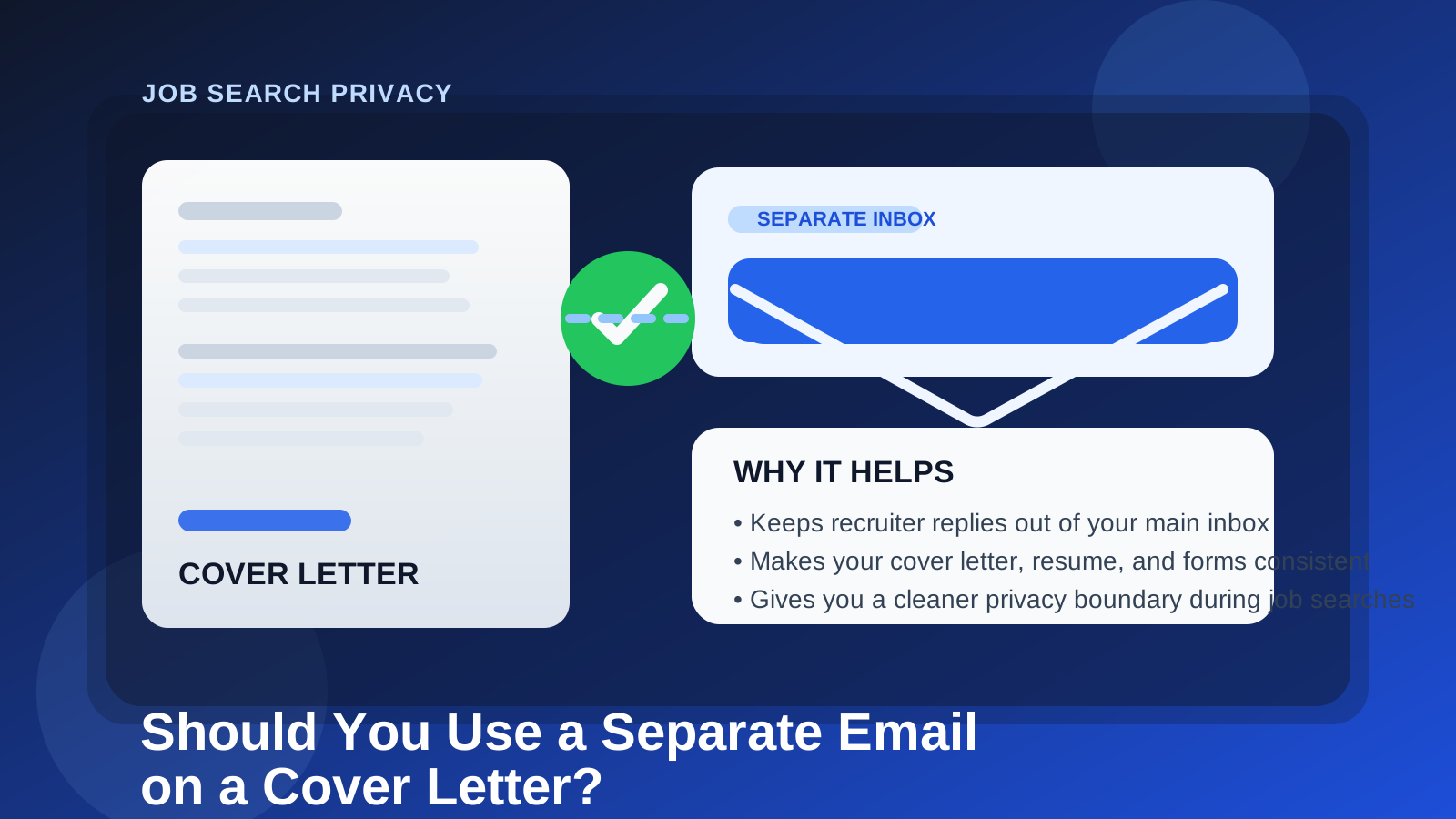
If you are asking whether a cover letter should point to a dedicated job-search address instead of your everyday personal inbox, the practical answer is often yes. A cover letter may look like one small document, but it can be downloaded, forwarded, saved as a PDF, copied into internal notes, and reopened weeks later when a team finally starts interviewing. That means the email attached to it is not just a formatting detail. It is a real contact point and a real privacy decision.
A separate email can make that decision easier. It gives you a cleaner place for recruiter replies, interview requests, assessments, and follow-up threads without mixing all of it into your personal mailbox. At the same time, it only helps if the address feels credible and if you actually monitor it. The goal is not to look secretive. The goal is to stay reachable while keeping more control over where your job-search traffic goes.
What “separate email” means in this context
Here, a separate email usually means a dedicated inbox or durable alias you use for your job search instead of your main everyday address. It is different from both a disposable inbox and your long-running personal mailbox.
- Main personal email: convenient, but it can gather job-search clutter and expose an address you use everywhere else.
- Separate job-search email: a stable address reserved for applications, interviews, and recruiter follow-up.
- Temporary inbox: useful for low-trust signups or one-off testing, but usually too fragile for real cover-letter communication.
That distinction matters. A cover letter usually belongs to the “serious contact” stage of a job search. Employers may come back to it days or weeks later. So the right separate email should still be something you control long enough to carry a real hiring conversation.
Why this question matters more on a cover letter than people expect
Application forms already ask for contact details, so it is easy to assume the cover letter does not matter much. In reality, cover letters often travel separately from the application form. A recruiter may forward only the letter and resume to a hiring manager. A PDF may be downloaded and stored outside the original portal. A team may revisit attachments after the initial application window closes. If the contact information on that document is messy, outdated, or tied to an inbox you do not want widely shared, the problem can follow you longer than you expect.
This is why the best cover-letter email is not just the one that looks professional. It is the one that still makes sense if the document stands on its own. A separate email can be a strong answer when you want both professionalism and a little more privacy boundary.
When using a separate email on a cover letter makes sense
1. You are applying broadly and expect a lot of follow-up
If you are sending many applications, one mailbox can fill quickly with confirmation emails, interview requests, screening questions, assessment links, and recruiter follow-ups. A separate inbox keeps that volume from spilling into your everyday personal email.
2. You want cleaner job-search organization
A dedicated address makes filters, labels, folders, and search much easier. When every hiring-related message goes to the same place, it becomes easier to track who replied, what needs action, and which employers are worth your time.
3. You want more privacy than your main inbox offers
Your primary personal email may already be tied to banking, shopping, social accounts, family communication, subscriptions, and years of logins. Reusing it on every cover letter spreads that identifier farther than necessary. A separate inbox gives you some insulation without making you hard to reach.
4. You are running a confidential job search
If you are applying while employed, a dedicated inbox can help keep your search compartmentalized. You still need normal operational caution, but having one clear address for your search helps reduce confusion and accidental crossovers.
5. Your cover letter may be forwarded outside the portal where you applied
That is more common than many applicants realize. A separate email can be the right contact point when the letter itself becomes the thing people circulate internally.
When a separate email may be unnecessary
A dedicated address is often useful, but it is not mandatory in every case. You may not need one if:
- you are applying to only a few carefully chosen roles
- your existing personal email is already clean, professional, and easy to manage
- you do not mind job-search replies landing in your main inbox
- the cover letter is pasted into a portal rather than sent as a long-lived document attachment
In those situations, a well-managed personal email can still be perfectly fine. The real question is whether a separate inbox solves a real problem for you. If it improves privacy, organization, or boundaries, it is worth using. If it only adds one more account you will forget to check, it may create more friction than benefit.
The biggest advantages of a separate cover-letter email
Better privacy boundaries
A separate inbox limits how widely your main personal address spreads across recruiter systems, applicant tracking platforms, staffing databases, and forwarded documents. It does not make you anonymous, but it does reduce unnecessary exposure of a valuable long-term contact point.
Less inbox clutter
Job searching can generate a surprising amount of mail. Even legitimate employers can produce confirmations, scheduling notes, portal invites, reminders, and automated updates. Add job boards and third-party recruiters and the volume gets annoying quickly. A dedicated inbox contains the noise.
Cleaner consistency across your documents
A separate email works best when the same address appears on the cover letter, resume, and application profile. That consistency reduces the chance that an employer replies to the wrong inbox or wonders which address is current.
Easier post-search cleanup
When your search ends, you can keep the inbox for future opportunities, convert it into a quiet career address, or retire it more easily than if your everyday personal email has already been circulated everywhere.
Common mistakes to avoid
Using a disposable inbox for real cover-letter communication
This is the biggest one. Temporary inboxes are great for testing low-trust job boards, downloading gated resume templates, or checking whether a site will flood you with newsletters before you commit your real address. They are usually a bad choice for a genuine cover letter if you expect follow-up over days or weeks. If the inbox expires or becomes hard to monitor, you may miss the message that mattered.
That is where a tool like Anonibox fits naturally: use it for early filtering, low-trust signups, or one-off resource downloads, then move to a stable separate address once you are sending real applications and care about long-term replies.
Choosing an address that looks fake or awkward
A separate email should still look normal and professional. If it resembles a burner account, a joke username, or a random string of letters and numbers, you create avoidable friction. The address does not need to be elegant. It just needs to look intentional.
Forgetting to check the inbox often
A dedicated mailbox only helps if you actually use it. If you set up a separate address and then forget to monitor it, you are creating your own missed-opportunity problem.
Mismatching your documents
If the cover letter shows one address, the resume shows another, and the portal profile shows a third, recruiters may reply to whichever one they notice first. Pick one address for the active search and keep it consistent everywhere.
Switching addresses mid-process without a plan
If you decide to change inboxes halfway through a search, make sure older mail is still forwarding or still checked. Hiring timelines are rarely clean enough to assume everyone will immediately use the new address.
Separate email vs personal email vs alias
These are related, but not identical.
- Personal email: often fine, especially if it is already professional and not overloaded.
- Separate mailbox: better when you want maximum organization and clear job-search boundaries.
- Email alias: useful if you want a dedicated address that routes into an inbox you already manage well.
If you already have a solid personal address and apply infrequently, you may not need anything more. If you want stronger separation, a separate mailbox is usually the clearest option. If you want separation with lower setup friction, an alias can be a smart middle ground as long as it stays reliable throughout the hiring process.
How to set up a separate email for cover letters the right way
Use a simple, name-based address if possible
The safest format is usually some variation of your name. It makes the address easier to trust, easier to read, and easier for recruiters to match to your application.
Make it your default job-search contact point
If you choose a separate email, use it consistently on your cover letter, resume, application forms, and follow-up messages. That way the address does not look accidental.
Set notifications and filters immediately
Do not wait until you are juggling multiple interviews. Build basic organization early so interview requests and assessment links do not get buried.
Keep it active long enough
Some employers move slowly. An address that works for signup week but disappears before final interviews is not a good cover-letter address.
Review your full contact block
Your email should fit cleanly with the rest of the header or signature. A polished cover letter is about consistency, not just one field.
A quick decision checklist
- Do I want recruiter replies separated from my main inbox?
- Will this address stay active for the full hiring process?
- Does it look professional enough to put on a formal cover letter?
- Can I monitor it reliably every day?
- Will I keep the same address across my resume, cover letter, and application forms?
If the answer to those questions is yes, a separate email is usually a smart move.
Final answer
Yes — using a separate email on a cover letter is often a good idea. It can give you cleaner organization, a better privacy boundary, and more control over job-search follow-up without making you harder for real employers to reach.
Just make sure the address is stable, professional, and used consistently across the rest of your application. A separate email should make your search easier, not more fragile. When set up well, it is one of the simplest ways to keep a job search organized while protecting your main inbox from unnecessary exposure.