Yes — for most active job seekers, using a separate Gmail account for career fairs is a smart way to stay reachable without dumping recruiter follow-up, event signups, and post-fair spam into your main personal inbox.
No, you do not need a brand-new account for every event, but one dedicated career-fair Gmail usually gives you a better privacy and organization balance than using your oldest everyday address or a fully disposable inbox.
Why this question matters at career fairs
Career fairs create a different kind of inbox exposure than normal job applications. You might talk to a dozen recruiters in a single afternoon, scan multiple QR codes, upload a résumé into talent communities, sign up for employer events, and leave with several “apply here later” links. That creates more contact spread, more reminders, and more follow-up messages than a one-company-at-a-time application process.
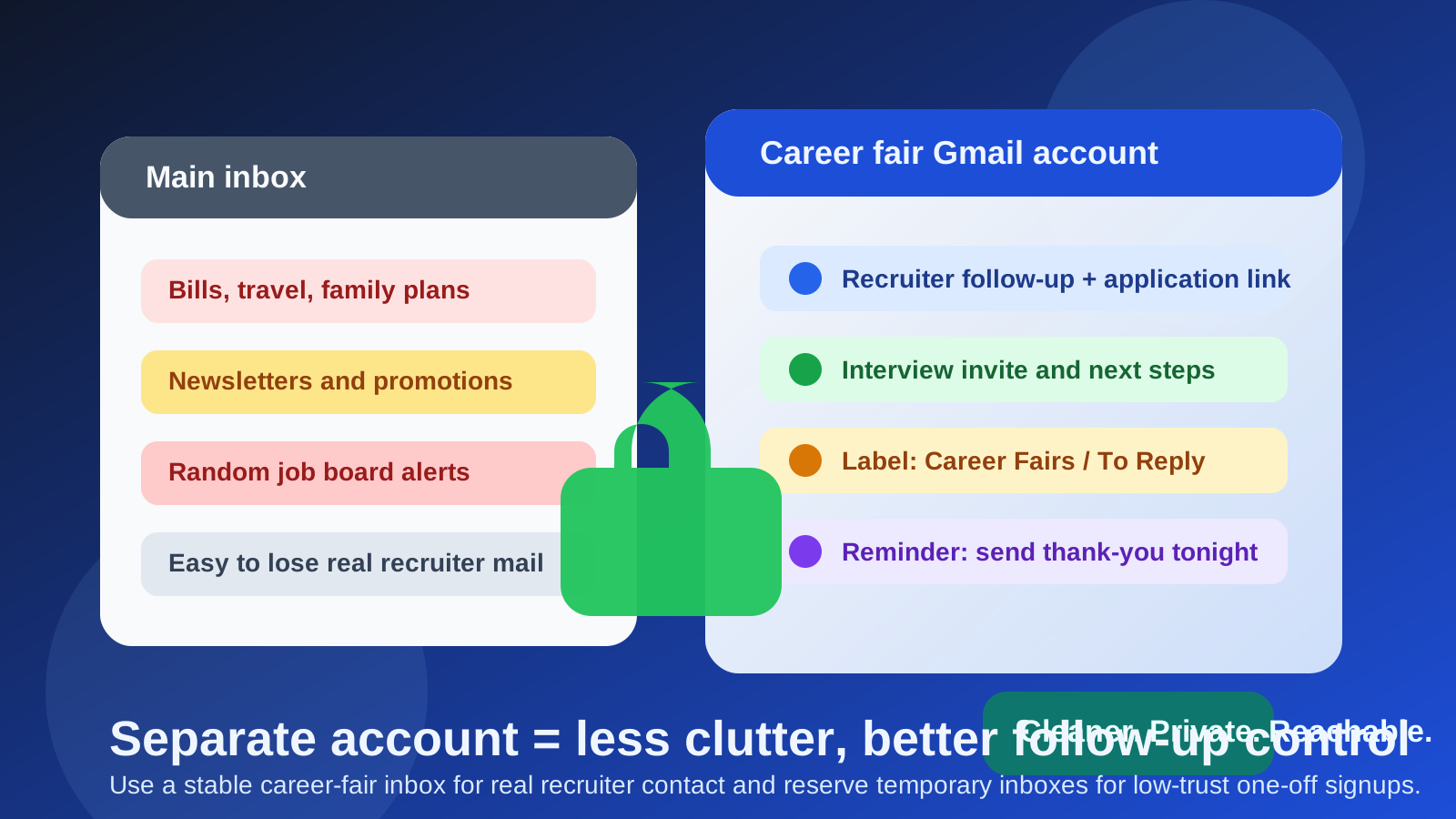
If all of that goes into the Gmail account you use for bills, travel, personal logins, school messages, and everyday life, two problems show up fast. First, legitimate recruiter replies get buried under volume. Second, your long-term personal email identity spreads much more widely across event systems, recruiters, staffing tools, and mailing lists than you may want.
A separate Gmail account will not eliminate every privacy risk, but it gives you a cleaner buffer. It lets you handle real recruiter contact professionally while limiting how much career-fair noise reaches the inbox attached to the rest of your life.
Short answer: when a separate Gmail account is the best choice
A separate Gmail account is usually the best choice when you expect real follow-up after the fair. That includes:
- résumé drops that may turn into interviews later,
- recruiter conversations that lead to application links or screening calls,
- employer signups where you want a stable address for a few weeks or months,
- active student or early-career searches with multiple fairs in one season, and
- situations where you want separation from your main inbox but still need a credible, durable email identity.
In those cases, a dedicated Gmail account is usually stronger than using your oldest personal inbox and more practical than using a temporary address everywhere.
What a separate Gmail account helps you control
1. Spam and overflow after the event
Even good career fairs create inbox clutter. Recruiters may send role links, talent-network invitations, webinars, “stay in touch” campaigns, and reminders to finish applications. Some of that is useful. A lot of it is not. A separate Gmail account keeps that flood out of the address you use for important personal communication.
2. Search and labeling
Gmail is useful because it gives you search, labels, filters, stars, and easy mobile access. If you dedicate an account to career-fair activity, you can label messages by employer, mark messages that need replies, and find follow-up threads quickly instead of digging through unrelated mail.
3. Professional continuity
Career fairs often lead to delayed follow-up. A recruiter you met today might email next week, next month, or later in the semester. That is why a stable separate Gmail account works well: it keeps the communication lane open long enough for real hiring activity without exposing your main address everywhere.
4. Better boundaries than your main personal inbox
There is a difference between “reachable” and “always mixed together.” A separate Gmail account lets you stay responsive to recruiters while deciding when you want to check job-search communication instead of seeing it alongside family, shopping, banking, and personal notifications all day.
When your main Gmail is probably still fine
You do not have to overcomplicate it. If your current Gmail address already looks professional, you only attend an occasional fair, and you do not mind some extra follow-up landing in your everyday inbox, then your main Gmail may be perfectly acceptable.
The real benefit of a separate Gmail account appears when career fairs become a repeat process rather than a one-off event. If you are attending multiple fairs, doing campus recruiting, exploring internship pipelines, or trying to keep your search more private and organized, the separate account becomes much more valuable.
Separate Gmail account vs temporary inbox: not the same job
This is where a lot of people make the wrong trade-off. A temporary inbox can be useful at career fairs, but it is not a full replacement for a stable account when real recruiter follow-up matters.
A temporary or disposable address is best for low-trust, low-stakes situations like:
- downloading a generic event guide,
- unlocking a one-off employer resource you may never revisit,
- testing a signup flow you are not sure you trust yet, or
- avoiding long-term marketing clutter from something that does not need ongoing replies.
That is where a tool like Anonibox fits naturally. It can help protect your real inbox during lightweight or uncertain signups. But if you just had a good conversation with a recruiter and actually want application links, interview scheduling, or future follow-up, a separate Gmail account is usually the better tool. It is stable, familiar, easy to monitor, and less likely to break a real hiring thread.
Why a separate Gmail account often beats your school or work address
Students sometimes default to a college email because it feels official. Working professionals sometimes use a work-managed account because it is already open all day. Neither is always ideal.
A school email may expire after graduation or become less central than you expect. A work email raises bigger privacy questions, especially if your employer controls the account. A dedicated Gmail account that you control personally is often the most durable middle ground: easy for recruiters to recognize, portable across jobs or graduation, and separate from employer-managed systems.
How to set up a career-fair Gmail account the right way
Choose a professional address
Keep it simple: your name, initials, or a clean variation is enough. Avoid joke handles, year-heavy usernames that age badly, or anything that makes a recruiter wonder whether the account is abandoned.
Set recovery options immediately
If you create a fresh account, secure it from day one. Add a recovery method you control, use a strong password, and enable two-factor authentication if it fits your setup. You do not want to miss follow-up because you got locked out of the account you just handed to employers.
Create a small label system
You do not need an elaborate workflow. A few labels usually cover most needs:
- Career Fair
- Need Reply
- Applied
- Interview
That alone makes post-fair follow-up much easier.
Turn on useful notifications, not all notifications
You want important replies fast, but you probably do not need your phone buzzing for every newsletter-style message. Check the account often after an event, and consider filters or notification settings that keep signal above noise.
Use a simple signature
If you expect direct recruiter replies, add a basic signature with your name, phone number if you are comfortable sharing it, and maybe a LinkedIn URL. Keep it minimal. The goal is clarity, not decoration.
Good situations for a separate Gmail account at a fair
- You are attending several employer booths and expect follow-up from many of them.
- You want a consistent address for résumé drops, application links, and screening messages.
- You do not want job-search mail mixed into the account you use for personal finance, travel, or family communication.
- You are trying to keep your search more organized during internship or new-grad recruiting season.
- You want something more stable than a disposable inbox but more contained than your everyday email.
Mistakes to avoid
Using a disposable inbox for serious employer contact
Disposable inboxes are useful, but not for every step. If an employer might contact you again, do not make them chase you through an address you may stop checking.
Neglecting the account after the fair
The account only helps if you actually monitor it. Many career-fair opportunities are lost because candidates treat the event as the hard part and forget that follow-up is where momentum often turns into interviews.
Creating unnecessary complexity
You do not need one Gmail account per employer or per fair. One clean dedicated account is usually enough.
Using an address that looks unprofessional
If the whole point is better organization and cleaner presentation, the email itself should support that goal.
Assuming Gmail itself guarantees privacy
A separate Gmail account improves separation and inbox control. It does not magically remove all tracking, spam, or security risk. You still need normal caution with links, attachments, and recruiter outreach you cannot verify.
A practical post-fair checklist
- Check the separate account the same evening or next morning.
- Star or label any recruiter message that needs a reply.
- Save application links before they get buried.
- Unsubscribe from obvious low-value mail when appropriate.
- Move any serious employer thread into a clear label or filter.
- Keep using the account for the whole follow-up cycle, not just the event itself.
Final answer
So, should you use a separate Gmail account for career fairs? For many people, yes. It is one of the simplest ways to stay professional, reduce inbox clutter, and keep recruiter communication separate from the rest of your digital life without sacrificing reliability.
The best setup is usually a stable, professional Gmail account dedicated to job-search and career-fair activity, with temporary inbox tools reserved for one-off or low-trust signups that do not need long-term follow-up. That gives you the balance most people actually need: privacy where it helps, continuity where it matters, and a cleaner path from booth conversation to real opportunity.