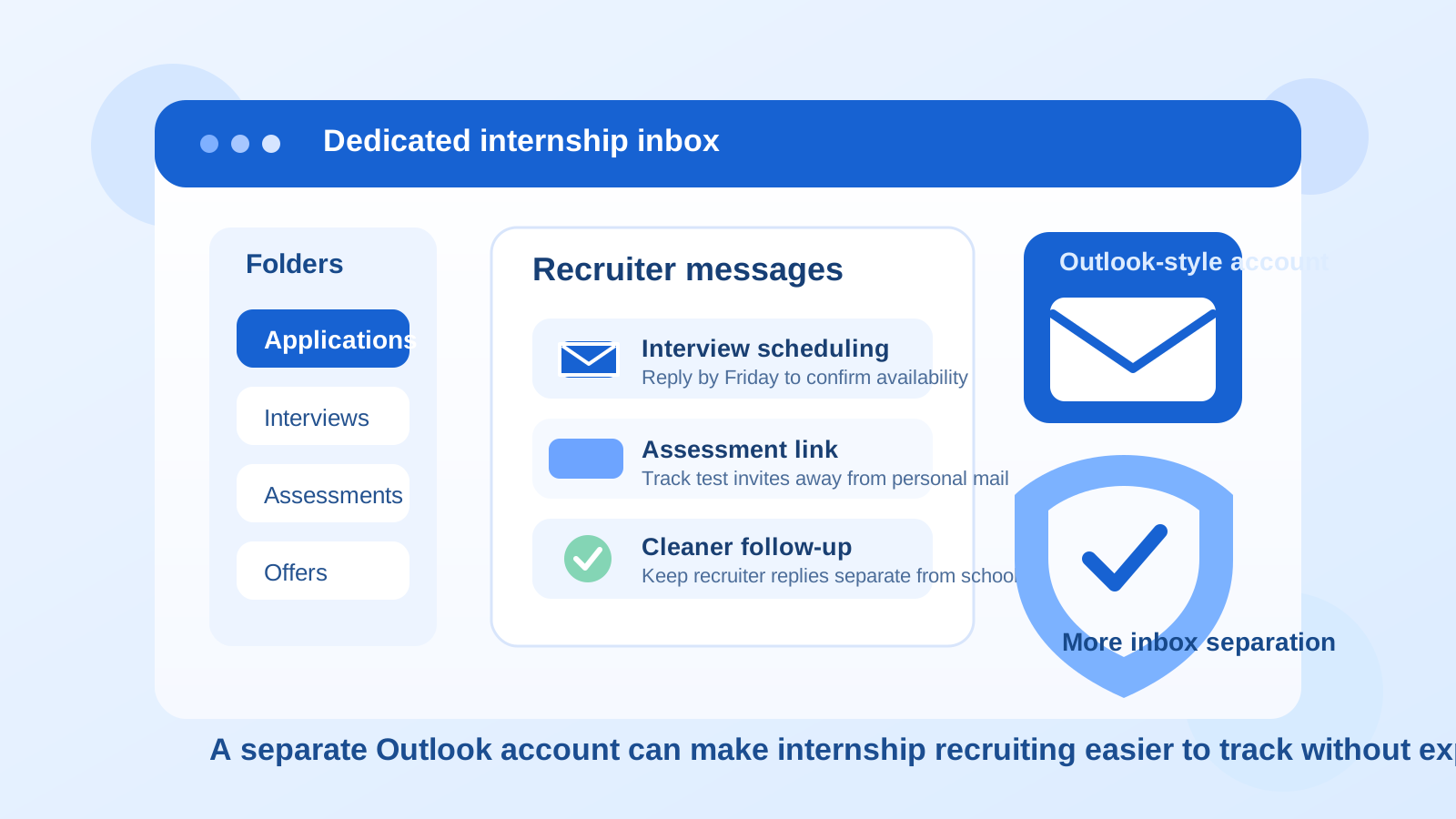
Usually yes. A separate Outlook account for internship applications is a practical way to keep recruiter email organized without exposing the inbox you use for school, shopping, family, and long-term logins.
For serious applications, it is usually a better long-term choice than a disposable inbox. Temporary email still has a place for low-trust signups or one-off platform testing, but real internship recruiting usually needs a stable address you will keep checking.
Why this question matters during internship season
Internship applications create a lot more email than people expect. One application can trigger a confirmation message, a coding assessment, a recruiter follow-up, a webinar invite, a “join our talent community” email, and several reminders to finish a profile you already forgot about. Multiply that by ten or twenty applications and your inbox stops feeling manageable fast.
That matters because internship timelines are often short. A recruiter may only give you a day or two to respond. A campus employer may fill interview slots quickly. A startup may send an assessment link that expires. When all of those messages land in the same inbox you use for newsletters, receipts, class notifications, and personal logins, important replies can disappear into noise.
Using a separate Outlook account gives your internship search its own lane. It does not make you anonymous, and it does not solve every privacy problem. What it does is reduce unnecessary exposure and make your communication easier to control.
Short answer: yes, for most active applicants it is a smart default
If you are applying to multiple internships, a separate Outlook account is usually worth it. Outlook is mainstream, familiar, and stable enough for a process that may stretch over weeks or months. A separate account lets you stay reachable without giving every platform and recruiter access to the inbox tied to the rest of your life.
It is also a better fit than a purely disposable address once an internship search becomes real. Employers may follow up later than expected. They may revisit candidates for another role. A recruiter may contact you again months later. That kind of communication works best when your inbox still exists and you still monitor it.
What a separate Outlook account helps you control
1. Recruiter follow-up is easier to spot
The biggest benefit is simple visibility. When almost every message in an inbox is related to internships, it becomes much easier to notice a scheduling email, a rejection you need to respond to professionally, or an assessment request that needs quick action.
That is especially helpful if you are juggling school, part-time work, campus clubs, or family obligations. You do not want an interview request buried under package notifications and password-reset emails.
2. Your main inbox stays cleaner
Many internship-related platforms keep sending messages long after you applied once. Some are useful. Many are not. A separate Outlook account keeps that traffic from lingering in the inbox you use for everything else. When internship season ends, cleanup is much easier because the clutter is already isolated.
3. You reduce unnecessary exposure of your oldest personal inbox
Your long-running personal address often connects to more of your life than you realize: shopping accounts, travel bookings, bank alerts, friends, family, account recovery, and years of subscription history. There is rarely a good reason to expose that same inbox to every employer form, student platform, and third-party recruiting workflow you touch during a search.
A separate account does not hide who you are, but it does narrow the path through which internship-related spam, list-building, and stray follow-up can reach you.
4. Outlook still looks normal and professional
Recruiters are not usually comparing candidates based on Gmail versus Outlook. What matters more is whether the address looks clean, the inbox is active, and you reply like a professional. Outlook clears that bar easily. A separate Outlook account gives you familiarity and stability without forcing you to use an inbox that carries years of unrelated digital baggage.
Separate Outlook account vs. your main Outlook account vs. temporary email
These are three different choices, and they solve different problems.
- Main Outlook account: easiest in the moment, but it mixes internship traffic with the rest of your life and increases long-term inbox clutter.
- Separate Outlook account: best for serious applications, recruiter replies, interview scheduling, and any process that may continue for months.
- Temporary email: best for low-trust signups, one-off downloads, or early research when you are not ready to hand over a lasting inbox yet.
This is where a tool like Anonibox fits naturally. If you are testing a sketchy-seeming student portal, downloading a guide, or trying a signup flow you do not fully trust, a temporary inbox can make sense at the very beginning. But once you are submitting real applications to employers you actually want to hear from, a stable inbox is usually the better move.
When a separate Outlook account makes the most sense
- You are applying widely. The more companies, job boards, and campus systems you touch, the more useful inbox separation becomes.
- You expect real back-and-forth. If you are likely to receive interview requests, assessments, or paperwork, a stable dedicated inbox is much better than a disposable one.
- Your current email address is old or messy. A clean separate account can be more professional than trying to reuse an address you made years ago.
- You want better search organization. Folders, rules, and categories are easier to manage when the whole account is focused on one goal.
- You want an address you can retire later. When recruiting season ends, you can keep the account for follow-up or scale down how often you check it without disturbing your primary inbox.
When a separate Outlook account may be unnecessary
If you are only applying to one or two internships, already have a clean professional inbox, and are disciplined about monitoring it, creating a separate account may be optional rather than essential. Some people genuinely do fine with one well-managed inbox.
The question is not whether everyone must do this. The question is whether the extra separation makes your specific search easier to manage. For many students and early-career applicants, the answer is yes because internship recruiting tends to create more noise than expected.
How to set up the account well
Choose a clean address
Use some version of your real name if possible. Keep it simple. You do not need a clever handle. A straightforward address makes replies easier and avoids the awkwardness of sending applications from something that looks unserious.
Set the display name correctly
Make sure the account shows your real name, not a nickname, meme, or outdated gamer tag. Recruiters usually notice the display name before they notice anything else.
Turn on notifications and recovery options
A separate inbox only helps if you actually see the messages. Add recovery information you control, enable alerts on the device you check most, and test the login before application season gets busy.
Create basic folders or rules
You do not need an elaborate system. Even a few folders such as Applications, Interviews, Assessments, and Offers can help. Outlook rules can also keep automated job-board messages from burying actual recruiter replies.
Use a simple signature if you want one
A plain signature with your name, phone number if you are comfortable sharing it, and maybe your LinkedIn profile can be useful. Keep it light. Internship communication does not need a corporate-style signature block.
Mistakes to avoid
- Do not use an address you never check. A separate account that goes unread is worse than a main inbox you monitor consistently.
- Do not treat temporary email as a full replacement for serious recruiting. It is useful for early filtering, not for every later stage.
- Do not use a school or work-managed account you might lose. If you will graduate, change schools, or leave a job, your access may not last as long as the recruiting cycle or later follow-up.
- Do not assume separation equals security. A separate account reduces clutter and exposure, but you still need to watch for phishing, fake recruiter messages, and suspicious links.
- Do not make the address harder than it needs to be. The whole point is simplicity and control.
A practical rule of thumb
If an internship opportunity is legitimate enough that you would want an interview invite from it, it probably deserves a real inbox rather than a disposable one. If a signup feels low-trust, promotional, or more like research than a real employer relationship, temporary email is often the better first step.
That makes a separate Outlook account a strong middle ground. It is stable enough for real recruiting, ordinary enough that no one questions the provider, and separate enough that the rest of your life does not have to absorb every internship-related message.
Final answer
Yes — in most cases, using a separate Outlook account for internship applications is a smart move. It helps you stay organized, keeps recruiter email easier to spot, and reduces how widely your oldest personal inbox gets exposed during a noisy hiring process.
Use temporary email only when you are still filtering low-trust signups or one-off forms. Once you are applying to internships you genuinely care about, a separate Outlook account is usually the cleaner and more reliable choice.