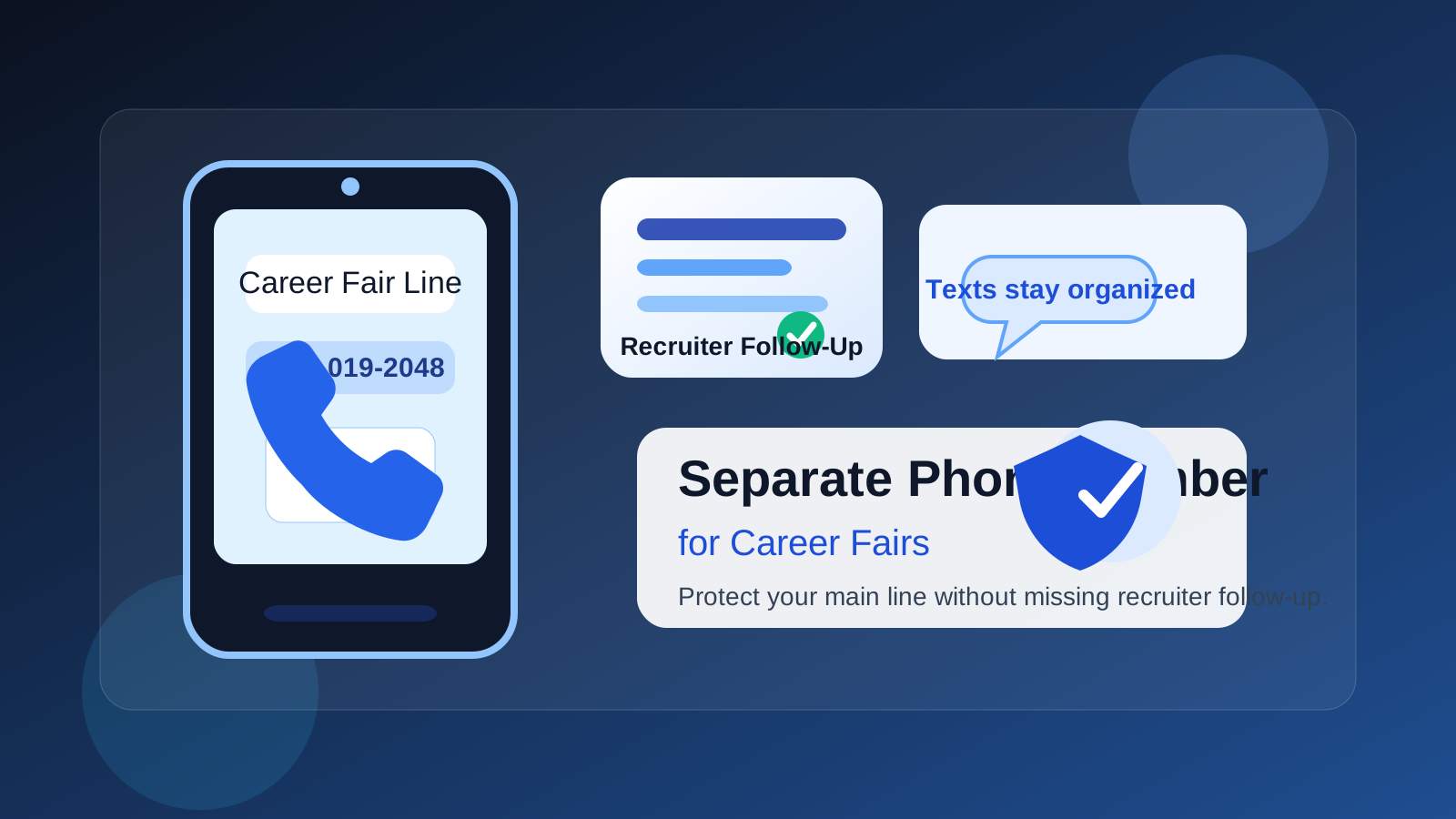
Yes—using a separate phone number for career fairs is often a smart move if you expect recruiter calls, follow-up texts, QR-code signups, and a lot of contact sharing in a short time. It helps you stay reachable without putting your main personal number on every booth list, event form, and talent network.
No—you do not need a second number for every small event. But if you are attending a busy campus fair, industry expo, or hiring event where your contact details may spread quickly, a dedicated number can give you cleaner boundaries, better spam control, and an easier way to manage follow-up.
Why career fairs create more phone-number exposure than a normal application
A direct job application usually goes to one employer through one careers page. A career fair is different. In a single afternoon, you might hand out your résumé, scan event QR codes, register for employer follow-up sessions, join talent communities, sign up for alerts, and chat with recruiters who later pass your details to someone else on the hiring team.
None of that is automatically bad. It is just a much messier contact environment. Your phone number can end up attached to:
- recruiter text follow-up after a short booth conversation,
- event apps and badge-scanning systems,
- employer talent pipelines you only loosely remember joining,
- generic reminder campaigns for future events, and
- third-party staffing outreach that feels more aggressive than helpful.
That is why this question matters. The issue is not whether phone contact is inherently unprofessional. It is whether you want your everyday number mixed into a high-volume, semi-public networking workflow.
Short answer: when a separate number usually makes sense
A separate phone number is usually worth considering when career fairs are part of a serious job-search plan rather than a one-off casual stop. It is especially useful if:
- you expect to talk to many employers in one day,
- you are a student or recent graduate entering high-volume campus recruiting,
- you want recruiter texts and calls without giving out your main line everywhere,
- you are quietly exploring a job change and want tighter boundaries,
- you already use a separate job-search email and want your phone workflow to match, or
- you know you may want to retire the number later if it starts attracting spam.
If several of those apply, a second number is usually a practical upgrade rather than overkill.
When your regular phone number is probably fine
You do not need to overcomplicate things if the event is small, targeted, and low-volume. Your normal number may be perfectly reasonable if:
- you are attending a niche fair with only a few employers you already know,
- you are comfortable being reachable directly on your main line,
- you rarely share your number outside carefully chosen applications, and
- you do not expect a flood of recruiter texting or follow-up automation.
In other words, a separate number is not a moral rule. It is a boundary tool. If the exposure is low and the employers are trustworthy, your main number may be fine.
What a separate phone number actually helps with
1. Cleaner boundaries
Your main phone number usually connects to family, friends, banks, two-factor codes, delivery updates, medical reminders, and everyday life. Career-fair traffic can be noisy and unpredictable. A separate number keeps that noise from landing in the same place as everything else.
2. Better spam control
Some employers follow up thoughtfully. Others send repetitive reminders, event invitations, or broad recruiting texts that stop feeling useful after the first week. With a separate number, you have more control over how long that traffic stays active in your life.
3. Easier follow-up tracking
If every fair-related text and voicemail goes to one dedicated line, it becomes much easier to remember who contacted you, which company you talked to, and which next step actually matters.
4. More confidence sharing contact details in person
At career fairs, conversations move fast. You may decide in seconds whether to scan a code, fill a form, or hand someone your résumé. A dedicated number makes those moments less stressful because you are not deciding whether to expose your main personal line each time.
What kind of number works best?
The best career-fair number is usually a stable, professional secondary number—not one that disappears too quickly. Recruiters may follow up the same day, but they may also reach out one or two weeks later after reviewing candidates internally. If your number goes dead too soon, you can miss a good opportunity.
A useful setup usually has these qualities:
- it can receive both calls and texts reliably,
- it stays active long enough for the full follow-up window,
- it lets you set a professional voicemail,
- it is easy to monitor without confusing it with your personal line, and
- it can be muted, filtered, or retired later if needed.
Depending on your region and provider options, that might mean a secondary SIM, an additional mobile line, or a managed calling number you control. The exact tool matters less than the workflow: stable during the active search, separate from your main life, and easy to phase out later if it becomes noisy.
Separate number vs burner number vs your main number
People often mix these ideas together, but they solve different problems.
Your main number
Best when the event is low-risk, you want direct access, and you do not mind long-term exposure.
A separate stable number
Best for most active job seekers. It gives you privacy and organization without cutting off legitimate recruiter follow-up.
A very short-lived burner number
Sometimes useful for low-trust situations, but risky for real career-fair conversations. If a recruiter tries to reach you next week and the number is already inactive, the privacy gain was not worth the missed opportunity.
That is why the best answer is often not “most disposable.” It is “most controlled.” You want enough separation to protect your main line without making yourself hard to reach.
How to use a separate phone number well at a career fair
Put it on the materials that need follow-up
If you are using the number, use it consistently on the résumé version, QR profile page, digital contact card, or fair signup flow you expect recruiters to use. Mixed contact details create confusion.
Set up voicemail before the event
A simple professional greeting matters. If you miss a call from a recruiter, the message should make you sound reachable and organized.
Label contacts immediately after each conversation
Career fairs create memory blur. Save numbers with the company name, recruiter name, and a note like “data analyst booth” or “follow-up on internship program.” That makes later texts much easier to evaluate.
Use it for real recruiting conversations, not only signups
A dedicated number works best when it is treated as your career-fair contact channel, not as a disposable trick. If you want a company to reach you, check it regularly and reply professionally.
Move strong opportunities into a more permanent workflow
Once an employer becomes a serious contender, keep things organized. You may continue using the separate number throughout the search, or you may prefer to consolidate later. The important part is making that transition intentionally, not by accident.
How this fits with your email strategy
Phone privacy works better when it matches your email privacy strategy. Many people protect their inbox but forget that phone exposure can be just as messy after a career fair.
A practical setup often looks like this:
- a stable job-search email for real recruiter follow-up,
- a separate phone number for calls and texts tied to the fair, and
- temporary inbox tools such as Anonibox for low-trust downloads, one-off booth giveaways, or signups that do not need a long-term reply channel.
That last part matters. A career fair includes both real opportunities and low-value contact collection. You do not need the same communication channel for both. A stable contact path is best for genuine hiring conversations. A temporary inbox can be useful when you just want access to a brochure, webinar recording, or generic mailing list without committing your long-term contact details.
Mistakes to avoid
- Using a number that expires too fast: recruiter follow-up often lags behind the event.
- Ignoring the number after the fair: a separate line only helps if you actually monitor it.
- Giving different numbers to different versions of your materials: that creates confusion and missed callbacks.
- Sharing sensitive information casually by text: a phone number is for contact, not for oversharing documents or identity data.
- Assuming every text is legitimate: scammers know job seekers expect follow-up.
Red flags after the event
A separate number improves boundaries, but it does not magically make every message safe. Be cautious if someone:
- pushes you to move immediately to WhatsApp, Telegram, or another off-platform channel,
- asks for sensitive personal details before the role is clearly real,
- wants you to share one-time verification codes,
- offers a job with almost no screening, or
- sends vague texts that never clearly identify the employer or position.
Those are reasons to slow down, verify independently, and keep control of the conversation.
A quick decision checklist
Before the event, ask yourself:
- How many employers will likely get my number?
- Am I comfortable with recruiter texts landing on my main line for weeks or months?
- Do I want a contact channel I can mute or retire later?
- Will recruiters need a stable callback number after the fair?
- Do I already use a separate email and want the same separation for phone contact?
If the honest answers point toward volume, uncertainty, or privacy concerns, a separate number is probably the better choice.
Final answer
Yes, using a separate phone number for career fairs is often a smart idea—especially if you want recruiter follow-up without giving your everyday personal line to every booth, form, and event platform you touch. It is one of the simplest ways to create boundaries without making yourself unreachable.
The best version is usually a stable, professional second number you can monitor during the active search, not a hyper-disposable number that disappears before recruiters reply. Pair it with a sensible email strategy, stay alert for scammy follow-up, and you can keep more control over your contact information while still making the most of real opportunities.