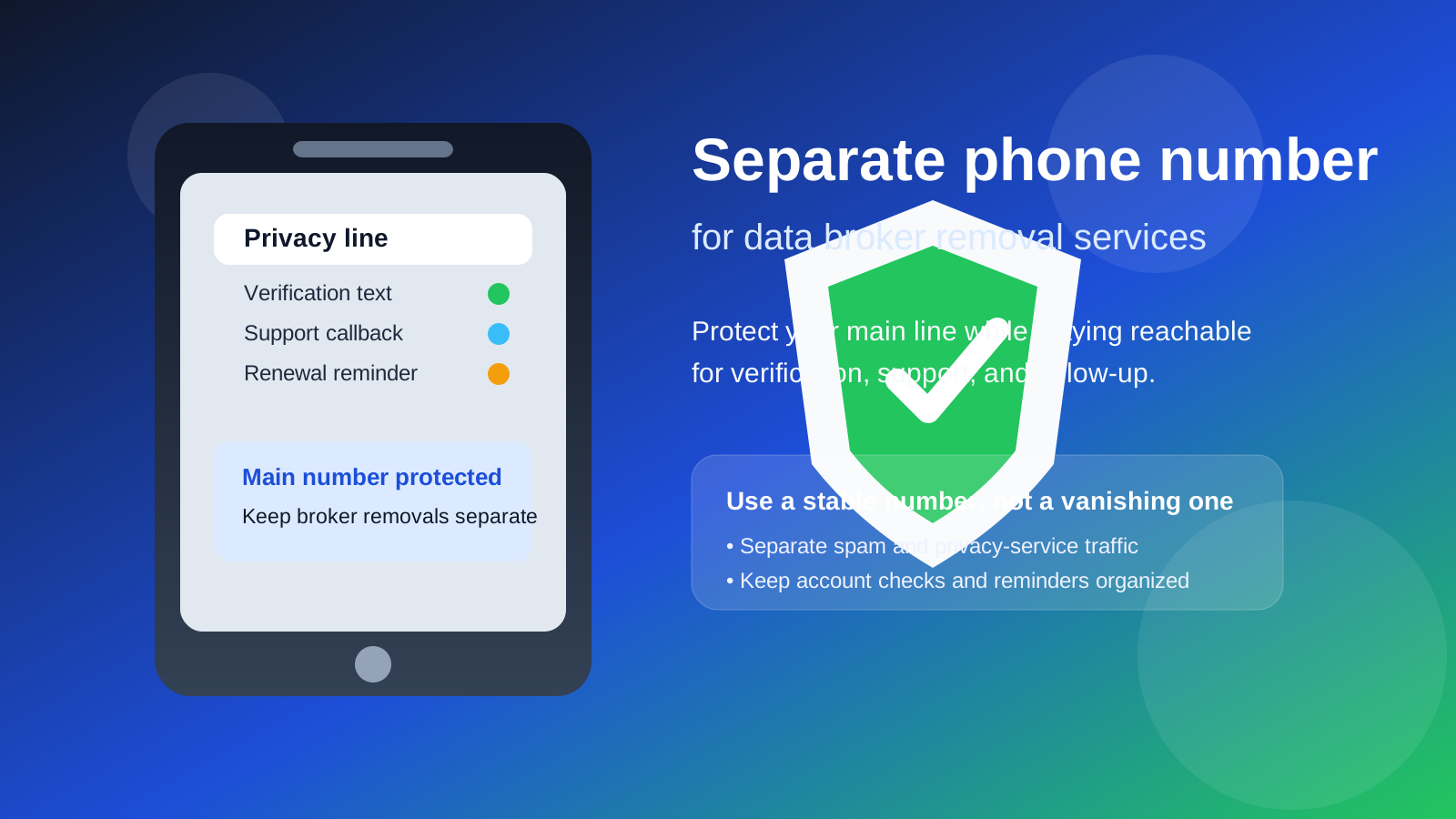
Usually yes. A separate phone number is often a smart choice for data broker removal services if you want to stay reachable for verification and follow-up without exposing your main personal number.
The key is using a stable number you can monitor, not a throwaway line that disappears before a service texts you about an account check, support reply, or renewal decision.
Data broker removal sounds like a one-time privacy chore, but in practice it often turns into an ongoing stream of confirmations, support replies, progress updates, and occasional re-checks. That is exactly why phone-number decisions matter here. If you hand over your everyday number to every privacy service you test, you may reduce one kind of exposure while creating another.
For many people, a separate number is the clean middle ground. It lets you respond to legitimate calls or texts without tying your main line to yet another category of online accounts. It also gives you a cleaner way to cut off future noise if a service turns out to be disappointing, overly aggressive, or simply no longer useful.
Why this question matters
People often focus on email when they think about privacy, and that makes sense. But phone numbers are powerful identifiers too. They can be used for account recovery, support callbacks, text-message verification, marketing outreach, and data matching. Even when a data broker removal service is acting in good faith, giving it your main number extends your personal contact footprint.
That does not mean every service asking for a phone number is doing something shady. Some use numbers for two-factor login, billing support, or urgent contact about an account issue. The real question is not whether a phone number is always bad. The real question is whether your main phone number is the right one to use.
Short answer: a separate number is often the better default
If you plan to work with a real service and keep access to your account over time, a separate number is often more practical than either your main personal line or a disposable number that may stop working too soon. It gives you separation without making you unreachable.
That balance matters. Data broker removal services may require follow-up over weeks or months. You may need to approve a change, confirm identity details, review a support response, or decide whether to renew. If the number attached to the account is gone, recovery becomes annoying fast.
Why a separate phone number helps
1. It protects your main personal line
Your main number is usually tied to family, friends, work contacts, banking alerts, delivery updates, medical offices, and countless old accounts. Adding privacy-service traffic to that mix may be convenient in the short term, but it widens the circle of places where your number lives. A separate line creates a boundary.
2. It reduces the impact of future spam or sales follow-up
Not every unwanted message is a scam. Sometimes the bigger annoyance is simple persistence: promotional texts, calls about upgrades, follow-ups after a trial, or support messages you no longer care about. When that traffic lands on a separate number instead of your daily line, the downside is much easier to manage.
3. It keeps privacy work organized
Privacy maintenance is easier when related messages stay in one channel. A separate number makes it simpler to notice which texts belong to a removal request, which service called you back, and whether a message is tied to a specific vendor. If you are comparing more than one service, that separation matters even more.
4. It is easier to retire later
If you eventually stop using a provider or decide the entire setup is not worth it, retiring a dedicated privacy number is far less disruptive than trying to untangle the same problem from your main everyday line.
What counts as a good separate number?
A separate number does not have to mean anything exotic. In practice, it usually means a stable second number you control and can keep active for as long as the account matters. Depending on your region and setup, that might be a secondary SIM, an extra carrier line, a lawful virtual number, or another managed line that stays available long enough for account support and follow-up.
The important part is reliability. If the number expires quickly, drops incoming texts, or is so rarely checked that you miss important messages, it stops being helpful.
When using a separate number makes the most sense
- You are comparing multiple data broker removal services. A separate number keeps vendor follow-up from spilling into your main line.
- You are privacy-sensitive by default. If you already separate email accounts or browser profiles, a separate number is a natural extension of the same habit.
- You have had spam problems before. If your main number already attracts too much noise, there is no reason to feed that problem.
- You are not fully sure which provider you will stick with. Testing a service is exactly when separation has the most value.
- You want easier household or personal record-keeping. One number dedicated to privacy-service messages is easier to audit later.
When your main number may be fine
Using your main number is not automatically wrong. It may be perfectly reasonable if you already trust the provider, expect to keep the account long term, and do not mind that number being part of the relationship. Some people prefer fewer moving parts, and that is fair.
Still, even in those cases, it is worth asking whether convenience today is worth broader exposure tomorrow. Phone numbers are sticky. Once a number is tied into multiple systems, it tends to stay there.
Why a disposable or temporary number is not always the answer
A lot of people jump from “I do not want to use my main number” to “I should use the most disposable thing possible.” That can backfire. Data broker removal is not always a one-click transaction. If a service needs to send a verification code later, call you about an account problem, or confirm a change, a number that vanished can create its own mess.
This is the same reason a separate long-term inbox often works better than a fully temporary inbox once you move beyond early research. Tools like Anonibox can be useful when you are checking low-trust sites or testing sign-up flows, but once you actually choose a service, durability matters. A separate number should give you privacy and continuity.
What to avoid
- Do not use your work number. It creates unnecessary employer visibility and can become awkward if you change jobs or lose access.
- Do not use a number you rarely check. A dedicated line only helps if you stay reachable.
- Do not tie the setup to important personal accounts unless you mean to keep it. If the line later disappears, account recovery can get annoying.
- Do not assume “privacy service” automatically means “privacy perfect.” Read the account and contact requirements with the same skepticism you would apply anywhere else.
Red flags around phone-number requests
Even if you are open to using a separate number, it is still smart to watch for signs that a provider is asking for more than it reasonably needs.
- It pushes for a phone number before you can even review basic service details.
- It tries to move you into aggressive sales calls right away.
- It requests more personal information than seems necessary for the stage you are in.
- It treats the number as mandatory without clearly explaining why.
- Its support or signup flow feels sloppy, vague, or inconsistent.
A separate number can reduce the fallout from a bad decision, but it should not replace common sense. If the service itself feels wrong, the better answer may be walking away.
A practical setup that works for most people
- Use a separate number for the account. Keep it stable enough for texts, calls, and account recovery.
- Pair it with a separate email if possible. That keeps privacy-service communication out of your main inbox too.
- Monitor both consistently. Separation only works if you still see important messages in time.
- Save key confirmations. Keep records of signup details, support replies, and renewal notices.
- Reassess after you settle on a provider. If the service proves trustworthy and useful, keep the dedicated setup. If not, it is easier to shut down cleanly.
Final answer
Yes — in many cases, using a separate phone number for data broker removal services is a smart privacy move. It helps protect your main line, keeps service-related calls and texts organized, and gives you more control if a provider becomes noisy or disappointing.
The best version of this strategy is not a disappearing number you forget to check. It is a stable separate number you can actually monitor. That way you stay reachable for real verification and support while keeping more distance between your everyday identity and yet another online service.