Yes, often — a separate phone number is a smart choice for internship applications if you expect lots of recruiter calls, portal signups, career-fair follow-up, or spam from lower-trust job boards.
You do not need a separate number for every internship search, but using one can make call screening easier, protect your main line, and keep internship traffic from bleeding into the rest of your life long after the season ends.
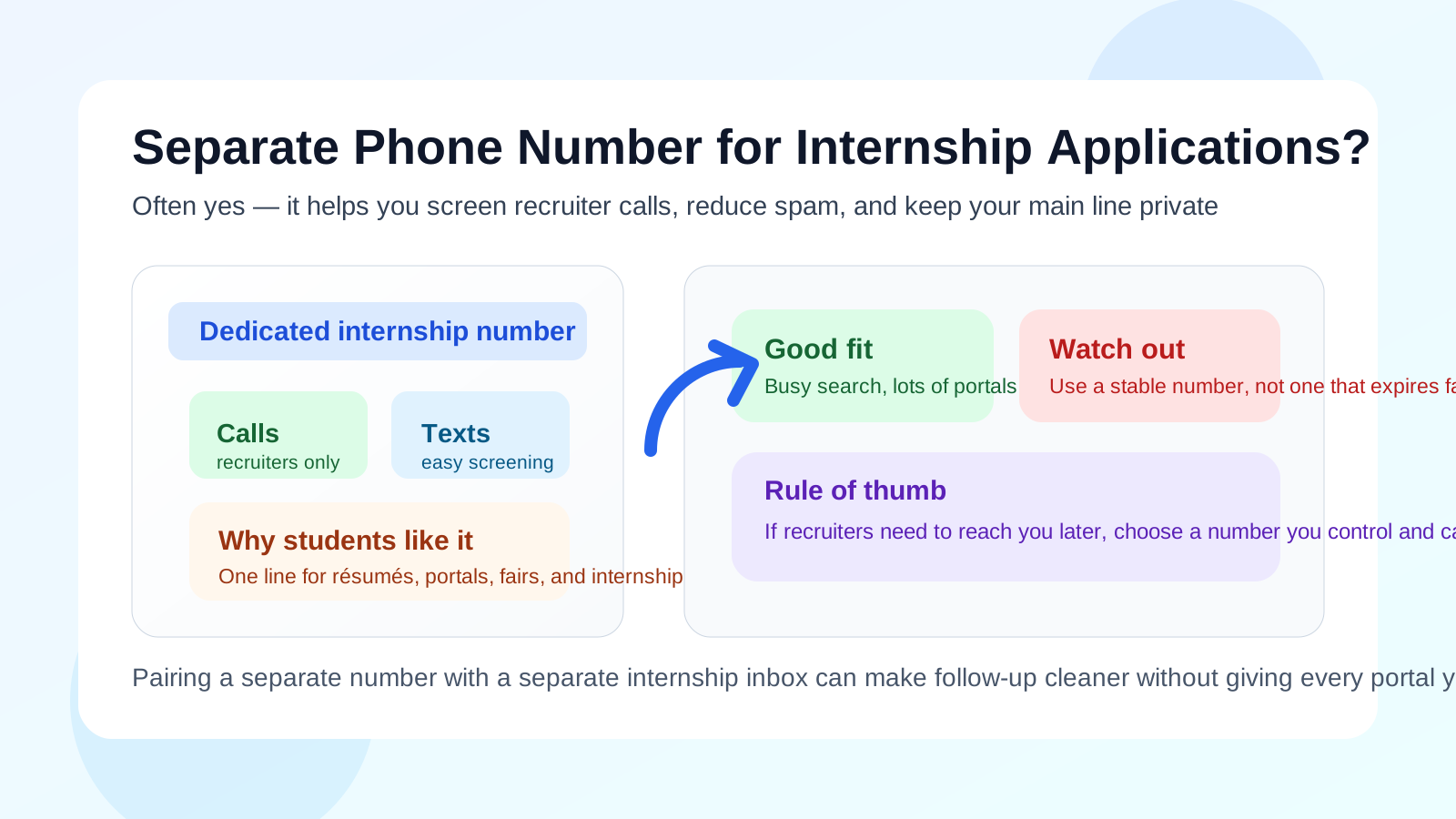
Why this question matters more than it looks
Internship applications can spread your contact information far and wide in a short time. Students often apply to dozens of roles, upload résumés to multiple portals, attend campus events, join employer talent communities, and reply to third-party recruiters all in the same month. That means your phone number can travel through applicant tracking systems, event tools, agency databases, and job boards faster than you expect.
A phone number is not just another form field. It is a direct line to you. Once it is widely shared, it can lead to recruiter calls at awkward times, persistent text reminders, robocalls, and scam messages pretending to be employers. That does not mean you should never share a number. It means you should be intentional about which number you share.
Short answer: a separate number is often a good idea
For many students and early-career applicants, a separate phone number is a practical middle ground. It gives real employers a stable way to contact you without requiring you to hand your primary personal number to every internship portal and event registration form you touch.
It is especially useful if you are applying broadly, joining multiple recruiting platforms, or want a cleaner boundary between school, personal life, and job-search admin.
What counts as a separate phone number?
A separate phone number does not have to mean carrying a second physical phone. In practice, it usually means any legal, reliable second line that you control and can keep active throughout the application process. That might be a second SIM or eSIM, a dedicated line from your carrier, or another stable number solution that works well in your region.
The key point is stability. Recruiters may follow up weeks later for an interview slot, availability check, or offer conversation. If the number expires too soon or is hard for you to monitor, it stops being helpful.
When a separate number helps the most
1. You are applying to lots of internships
If you are sending applications widely, a separate number can absorb the noise. That matters because not every application source is equally trustworthy. A major company careers page is one thing. A random aggregator, event signup, or résumé database is another.
Using a separate line means recruiter activity, talent-community texts, scheduling reminders, and low-value follow-up all land in one place instead of taking over your everyday number.
2. You attend career fairs or networking events
Internship searches often overlap with campus recruiting events, employer webinars, club networking nights, and student talent platforms. Those can be useful, but they also multiply the number of systems collecting your contact details. A separate number makes it easier to participate without turning your main line into a permanent recruiting channel.
3. You want better scam screening
Job scams increasingly arrive by text. Messages that claim you were “selected immediately,” ask you to move to WhatsApp, or push fake check-cashing and equipment schemes are easier to spot when they are isolated in a dedicated internship line. You can take recruiter communication seriously without mixing it into family chats, banking alerts, school notices, and everything else.
4. You want cleaner work-life boundaries
Internship recruiting does not always respect your schedule. You may get calls during class, late texts from staffing firms, or follow-up long after you accepted another role. A separate number helps you decide when to engage and when to mute the noise.
When your main number is probably fine
You do not always need extra setup. Using your primary number is usually fine if you are applying selectively through high-trust company career pages, you are comfortable being contacted there, and you do not mind some recruiter traffic landing on your main line.
For example, if you are only applying to a handful of internships, mostly with well-known employers, and you already keep strong spam filtering on your phone, the convenience of one number may outweigh the privacy benefit of a second line.
Risks of using your personal number everywhere
Spam and robocalls
Some internship platforms and third-party recruiting tools are more aggressive than they first appear. Even if the original role is real, your number may end up tied to newsletters, reminders, lead forms, and re-engagement campaigns that keep showing up later.
Scam texts that sound credible
Someone who knows you are job hunting can write a convincing message. “We reviewed your application.” “Your interview is ready.” “Reply now to confirm your paid internship.” Those messages work better when your number is already floating around recruiting databases.
Too much noise at the wrong time
If your personal line handles friends, family, school, banking, and two-factor authentication, internship traffic can become annoying fast. You may start ignoring unknown numbers altogether, which is not great if a real recruiter is trying to reach you.
Long-tail contact you did not ask for
Even after internship season ends, some systems keep nudging you. That is one of the main reasons a separate number helps: if the line becomes noisy later, you have far more control over how much it affects your day-to-day life.
What to avoid when setting up a separate number
Do not use a number that may disappear too quickly
A truly short-lived burner number is usually the wrong fit for real internship applications. Disposable contact details can be helpful for low-trust signups, but actual recruiters need a stable way to reach you. If the number might expire before interviews happen, it creates more risk than protection.
Do not use a line you rarely check
A separate number only works if you monitor it. Turn on notifications, check voicemail, and respond promptly. A private number that makes you miss interview scheduling is not a win.
Do not create confusion across your résumé and applications
Use the same number consistently on your résumé, application forms, and follow-up email signature. If one system has one number and another has a different one, you can make your own search harder to manage.
Do not treat privacy like invisibility
A separate number improves control, not magic anonymity. If you are contacting real employers, your name, résumé, and other materials still identify you. The goal is better boundaries and less exposure, not pretending no one can connect the dots.
How to use a separate number well
Set a professional voicemail greeting
Keep it simple: your name and a brief message that you will return the call. If recruiters hit voicemail, the interaction should still feel professional.
Label contacts early
As soon as a recruiter or coordinator reaches out, save the contact with company and role details. That way later calls do not feel like random unknown numbers.
Use call screening and quiet hours
One of the big advantages of a separate line is better filtering. You can screen unknown callers, silence the line during class, or review missed calls later without risking family or emergency traffic.
Keep the line active for the full search cycle
Some internships move quickly. Others go quiet for weeks and then suddenly reopen conversations. Keep the number alive through applications, interviews, offers, and any post-event follow-up if you use it seriously.
How this fits with your email strategy
Phone privacy and email privacy usually go together. Many students already understand the benefit of using a separate inbox for internship applications so recruiter traffic does not mix with personal mail. The same logic applies to phone numbers.
A service like Anonibox can help on the email side when you want cleaner boundaries, spam control, or safer handling of lower-trust signups. But for actual internship communication, you usually want stability. That means a real email inbox you monitor and, if you choose the privacy-first route, a real phone number you control rather than a contact point that disappears too soon.
In other words: separate does not have to mean disposable. Often the best setup is a stable separate inbox plus a stable separate number.
When you should definitely think twice about sharing your main number
- You are uploading your résumé to lots of job boards or staffing platforms.
- You are attending multiple career fairs and signing up for follow-up lists.
- You have already seen spam or scam texts from earlier applications.
- You want to keep internship searches separate from school and family life.
- You plan to apply broadly over a long period rather than only to a few employers.
A quick decision checklist
- Am I applying broadly enough that my number will spread across many systems?
- Do I want recruiter traffic separated from my everyday personal calls and texts?
- Do I have a stable second line I can actually monitor?
- Would missing a real recruiter call be worse than setting up a cleaner workflow now?
- Am I using a stable separate number rather than an ultra-short-lived disposable one?
If most of those point toward more separation, a dedicated internship number is probably worth it.
Final answer
So, should you use a separate phone number for internship applications? For many people, yes. It is one of the simplest ways to reduce spam, improve scam screening, and keep internship recruiting from taking over your main personal line.
You do not need it in every case, and it only helps if the number is stable and monitored. But if you are applying widely, sharing your details at events, or trying to build a cleaner privacy-first job-search setup, a separate number is a smart, practical upgrade.