If you are asking should you use a separate phone number for job offers, the practical answer is yes in many cases — as long as it is a stable number you actually monitor. A separate number can protect your privacy, reduce spam, and keep offer-stage calls and texts organized without making you hard to reach.
What you should not use is an unreliable throwaway line that may expire, drop messages, or sit unchecked. Job offers move quickly, and at this stage reliability matters almost as much as privacy.
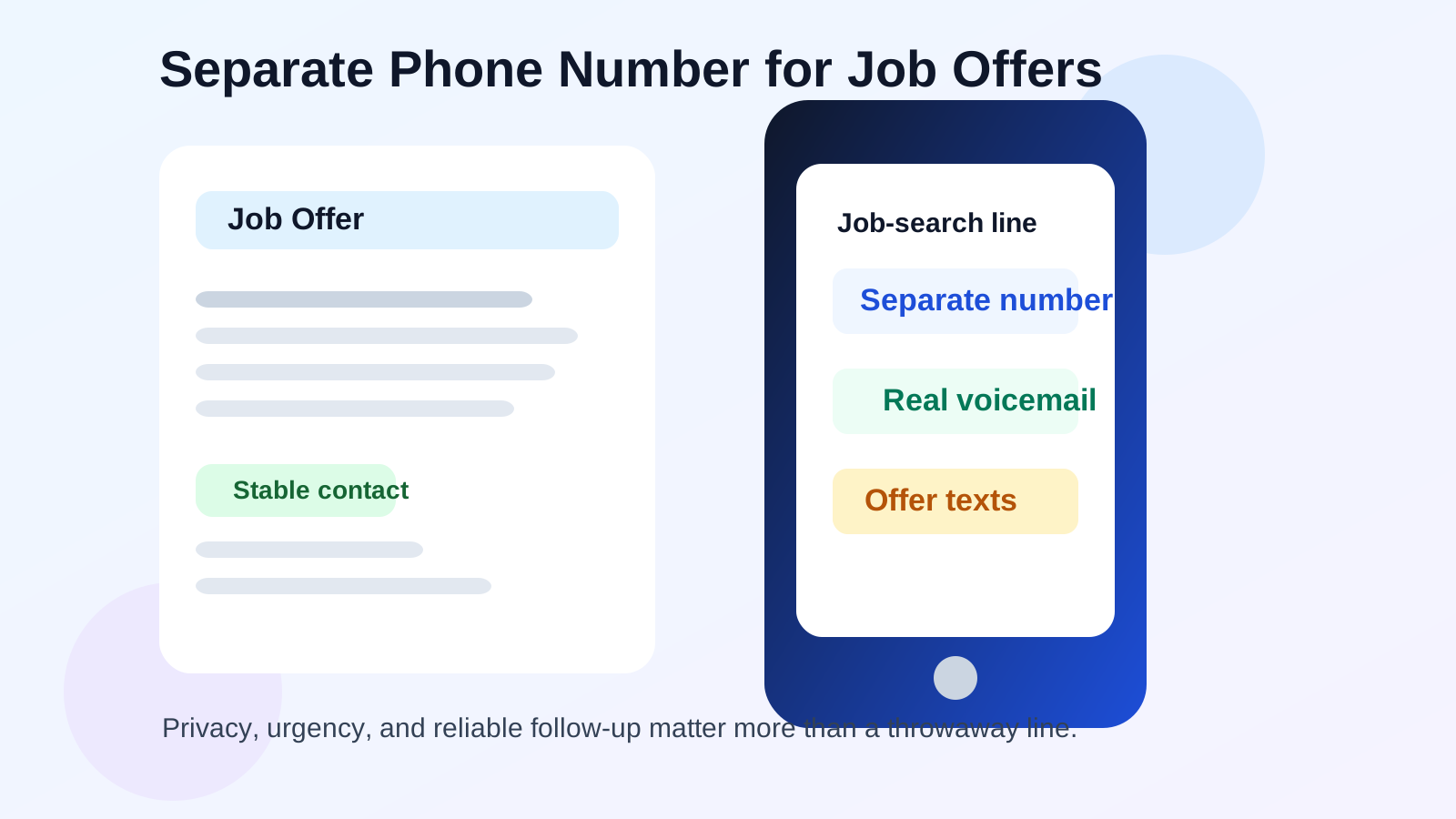
Why the job-offer stage changes the phone-number question
The phone number that feels fine during early applications is not always the best one once an employer is ready to make an offer. At the start of a job search, your main goal is often limiting exposure. You may be applying through job boards, recruiter databases, referral chains, and forms you do not fully trust yet. A cautious approach makes sense there.
Once a real job offer is in play, the communication pattern changes. Recruiters may call to confirm timing before sending the written offer. HR may text about availability, start dates, or follow-up paperwork. A hiring manager may want to clarify compensation, relocation details, or notice-period expectations. If you miss one of those messages because your number is noisy, temporary, or poorly managed, the friction becomes real fast.
That is why the best answer is usually not “use the most private number possible.” The better answer is “use the most reliable number that still protects your boundaries.” For many people, that can be a separate long-term number dedicated to their job search.
Short answer: a separate number is often a smart middle ground
A separate phone number for job offers can be a very sensible setup. It lets you keep recruiter calls, scheduling texts, and onboarding follow-up away from your everyday personal line, while still giving legitimate employers a dependable way to reach you.
The key distinction is separate versus disposable. A separate number is useful when you control it, keep it active, and check it consistently. A disposable or short-lived number is risky if it creates missed calls, lost verification texts, or confusion during a time-sensitive offer process.
When using a separate phone number for job offers makes sense
There are several situations where a dedicated number is more helpful than simply using your main personal line.
1. You want better privacy without becoming unreachable
If your number has already spread through applications, recruiter databases, and networking contacts, a separate line can contain the spillover. You still take important calls, but you are not adding more long-term noise to the number you use for family, friends, banking alerts, and everyday life.
2. You are in a confidential job search
If you are still employed and want cleaner separation between your current life and your next move, a dedicated number can help. It lowers the chance that recruiter calls appear mixed in with work-related notifications on a device or account you do not want associated with your search.
3. You are dealing with multiple employers at once
Offer-stage communication can get busy quickly. One company may text to set up a call, another may leave a voicemail about compensation, and a third may ask about availability. A separate number creates a focused lane for that activity, which can make it easier to respond promptly and stay organized.
4. Your personal number already gets too much spam
If your main number is buried under robocalls, random recruiter pings, and unknown texts, a real offer call can get lost in the clutter. A cleaner dedicated number can make the important messages easier to notice.
5. You want a clear boundary after the search ends
One of the biggest practical benefits is that you can decide what happens later. If the search is over and the number keeps attracting irrelevant outreach, you can scale it back or retire it without disrupting your core personal life.
When your main personal number is probably fine
A separate number is helpful, but it is not mandatory for everyone. Your personal number may still be the best option if:
- you are speaking with a verified employer and feel comfortable with the privacy trade-off,
- your main number is stable, quiet enough, and easy for you to monitor,
- you prefer not to manage another line during a fast-moving process, or
- you know you respond much faster on your everyday device and do not want any extra complexity.
In other words, a separate number is not automatically “more correct.” It is just a good option when privacy, organization, or spam control matter enough to justify the extra setup.
Why a burner or temporary number is usually the wrong choice for offers
This is where people sometimes over-correct. They hear “protect your privacy” and assume the best answer is the most disposable phone number possible. For job offers, that is usually a mistake.
Offer-stage communication often continues beyond the first congratulations call. You may need follow-up messages about written documents, start dates, onboarding logistics, benefits meetings, or identity-verification steps. If the number is unstable, expires, or is not tied to a device you regularly use, you create unnecessary failure points.
A burner-style number can also look inconsistent if the hiring process stretches out. Even when nothing suspicious is happening, people on the employer side may simply assume you are hard to reach if texts bounce, voicemails go unchecked, or replies arrive too slowly.
So if you want privacy, think dedicated long-term number, not fragile temporary number.
What employers may use your number for at the offer stage
Depending on the employer, your phone number may be used for:
- verbal offer calls before the written version arrives,
- quick scheduling for compensation or start-date conversations,
- urgent clarifications if email replies are delayed,
- logistics around background checks, screenings, or onboarding portals,
- text reminders about deadlines, meetings, or pending signatures.
Not every employer uses phone communication heavily, but enough do that you should assume the number matters. A reliable line makes the whole stage smoother.
How to set up a separate number the right way
If you decide to use one, a few habits make the difference between a smart privacy move and an avoidable mess.
Choose a number you control fully
Use a line you can keep active for the full hiring process, not something you may lose next week. Stability matters more than novelty.
Put it on a device or app you actually check
A dedicated number only works if it is visible in your real routine. If notifications are buried or the app is always muted, the privacy benefit is not worth the missed opportunity risk.
Set up a professional voicemail
Keep it simple: your name, a calm greeting, and a clear invitation to leave a message. If a recruiter cannot reach you live, the voicemail should make you sound organized and dependable.
Save known contacts quickly
Once you confirm a recruiter or HR contact is legitimate, save their details. That helps you separate real offer communication from random unknown callers.
Check text messages as carefully as calls
Some employers text more than they call, especially for scheduling or reminders. Do not assume all important communication will arrive by email.
Pair it with a separate email strategy
Phone privacy and email privacy usually work best together. If you already use a separate inbox for job searching — or an early-stage temporary inbox through a tool like Anonibox when you want to limit spam exposure — a dedicated phone number creates the same kind of boundary on the call and text side. The point is not to disappear; it is to stay reachable without mixing everything into one personal channel.
Scam red flags still matter, even during the offer stage
People sometimes relax too much once they hear the word “offer.” That is understandable, but risky. Fake recruiters and job scammers know that excitement lowers defenses.
Be cautious if someone claims to be making an offer but:
- will not email from a verifiable company domain,
- pushes you to move everything to WhatsApp, Telegram, or another side channel immediately,
- asks for banking details or identity documents by text before basic verification,
- pressures you to pay for equipment, software, or processing fees,
- uses urgency to stop you from checking the company independently.
A separate number can reduce exposure, but it does not replace normal skepticism. Verify the employer, match names and domains, and slow down if the communication feels off.
Should you keep using the separate number after you accept?
That depends on why you created it. If the number is clean, stable, and easy to manage, you may want to keep using it through onboarding until your company communication channels are fully in place. If it was mainly for privacy during the search, you may eventually move important contacts back to your primary number once the process is finished and trust is established.
The important part is not switching too early. Do not create confusion in the middle of signed-offer follow-up, start-date coordination, or onboarding tasks unless there is a clear reason to do so.
Final answer
So, should you use a separate phone number for job offers? In many cases, yes. It is a smart middle ground when you want privacy, cleaner organization, and fewer long-term spam problems without risking missed offer-stage communication.
Just make sure the number is stable, professional, and actively monitored. A dedicated number can be excellent for job offers. A disposable one usually is not. If you want the benefits of separation, choose reliability first and privacy second — not because privacy stops mattering, but because an offer is exactly the point where lost messages can cost you the most.