Usually yes — a separate phone number is often the best option for reference checks if it is stable, monitored, and fully under your control.
It gives you privacy and organization without the reliability problems of a disposable number, which matters because reference checks often involve time-sensitive calls, voicemail, and follow-up.
Reference checks happen late enough in a hiring process that small contact mistakes can suddenly matter. A missed call, a full voicemail box, or a number tied to the wrong device can delay an offer, create confusion for your references, or expose your search more widely than you wanted. That is why the right answer is not simply “give any number” or “never share a number.” It is to use a number that protects your privacy while still being dependable.
For many people, a separate phone number hits that balance better than either a work line or a main personal number. The important distinction is that separate should mean organized and long-term enough for the process — not random, untested, or disposable.
Short answer: yes, if the number is stable and you actually monitor it
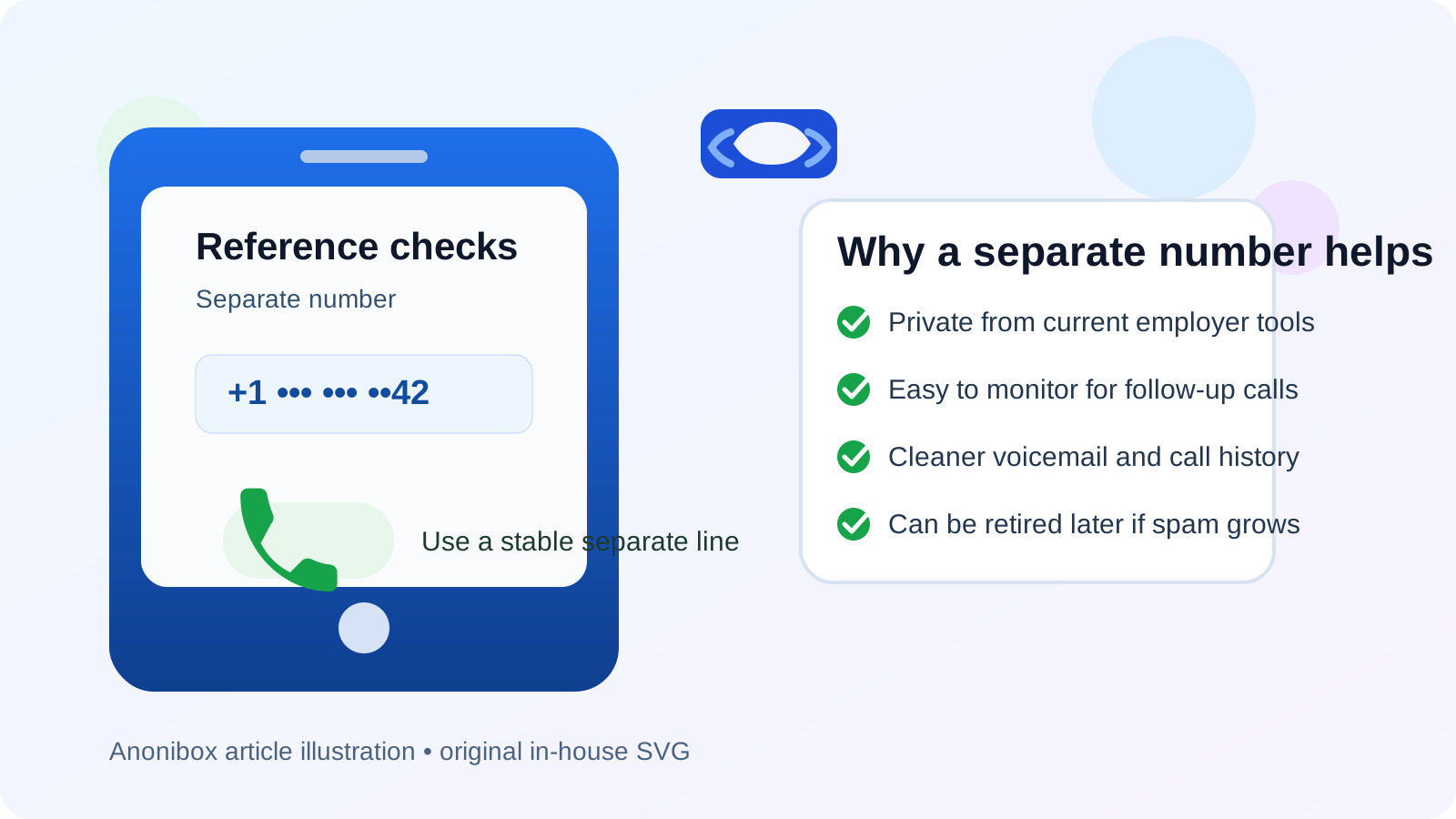
If you expect reference-check calls, scheduling follow-up, or messages from a recruiter or screening vendor, a separate phone number is usually a smart choice. It helps you keep hiring communication contained, avoids mixing it with your current employer’s systems, and makes it easier to retire that line later if it starts attracting spam or stale recruiter traffic.
What you should avoid is confusing a separate number with a temporary one. Reference checks are often close to the finish line, but they do not always finish in one day. The best number for this stage is one you can answer, hear voicemail on, keep active, and trust for however long the employer’s process takes.
Why this matters during reference checks
Reference checks feel like a small administrative step, but they often happen when the employer is seriously evaluating you. At that point, little delays create more friction than they would earlier in the process. If a reference does not answer, a coordinator may call you. If a form is incomplete, someone may need quick clarification. If a third-party service cannot verify contact details, they may reach out again from a number you do not recognize.
That is why contact control matters so much here. You want a number that is:
- private enough that you are not exposing your main line more than necessary,
- reliable enough that you will not miss an important follow-up,
- separate enough that job-search activity stays organized, and
- stable enough to stay with you through offer timing, onboarding questions, or late follow-up.
A separate phone number often gives you all four.
What counts as a separate phone number?
A separate phone number does not have to mean a dramatic second-device setup. It can be any lawful number arrangement you control that is distinct from your main everyday line and still reliable enough for real communication.
Examples include:
- a second SIM or eSIM you use for job-search communication,
- a dedicated long-term mobile line,
- a virtual number you have already tested for calls, voicemail, and notifications,
- another stable personal number that is not tied to your current employer or your main daily contact identity.
The key test is simple: if a recruiter or verification vendor calls from an unknown number at an inconvenient time, will you still reliably see it, hear the voicemail, and be able to call back quickly? If the answer is no, it may be separate, but it is not good enough for reference checks.
Why a separate number is often better than your main personal number
1. It limits long-tail spam and recruiter noise
Even legitimate hiring processes can spread your contact details farther than you expect. Staffing firms, outsourced verification vendors, and old applicant records can all generate follow-up later. A separate number gives you a buffer. If it starts collecting noise months later, you do not have to let that spill directly into your main personal line forever.
2. It keeps this stage of your search organized
When you use one number specifically for job-search communication, you do not have to guess whether an unfamiliar missed call was a reference-check coordinator, a recruiter, or something unrelated. The context is cleaner. That makes it easier to return calls quickly and harder to let important follow-up disappear into everyday clutter.
3. It creates better boundaries
Your main number may be tied to family, friends, school, banking alerts, two-factor codes, and the rest of your daily life. A separate line gives you breathing room. You can stay reachable for hiring without letting every employer-facing interaction land on the same contact channel you use for everything else.
4. It is easier to retire later
If a job-search number becomes noisy after you accept an offer or stop applying, you have options. You can mute it, wind it down, or keep it only for professional use. That flexibility is much harder if every application, recruiter, and verification vendor has your main personal number.
Why a separate number is usually better than a work number
A work phone creates a different problem: control. Employer-managed numbers, call logs, softphones, and mobile-device policies are simply a bad fit for a confidential hiring stage. Even if nobody is actively watching, you still risk mixing job-search communication into a system that is not fully yours.
A separate personal number avoids several common headaches:
- no employer-owned voicemail or call records,
- no awkward overlap with your current workplace identity,
- no risk that a line disappears if your role changes, and
- no need to worry about who else can access the device or account.
If you already use Anonibox or another separate email workflow earlier in your search, a separate phone number follows the same logic. Keep early outreach, verification messages, and hiring logistics compartmentalized instead of letting them all run through your main or employer-managed channels.
What to avoid even if you want more privacy
Do not use a fragile throwaway number
The biggest mistake is choosing a number that is technically separate but practically unreliable. Reference checks are not the right stage for a number you barely monitor, cannot call back from comfortably, or might lose access to if the process drags on.
Do not use an untested virtual setup
A virtual number can be fine, but only if you have already tested it. Make sure calls ring, voicemail works, alerts reach you quickly, and returning calls is straightforward. If you are still figuring out the setup while a hiring team is waiting, the privacy benefit is not worth the friction.
Do not split attention across too many numbers
One well-managed separate number is better than scattering your communication across a main personal line, a work line, and a barely checked second number. The goal is clarity, not complexity.
Do not treat reference checks like early-stage signups
Earlier in a job search, you may be comfortable using more protective layers to filter job-board noise or low-trust outreach. Reference checks are different. They call for control and separation, but also consistency. Think “dedicated” more than “disposable.”
When a separate phone number may not be necessary
You do not always need an extra number. If your main personal number is already private enough for your comfort, you answer it reliably, and you are not worried about long-term spam or contact spread, your normal mobile line may be perfectly fine.
A separate number is most useful when one or more of these are true:
- you are trying to keep your search discreet,
- you want better separation from everyday life,
- you have had problems with recruiter spam before,
- you are juggling multiple employers and want cleaner call context,
- you do not want reference-check traffic on your main long-term number.
If none of those apply, your existing personal line may already be the simplest good answer.
How to use a separate number well for reference checks
1. Set up a clear voicemail greeting
You do not need anything elaborate. A short professional greeting with your name is enough. If a coordinator or recruiter cannot reach you live, the voicemail should make it easy for them to leave a message confidently.
2. Turn on notifications and actually monitor the line
A separate number only helps if you treat it like an active communication channel. Keep notifications on, check missed calls promptly, and review voicemail every day while a hiring process is moving.
3. Save important contacts once they identify themselves
Many reference-check calls arrive from unfamiliar numbers. Once you confirm who is calling, save the contact so later follow-up is easier to spot and less stressful to evaluate.
4. Keep texts and calls professional
Use the number for scheduling, callbacks, and ordinary hiring logistics. Do not let convenience push you into sharing sensitive documents or personal identifiers over text unless you have independently confirmed the employer and the request is appropriate.
5. Pair it with a stable email workflow
Reference checks often involve both phone and email. A separate number works best when it is paired with an inbox that is also organized and dependable. If you used Anonibox earlier for low-commitment applications or broad job-board experiments, this is often the stage where a stable dedicated email plus a stable separate number gives you the cleanest overall setup.
A quick practical example
Imagine a hiring team asks for references on Thursday afternoon. A third-party coordinator tries one of your references Friday morning, gets no answer, and calls you from an unfamiliar number before the weekend to confirm the contact details. If that call goes to a line you actually watch, the issue gets fixed fast. If it goes to a work phone you avoid after hours or a throwaway number with unreliable alerts, the whole process can slow down for no good reason.
That is really the point of a separate number at this stage: not secrecy for its own sake, but privacy plus responsiveness.
Decision checklist
Before you decide what number to give, ask yourself:
- Do I fully control this number and device?
- Will I still have access to it through the whole hiring timeline?
- Will I notice missed calls and voicemail quickly?
- Am I comfortable letting this contact method spread to recruiters or screening vendors?
- Would a separate number give me better privacy without making me harder to reach?
If the answer to that last question is yes, a separate number is probably the right move.
Final answer
Yes, you should often use a separate phone number for reference checks — as long as it is a stable number you control, not a disposable one you might miss messages on. It gives you a cleaner, more private way to handle late-stage hiring communication without dragging your work line or main personal number into every follow-up.
The best setup is simple: one reliable separate number, one stable email workflow, prompt monitoring, and professional voicemail. That combination keeps you reachable for real opportunities while giving you more control over where your job-search contact details end up.