Yes — using a separate phone number on your resume can be a smart move if you want employers to reach you without giving every recruiter, staffing firm, and job board direct access to your main personal line.
It works best when the number is dedicated and stable, not truly disposable, because a resume may keep circulating for weeks or months after you send it.
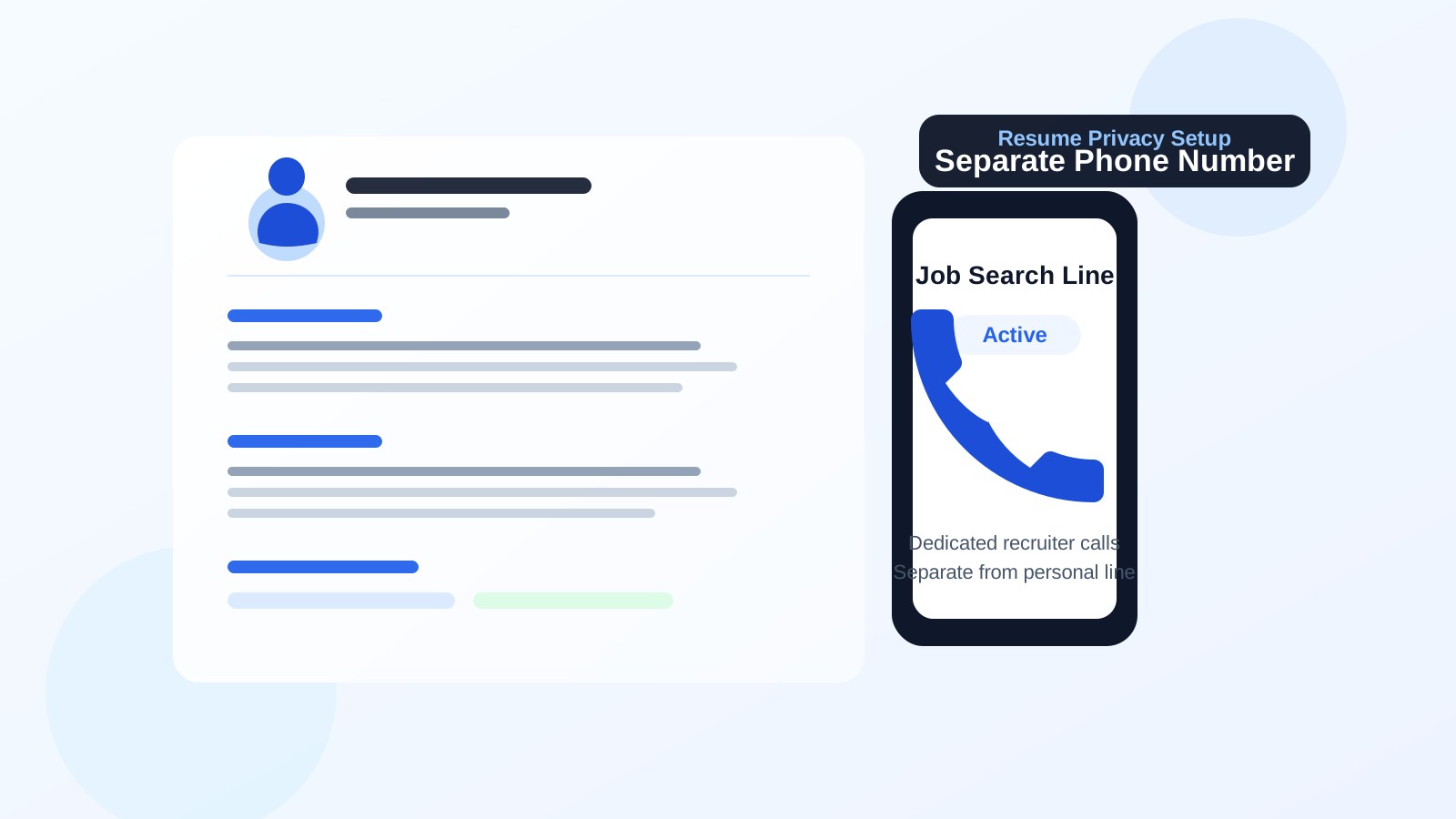
That distinction matters. A resume is not just a one-time message. It can be uploaded to job boards, attached to applications, forwarded between recruiters, saved in applicant tracking systems, printed for interviews, and reopened long after you forgot where you sent it. Once your number is on the document, it can travel farther than a quick email exchange ever would.
So the real question is not whether phone contact is useful. In many hiring situations, it absolutely is. The better question is whether you want that contact flowing to the same number you use for family, banking alerts, two-factor codes, doctor offices, and the rest of your personal life. For a lot of job seekers, a separate line is the cleaner answer.
Why this question matters more on a resume than on other documents
A resume is often more reusable than a cover letter and more portable than a job portal profile. Recruiters download it, rename it, share it internally, and keep it on file. Some employers may contact you quickly. Others may come back months later. Third-party recruiters may pass your profile around inside their own systems. None of that is unusual, but it does mean your phone number can end up in more places than you originally expected.
If you apply broadly, the practical downside shows up fast: screening calls during work hours, text-message pings from unknown recruiters, follow-ups from roles you already ruled out, and spam that keeps arriving after your search is over. A separate number will not eliminate every annoyance, but it gives you more control over where that noise lands.
When a separate phone number on your resume makes sense
A dedicated number is especially helpful when your job search has any of these traits:
- You are applying at scale. The more applications you send, the more likely recruiter traffic becomes noisy.
- You post your resume on job boards. Public or semi-public visibility increases the odds of generic outreach and low-quality recruiter messages.
- You work with multiple recruiters. Agency pipelines can create more repeat contact than direct company applications.
- You want cleaner boundaries. Some people simply do not want job-search calls mixed into personal life.
- You are privacy-conscious. If you already separate browser profiles, email inboxes, or job-search accounts, a separate number fits the same workflow.
- You are worried about scams or spam. A dedicated number makes suspicious contact easier to screen without affecting your main line.
In those situations, a separate number is not overkill. It is basic organization. It lets you stay reachable while reducing the long tail of recruiter noise that often follows a broad job search.
When your main number is probably fine
You do not need a second number just because privacy advice exists. Your main number is usually fine if:
- You are applying only to a short list of known employers.
- You are not posting your resume on public job boards.
- You already have strong call screening and spam filtering on your primary line.
- You would be more likely to miss opportunities if you split your attention across multiple numbers.
- You prefer simplicity and do not want one more account or service to manage.
The goal is not to create a more complicated life. The goal is to use separation where it clearly improves control.
What kind of separate number works best?
The best resume number is usually a stable secondary number, not a short-lived throwaway. That might be:
- a second SIM or secondary mobile line,
- a reputable virtual number you control long-term,
- or another dedicated number-management option that lets you receive calls, texts, and voicemail reliably.
What matters is not the brand name. What matters is reliability. If an employer calls after two weeks, the line should still work. If a recruiter texts to confirm an interview, you should actually receive it. If someone leaves a voicemail, you should hear it promptly.
That is why a true temporary number is usually the wrong fit for a resume. A resume is a long-tail document. It keeps working after you stop thinking about it. Your contact method needs to keep working too.
Benefits of using a separate number on your resume
1. Better privacy boundaries
Your main personal number may already be tied to important parts of your life. A job-search line limits how widely that number spreads.
2. Easier screening
When job-search calls come to their own number, it is easier to decide when to answer, when to let voicemail handle it, and when to ignore obvious noise.
3. Cleaner organization
Texts, missed calls, and voicemail from recruiters stay in one lane. That makes it much easier to manage follow-up during a busy search.
4. Easier cleanup later
Once your search ends, you can reduce notifications, retire the number, or keep it as a low-noise professional line without disrupting your everyday personal number.
5. Better scam resistance in practice
A separate number does not make you scam-proof, but it can make suspicious patterns more obvious. If a brand-new “recruiter” starts pushing you toward Telegram, gift cards, or identity documents, it is easier to spot when all that traffic is isolated in one place.
Common mistakes to avoid
Using a number that expires too quickly
This is the biggest one. If your number stops working before employers finish reaching out, you create a bigger problem than the one you were trying to solve.
Forgetting to check the line
A separate number only helps if you actually monitor it. If you ignore it for days, you may miss perfectly legitimate interview scheduling.
Using a work number
Your employer’s phone system is usually the wrong place for your job search. It creates unnecessary visibility and can blur professional boundaries in the worst possible way.
Using different numbers across documents without a reason
If your resume shows one number, your application portal shows another, and your LinkedIn profile shows none, that inconsistency can create avoidable confusion. Keep your contact setup intentional and easy to follow.
Relying on a number with poor text support
Recruiters often text candidates for scheduling. If your chosen number handles voice calls well but text messages badly, it may not be the right tool.
How to use a separate phone number well on a resume
- Make sure voicemail is set up. A simple greeting with your name is enough.
- Check calls, texts, and voicemail consistently. A dedicated number should improve responsiveness, not reduce it.
- Use the same number across your resume and direct applications when possible. Consistency reduces confusion.
- Keep the resume formatting simple. Put the number in your header with your email and, if relevant, LinkedIn or portfolio link.
- Screen unknown calls professionally. Let suspicious calls go to voicemail, but return legitimate messages promptly.
If you are actively interviewing, you may even want to give that line a dedicated ringtone or notification style so real recruiter contact is easy to notice without making your main number more chaotic.
Should you use a burner or temporary number instead?
Usually no — at least not for the version of your resume you are sending to real employers. A burner-style number can sound appealing because it promises separation, but resumes are not short-lived interactions. They are often revisited later, especially if a recruiter reopens a search or a company keeps candidate materials on file.
A short-term number makes more sense for one-off marketplace interactions than for hiring documents. For resume use, a separate number should be stable enough to support delayed follow-up. Think dedicated, not disposable.
How this fits with your email strategy
Your phone number and email address work as a pair. If you use your resume to open new job-search conversations, both contact channels should reflect the same level of thought. For example, many privacy-conscious applicants use a separate email inbox for applications, recruiter replies, and portfolio signups so their main address does not absorb every job-board blast forever.
If you already use Anonibox or another separate-inbox setup for early-stage job-search traffic, a dedicated phone number is the phone equivalent of that same idea: stay reachable, but keep recruiter contact from blending into the most permanent parts of your personal identity footprint.
The important caveat is the same in both cases: resumes need reliable follow-up channels. Temporary tools can help in some stages of a search, but the contact details on a resume should still be stable enough for real employers to use successfully.
A quick decision checklist
Before you put a number on your resume, ask yourself:
- Will this resume be uploaded to job boards or shared widely?
- Do I want recruiter calls and texts landing on my main personal number?
- Can I monitor a second number consistently?
- Is the separate number stable enough to stay active for the full search?
- Would this setup make me more organized or just more scattered?
If your answers point toward privacy, scale, and cleaner boundaries, a separate number is probably worth it. If your search is small and you prefer simplicity, your main number may be perfectly adequate.
Final answer
Yes — using a separate phone number on your resume can be a smart idea, especially if you are applying broadly, posting your resume publicly, or simply want stronger privacy boundaries during your search.
Just make sure the number is dependable. A resume should not point employers to a line that disappears after a few days. The best setup is a dedicated, professional, easy-to-monitor number that gives recruiters access to you without handing your main personal line to every job board and recruiter database you touch.
That way, you keep the benefit employers want — fast contact — without giving up more privacy than the hiring process actually requires.