Yes—sometimes. A temporary email can be useful for very early apartment inquiries when you want to protect your real inbox from spam, sketchy listings, or mass lead forms.
But it is usually a poor long-term contact method. If a listing is real and you may need tour confirmations, application links, or lease follow-up, you need an address you can keep checking and control reliably.
That difference matters. An apartment inquiry is not the same as a full application. Early in a rental search, you may send quick messages like “Is this unit still available?” or “Do you allow pets?” to several listings at once. That is exactly where privacy risk tends to show up: your address can be copied into CRM systems, broker lists, syndication tools, or plain old spam databases before you even know whether the listing is legitimate.
A temporary inbox helps at that first-contact stage because it keeps your primary email out of low-trust forms and questionable ads. But the convenience has limits. If the landlord replies two days later, sends a tour reschedule, or asks you to confirm an application portal, an expired or poorly monitored inbox can cost you a real opportunity. The smarter move is usually to treat temporary email as a screening layer—not as the permanent communication channel for the entire rental process.
When a temporary email makes sense for apartment inquiries
A temporary email is most useful when you are still figuring out which listings deserve real attention. That usually includes situations like:
- Mass outreach on listing sites: you are contacting multiple properties and expect a mix of legitimate replies and junk.
- Low-trust platforms or reposted listings: the ad looks plausible, but the source is not strong enough to deserve your main inbox yet.
- Spam-heavy markets: some rental searches trigger endless follow-up from agents, referral services, and unrelated “housing help” offers.
- Privacy-sensitive moves: you do not want your personal address attached to every inquiry while you compare neighborhoods, pricing, or roommates.
- Short exploratory searches: you are asking basic availability questions before deciding whether the property belongs on your shortlist.
In those cases, a temporary inbox is acting like a buffer. It lets you receive the first reply without immediately exposing the address you use for banking, work, family, or important documents.
Why renters like the idea
The appeal is easy to understand. Apartment hunting can be noisy. One message to a syndicated listing can turn into repeated follow-ups, upsells, “similar property” campaigns, or messages from brokers you never intended to contact. Some of that is normal lead handling. Some of it is sloppy data hygiene. Some of it is outright scam bait.
A temporary email reduces that exposure in three practical ways:
- Less inbox clutter: your main email does not fill up with autoresponders and low-value marketing.
- Cleaner scam filtering: suspicious replies stay in a separate place, which makes them easier to review critically.
- More control over escalation: you can decide when a listing has earned a more stable contact method.
This is where a tool like Anonibox can be useful. If you are still in the early screening phase, a privacy-first temporary inbox can help you separate “maybe” listings from serious conversations without turning your everyday address into a public lead magnet.
Where a temporary email starts to fail
The downside is reliability. Apartment searches move fast, and temporary inboxes are often designed for short-lived verification or lightweight one-off use. That design can become a problem the moment a conversation turns real.
1. Follow-up may arrive later than you expect
Not every property manager replies immediately. Some respond the next day. Some wait until a leasing agent is on shift. Some send tour instructions hours after your first inquiry. If your inbox expires or you stop monitoring it, you can miss the one response that actually mattered.
2. Rental communication often becomes multi-step
A genuine apartment lead may involve a chain of messages: availability, screening questions, tour scheduling, application portal links, document requests, and move-in timing. That is no longer a disposable-email situation. You need continuity.
3. You may need to prove identity and consistency
Legitimate landlords and property managers often want a contact trail that feels stable. A temporary address is not automatically suspicious, but if the conversation moves toward applications or deposit discussions, a more permanent inbox looks more credible and is easier for everyone to manage.
4. Shared searches get messy
If you are searching with a spouse, partner, parent, or roommate, a throwaway inbox creates friction. Forwarding details, keeping everyone updated, and locating old replies gets harder fast.
The real issue: apartment inquiries are only the first step
This is the most important distinction. A temporary email can work for the first “hello,” but apartments are not like one-click retail signups. Even a simple inquiry can quickly become a scheduling and trust workflow.
For example, imagine you ask whether a unit is still available. The property manager replies with two showing times, asks how soon you want to move, and sends a floor plan PDF. If you are using an inbox that may disappear—or one you do not plan to revisit carefully—you just created unnecessary risk for yourself.
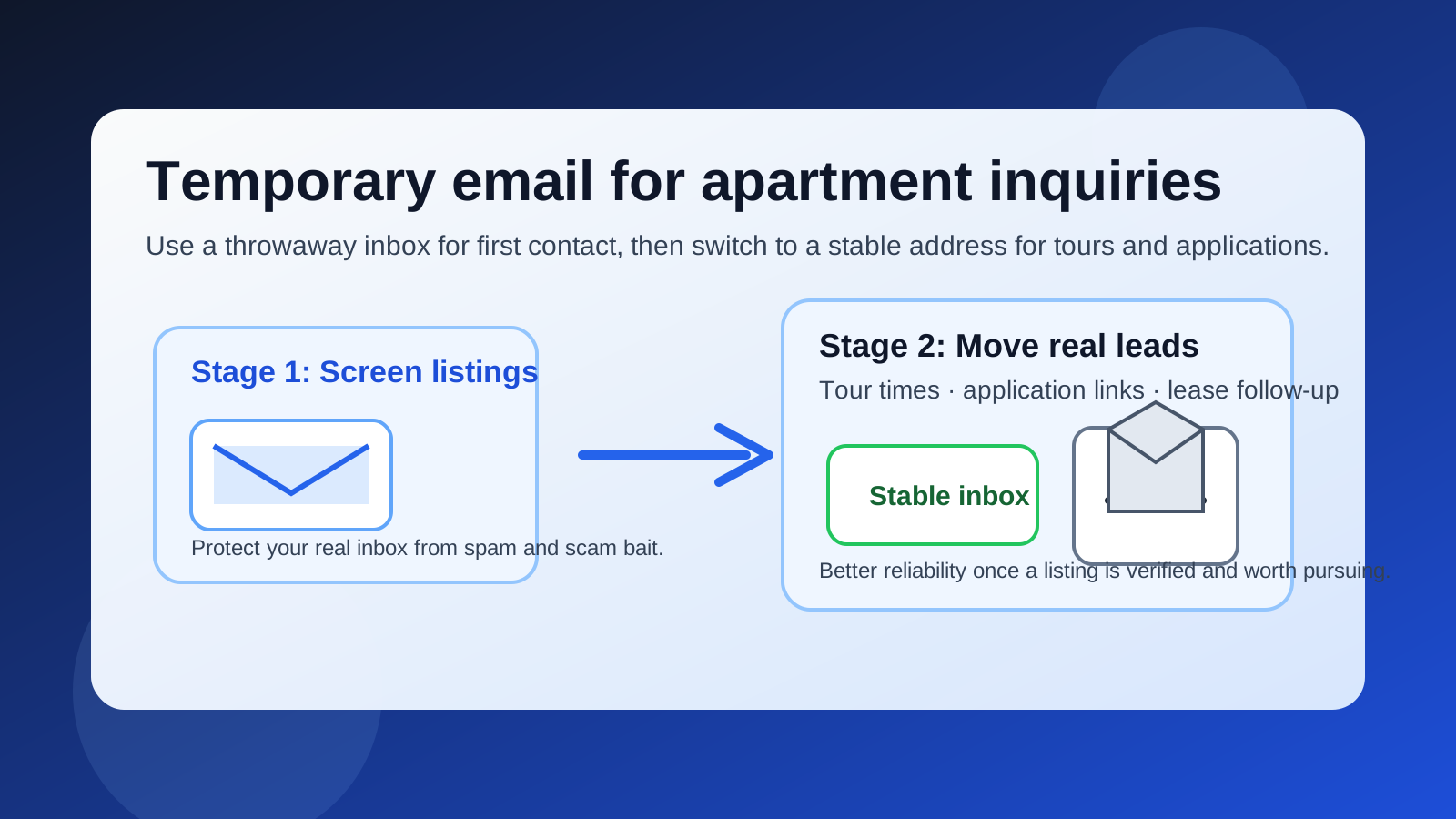
That is why the best answer is rarely “always use a temporary email” or “never use one.” The useful answer is: use it selectively for low-trust first contact, then switch to a stable address once the listing proves real and worth pursuing.
A better workflow than using a temporary email forever
If you want privacy and reliable follow-up, use a staged approach:
- Start with a temporary inbox for broad early outreach, especially on unfamiliar listing sites or broker-heavy platforms.
- Verify the listing by checking the building site, management company, public records, or a consistent contact trail.
- Move serious conversations to a stable separate inbox once you are discussing tours, applications, or documents.
- Keep your primary personal email out of the process unless you are comfortable using it for formal paperwork.
That middle option—a stable separate inbox—is often better than staying fully disposable. It protects your real address while still giving you dependable continuity. In other words, temporary email is a good screening tool; a dedicated apartment-search inbox is usually the better transaction tool.
What landlords and property managers actually care about
Most legitimate housing contacts are not judging you based on whether you use Gmail, Outlook, Fastmail, or another common provider. What they usually care about is whether you respond, show up, and provide consistent information.
So the risk is not that a temporary address automatically makes you look bad. The risk is that it makes your own process weaker. If messages disappear, if you miss a tour link, or if your contact history becomes fragmented, you create delays that hurt you more than the landlord.
That matters even more in competitive rental markets. When multiple renters want the same unit, slow follow-up can be enough to push you behind someone who simply had a cleaner communication setup.
Scam signals a temporary email can help you spot
One of the best reasons to use a temporary address early is that apartment scams are common. A separate inbox makes it easier to screen for patterns like:
- Pressure to send money before a viewing
- Claims that the landlord is “out of town” and cannot show the unit
- Messages pushing you off-platform immediately to WhatsApp, Telegram, or another app
- Listings copied from real buildings with slightly altered details
- Requests for excessive personal information before basic verification
If a reply looks suspicious, it is much better for that conversation to live in a disposable or isolated inbox than in the address attached to your everyday life. That separation also makes it easier to abandon bad leads without cleaning up a long trail in your main account.
When you should switch away from the temporary inbox
Use a more stable email as soon as any of the following happens:
- You want to schedule or confirm a tour
- You are asked to complete a formal rental application
- You need to receive attachments, screening links, or lease paperwork
- You expect ongoing back-and-forth over several days
- You have decided the property is a real contender
At that point, the privacy gain from staying disposable is usually smaller than the risk of missing an important message.
Best practices if you use one anyway
- Use it only for the earliest outreach, not the whole process.
- Check it actively while you are waiting for first responses.
- Save key messages quickly in case the inbox is time-limited.
- Do not send sensitive documents through a throwaway address unless you truly understand the setup and retention.
- Promote real opportunities to a stable separate inbox early instead of trying to stretch the temporary one too far.
Quick decision checklist
Ask yourself these questions before using a temporary email for an apartment inquiry:
- Am I still screening unknown listings rather than pursuing a serious lead?
- Do I expect spam, broker blasts, or scam replies from this source?
- Would I be okay missing the reply if it arrives much later?
- Do I already have a better separate inbox for real tour and application follow-up?
- Is the privacy benefit bigger than the continuity risk in this specific situation?
If the answer is yes to the first two and no to the last three, a temporary email is probably reasonable. If you already know the property is real and you care about a quick, organized response chain, use a stable separate email instead.
Final answer
Yes, you can use a temporary email for apartment inquiries—but only as an early privacy filter. It is most helpful when you are contacting unfamiliar listings, trying to avoid inbox spam, or screening for scams before you commit real contact details.
No, it is usually not the best address for serious rental follow-up. Once a conversation becomes real, a stable separate inbox is the better choice because it protects your privacy without sacrificing reliability. For most renters, that balance is the sweet spot: use temporary email for low-trust first contact, then switch to a controlled long-term address when the listing earns it.