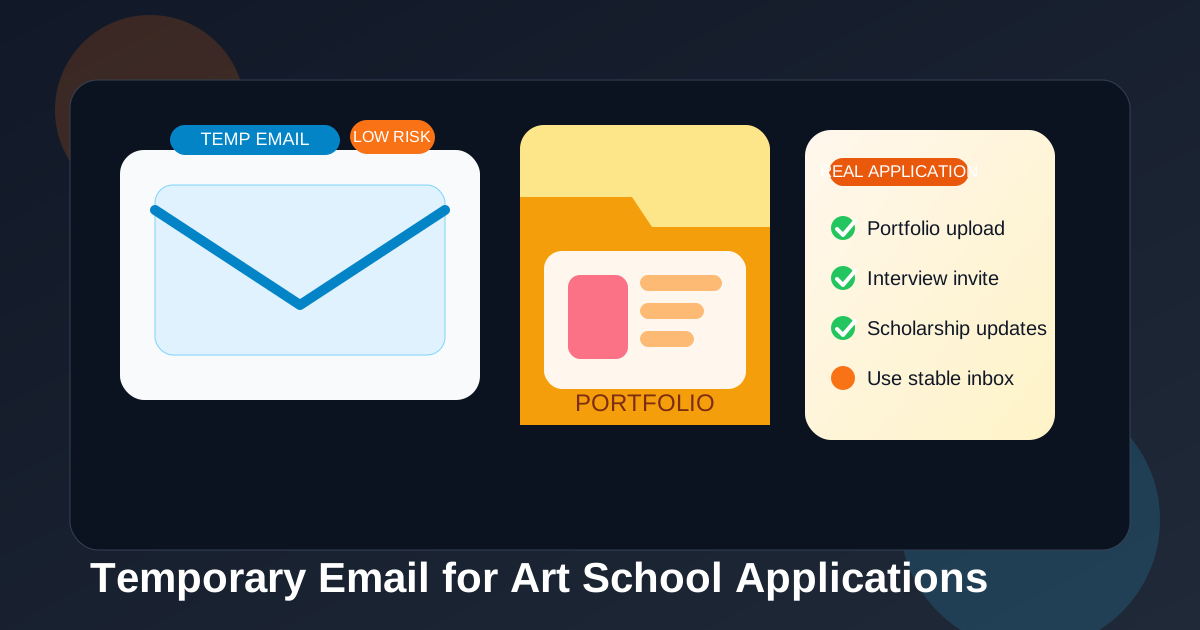
A temporary email can help with art-school research, mailing-list signups, and low-stakes portfolio-platform tests, but it is usually not the best inbox for actual art school applications.
For real applications, portfolio requests, interview invites, scholarship updates, and deadline changes, a stable separate email you control long term is usually the safer choice.
Why this question comes up so often
Art school applicants deal with a messier communication flow than many people expect. It is not just one application confirmation and one decision email. You may hear from admissions offices, portfolio review systems, faculty reviewers, interview coordinators, financial-aid teams, scholarship programs, summer portfolio events, and third-party application portals. Some messages arrive fast. Others show up weeks later, right when you are juggling deadlines across several schools.
That is why people start wondering whether a disposable inbox is smart. On one hand, art school research can create a lot of spam: open-house invites, newsletter blasts, webinar reminders, platform promos, and endless “finish your application” nudges. On the other hand, some of the messages you receive are genuinely important and not easy to replace if they disappear into an expired inbox.
The right answer depends on which part of the process you are in.
Short answer: good for early research, risky for real applications
If you are still exploring schools, checking portfolio requirements, signing up for virtual info sessions, or testing a platform before you trust it with your main inbox, a temporary email can be useful. It keeps your personal address off lists you may never want to stay on.
But once you begin sending real applications, requesting recommendation updates, uploading portfolios, scheduling interviews, or waiting on scholarship and decision messages, a temporary address becomes fragile. At that stage, reliability matters more than inbox cleanliness.
When a temporary email does make sense for art school applicants
There are a few situations where using a temporary inbox is practical and low risk.
1. You are only gathering information
If you want a school’s downloadable guide, webinar replay, mailing list, or event registration link, a temporary inbox can be perfectly reasonable. You get the confirmation email without committing your main address to months of follow-up.
2. You are testing portfolio or submission tools
Some applicants want to see how a platform works before tying it to their real application workflow. If you are exploring how a portfolio-hosting or form system behaves, a disposable inbox can help you do that without spreading your long-term contact details around too early.
3. You are comparing a large number of schools at the awareness stage
Early research often means downloading brochures, joining information sessions, and checking deadlines for many schools that will never make your final shortlist. A temporary inbox can keep that top-of-funnel noise separate from the schools you are seriously considering.
4. You are trying to reduce low-value inbox clutter
Some schools and platforms send a lot of reminder emails long before you decide whether you are applying. A tool like Anonibox can be helpful when you want to avoid turning casual research into a long-term newsletter problem.
When a temporary email is the wrong choice
The risks go up once the communication becomes real, personal, or time-sensitive.
1. You are submitting an actual application
If the email address is attached to the real application record, use one you expect to keep checking for months. Art school timelines can stretch. An admissions office may follow up about missing materials, an incomplete transcript, a portfolio formatting issue, or an interview request long after you hit submit.
2. You are sending or updating portfolio materials
Portfolio communication is rarely one-and-done. Schools may ask for clarification, alternate file types, updated links, or confirmation that a submission worked. If your inbox expires or becomes hard to monitor, those requests become much harder to manage.
3. You are waiting on scholarships, financial aid, or merit review
Those messages matter. They can include deadlines, portal instructions, document requests, and acceptance windows. This is not where you want to gamble on a throwaway inbox.
4. You are scheduling interviews, portfolio reviews, or admitted-student events
Time-sensitive scheduling messages are exactly the kind of communication that should go to a durable inbox you monitor consistently. Even a small delay can create avoidable stress.
5. You need a record you can search later
Applicants often go back and compare requirements, re-read instructions, or double-check what a school previously said. Disposable inboxes are not great for that. A stable inbox is.
The biggest risks of using a temporary email for art school applications
Missed portfolio follow-up
Art school admissions often revolve around the portfolio, and portfolio questions do not always arrive on a predictable timeline. A school may request a missing file, ask about a broken link, or send technical instructions after your initial submission. If that email lands in an inbox you no longer monitor, the problem can snowball quickly.
Lost continuity across a long admissions season
Unlike a one-click download or webinar signup, applications can stay active for months. During that time, you may receive updates from several systems and people. A temporary address makes that communication trail more fragile than it needs to be.
Harder organization when applying to multiple schools
A lot of applicants assume a disposable inbox will simplify things, but the opposite can happen. If you create several short-term addresses for different tools or schools, you may end up scattering important messages instead of organizing them.
No safety margin if something changes
Art school applications are full of moving parts: recommendation timing, transcript problems, changing deadlines, live review events, and scholarship paperwork. A stable inbox gives you room for that reality. A temporary inbox gives you less margin for error.
What works better for most applicants
A separate long-term application email
This is usually the best setup. It protects your primary personal inbox while still giving you a durable place for admissions traffic. You keep the privacy benefits of separation without the reliability problems of a disposable address.
An email alias that forwards into a stable inbox
An alias can work well if you want cleaner organization or a more private address on forms. The important part is that the destination inbox is stable, searchable, and under your control.
Your main personal inbox, if it is already clean and professional
If you already have a well-managed inbox and you are comfortable using it, there is nothing wrong with that. The point is not to force a complicated system. The point is to avoid losing important admissions messages.
A practical workflow that balances privacy and reliability
You do not have to choose between total exposure and total disposability. A blended workflow is usually better.
- Use a temporary inbox for early research. Download guides, join mailing lists, test platforms, and sign up for low-stakes events without handing your main address to every site.
- Switch to a separate long-term inbox before real applications begin. Once you are creating accounts tied to actual submissions, portfolio uploads, or school portals, move to a stable address.
- Keep one inbox for all serious schools if possible. A single dedicated application inbox is often easier to manage than a patchwork of disposable addresses.
- Create labels or folders by school. Organize messages for deadlines, portfolio instructions, interviews, and aid notices so you can find them quickly later.
- Save key messages outside the inbox too. Important dates, portal links, and document requirements should also live in your application tracker or calendar.
This is where Anonibox fits naturally: protect your main inbox during the exploratory stage, then graduate to a stable setup once the stakes become real.
Examples of when to use which inbox
Use a temporary email for:
- virtual open house registrations
- newsletter subscriptions
- requesting a brochure or program guide
- trying a portfolio platform before you trust it
- joining a one-off webinar or mailing list
Use a stable application inbox for:
- your actual application account
- portfolio submissions and revisions
- interview scheduling
- scholarship and financial-aid communication
- admissions decisions and deposit deadlines
- recommendation and transcript follow-up
What about portfolio platforms specifically?
Portfolio tools are where applicants get tempted to stay temporary for too long. It feels harmless to use a disposable inbox because you are “just uploading work.” But in practice, portfolio systems can become part of the real admissions record. If a school needs you to change file access, update media, or respond to a technical issue, that account suddenly matters a lot more than it did on day one.
So the safer rule is simple: if the portfolio platform is tied to a real application or live review process, use your stable application inbox. If you are only testing the platform or evaluating whether it is worth using, a temporary inbox is fine.
A quick checklist before you choose
- Am I still researching, or am I now applying for real?
- Will I need this inbox in two weeks, two months, or longer?
- Could a missed message affect a portfolio review, deadline, or scholarship outcome?
- Do I want fewer newsletters, or do I need a reliable long-term record?
- Would a separate permanent inbox solve the problem better than a temporary one?
If you are still at the research stage, a temporary inbox may be a smart privacy move. If any real admissions workflow has started, a durable inbox is usually the better call.
Final answer
Yes, a temporary email can be useful for art school applications at the research stage, especially for brochures, webinars, mailing lists, and low-stakes platform testing.
But for actual applications, portfolio follow-up, interview scheduling, scholarship communication, and deadline-sensitive updates, a stable separate inbox is usually the safer and more practical choice. Use temporary email to reduce noise early; use a dependable inbox when the admissions process becomes real.