Usually only in limited cases — using a temporary email for career fairs can help with registrations, sponsor downloads, and spam control, but it is usually too fragile for serious recruiter follow-up.
If you expect employers to contact you after the event, a separate long-lived inbox is usually a better choice than an expiring disposable address.
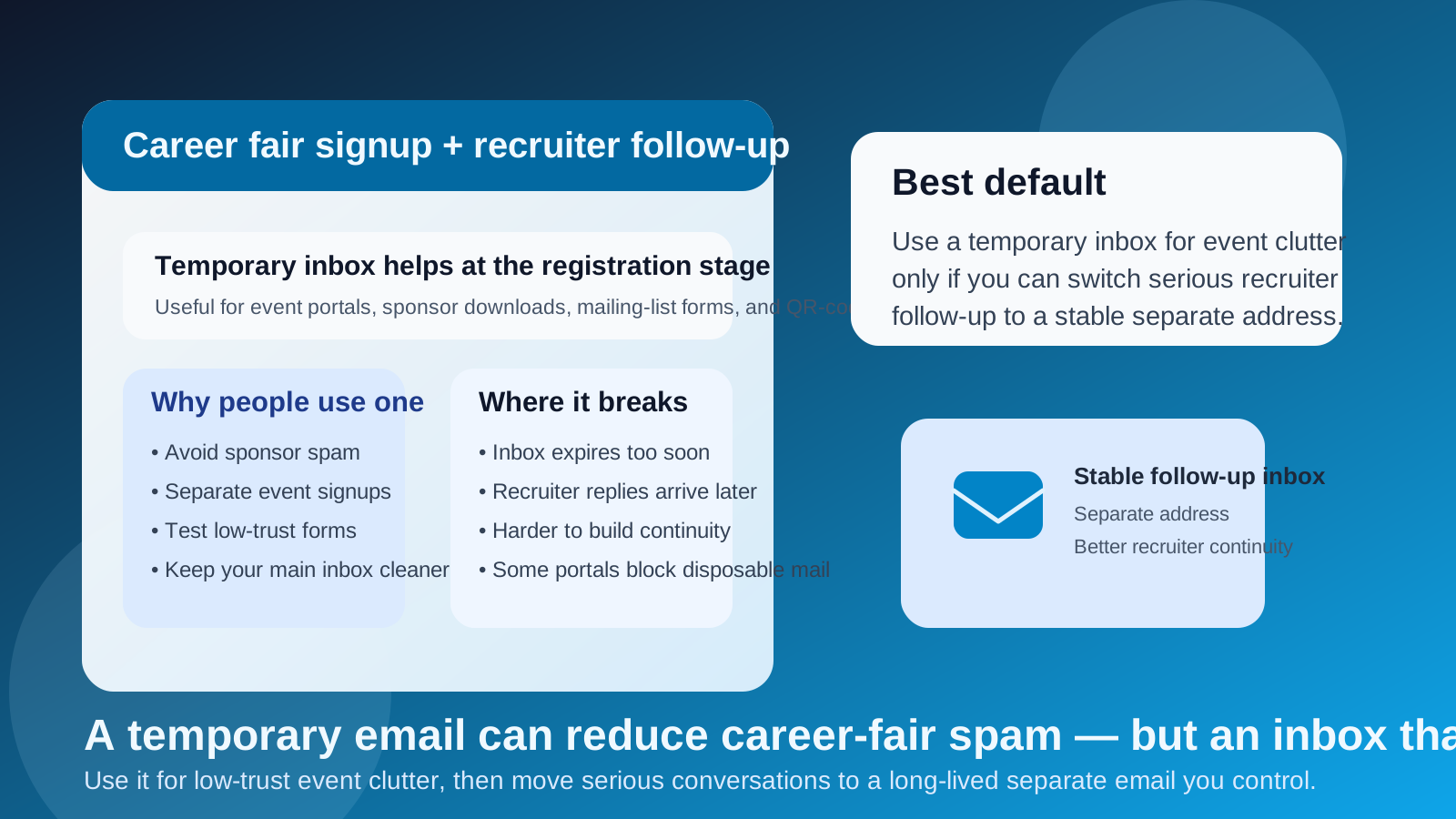
Why career fairs make this question tricky
Career fairs compress a lot of contact sharing into a short period of time. You may scan QR codes, upload a résumé to an event portal, sign up for employer talent communities, enter prize drawings, download company brochures, and hand your contact details to several recruiters in a single afternoon. That creates two competing needs at once.
First, you want to protect your privacy and keep your main inbox from turning into a landfill of sponsor messages, generic “join our talent network” emails, and months of follow-up from companies you only spoke with for three minutes. Second, you do not want to miss the one message that actually matters — the recruiter who wants to schedule a screen, ask for your availability, or move you toward a real interview.
That is why temporary email is tempting here. It looks like a clean privacy tool for a noisy situation. The problem is that career-fair follow-up often does not happen on the same timeline as the event itself. A recruiter may write back two hours later, three days later, or two weeks later after reviewing notes with the hiring team. If your inbox expires too quickly, convenience turns into lost momentum.
Short answer: useful for some forms, risky for real recruiting conversations
If you only need an address for event logistics, one-off downloads, or low-trust signups, a temporary inbox can be practical. It helps keep spam away from your main email and lets you compartmentalize event clutter.
But if you are giving an email directly to employers you genuinely want to hear from, a temporary inbox is often the wrong long-term address. Recruiters need continuity. You need a place to keep messages, attachments, scheduling details, and reply chains without wondering whether the inbox will still exist when it matters.
When a temporary email helps at career fairs
Event registration pages
Some career fairs require a sign-up before you can enter, reserve a slot, or access the event map. If the event is lightly vetted, sponsor-heavy, or clearly built to feed multiple mailing lists, a temporary address may be a reasonable shield for the initial registration step.
Booth giveaways and marketing forms
Many event booths are not really about active hiring. They are collecting leads for newsletters, webinars, employer branding campaigns, campus outreach, or future talent pools. If you want the handout without a year of follow-up, a temporary address can make sense.
Low-trust QR codes
At busy fairs, you may see QR codes on banners, tables, flyers, and presentation screens. Some lead to legitimate recruiter forms. Others route you into broad marketing funnels. If you are not ready to trust the form with your permanent address, temporary email can be a reasonable first filter.
Separating event noise from serious applications
Even when a fair is legitimate, the volume can still get messy. Temporary email can help you avoid mixing event registrations, sponsor announcements, and random follow-up with your main inbox. That can be especially useful if you are attending multiple fairs in one season.
Where temporary email starts to backfire
Recruiter follow-up often arrives later than you expect
This is the biggest problem. Many recruiters do not contact candidates instantly. They return to their notes later, compare résumés, check roles that are opening soon, or pass names to a hiring manager. If your inbox disappears before that happens, you lose the thread.
Some employers treat disposable addresses as a low-trust signal
Not every company cares, but some systems flag temporary-email domains or reject them outright. Others may not block them, but a recruiter could still see the address and assume you are not planning to stay reachable. That is not always fair, but it can still affect how the interaction feels.
You may lose important documents or scheduling details
Career-fair follow-up is not always just “Thanks for stopping by.” It can include calendar links, role summaries, application portals, interview instructions, or requests for writing samples and availability. Those are exactly the kinds of messages you want preserved in a stable inbox.
It can create friction when you need to switch addresses midstream
If you start with a temporary inbox and later move to another address, you add one more handoff to the process. Sometimes that is fine. Sometimes it creates confusion: the recruiter writes to the first inbox, you answer from a second one, and the continuity becomes messier than it needed to be.
Temporary email vs burner email vs separate long-lived inbox
People often blur these together, but they are not the same thing.
- Temporary email: usually short-lived, often disposable, and best for quick verification or low-value form submissions.
- Burner-style email: often created for privacy, but still intended to remain available long enough for real follow-up.
- Separate long-lived inbox: the safest default for serious job-search communication because it stays under your control and keeps recruiter messages organized without mixing them into your personal life.
For career fairs, that distinction matters. If the goal is simply to dodge sponsor spam, temporary email can help. If the goal is to meet employers and continue the conversation, a stable separate inbox is usually the smarter tool.
A better default for most people
For most job seekers, the best setup is simple: use one separate email address for career fairs, applications, recruiter outreach, and interview scheduling, then reserve temporary email for the noisy edges of the process.
That means you can still protect your main inbox without risking lost recruiter contact. You get the privacy benefit of separation, but you keep the reliability that serious hiring conversations need.
If you want cleaner boundaries, a setup like Anonibox can make that easier by giving you a dedicated path for job-search communication instead of forcing everything through your main inbox. The key point is durability. Privacy matters, but so does still receiving the message that turns into an interview.
When it is reasonable to use a temporary email anyway
There are still cases where temporary email is a practical choice:
- You are attending mainly to explore, not to actively pursue most employers.
- You want access to the event platform but do not yet trust the organizer’s data practices.
- You are filling out sponsor forms, giveaway entries, or content-download pages that are clearly more marketing than recruiting.
- You plan to give a different long-lived email directly to the few recruiters you actually want to hear from.
In other words, temporary email works best as a filter around the event, not as the main inbox for serious opportunities coming out of it.
What to do if you already used a temporary email
If you already registered for a career fair or scanned a booth QR code with a temporary address, you are not doomed. Just tighten the workflow.
- Check the inbox carefully after the event. Save confirmation emails, recruiter names, and any portal links immediately.
- Move serious contacts to a stable address fast. If a recruiter writes back, reply with your long-lived job-search email before the thread goes cold.
- Copy key information into your own notes. Do not rely on an expiring inbox to store dates, names, and next steps.
- Use the temporary address only for the clutter tier. If you see which employers are serious, route those conversations elsewhere.
Practical examples
Good use case
You sign up for a large university-hosted fair with dozens of sponsor booths and optional downloads. You use a temporary inbox for the platform registration and a few marketing-heavy booth forms, but when two recruiters ask where they should send next steps, you give them your stable separate job-search email. That is a smart split.
Risky use case
You put the same temporary address on every résumé drop, every QR form, and every employer follow-up field. Three days later, one recruiter sends a scheduling link, another asks for your transcript, and a third invites you to apply to a specific role — but the inbox is already gone or buried. That is the failure mode you want to avoid.
Questions to ask before you share the address
- Am I using this address for a low-trust form or a real recruiter relationship?
- Will I still have access to it next week if an employer follows up late?
- Would I be comfortable losing this inbox after the event?
- Am I trying to avoid spam, or am I trying to manage a real hiring conversation?
- Would a separate long-lived inbox solve the same problem with less risk?
If the interaction could realistically lead to an interview, most of the time the answer points away from temporary email and toward a more stable separate address.
Best practices for career-fair email privacy
- Use a separate long-lived inbox for real employer contact.
- Use temporary email only for registrations, downloads, or forms you do not fully trust.
- Keep your résumé and your serious follow-up address consistent.
- Save recruiter names, companies, and promised next steps outside the inbox itself.
- Switch from temporary to stable contact information early, not after messages start slipping through.
Final answer
So, should you use a temporary email for career fairs? Sometimes — but mostly at the outer edge of the event, not at the center of real recruiter follow-up.
It is useful for privacy, sponsor clutter, and low-trust forms. It is much less useful when the same address needs to stay alive for interview invitations, recruiter replies, and ongoing hiring conversations. For that part of the process, a separate long-lived inbox is usually the better answer.
If you want the best balance, use temporary email to absorb the noise and a stable separate address to carry the opportunities that actually matter.