Usually no — not as the only address for a real graduate school application. A temporary email can help with privacy during early research, mailing-list signups, and one-off inquiry forms, but full graduate school applications often stretch across months, so you need an inbox you can keep.
If you want privacy and organization, the safer default is a separate permanent application inbox or an alias you control. Use a temporary address only for low-stakes early steps, not for anything tied to recommendations, portals, fee waivers, interviews, funding updates, or admission decisions.
That distinction matters because graduate school communication is not a single confirmation email. A normal application cycle may involve account verification, reminder emails, missing-material notices, recommendation requests, interview scheduling, funding conversations, waitlist updates, and final decisions spread over weeks or months. If your inbox disappears halfway through, you may miss something that is genuinely important.
So the real question is not whether a temporary email is possible. It is whether it is smart for the specific step you are taking. In some cases it absolutely can help. In others it creates avoidable risk.
Why graduate school applications are different from casual sign-ups
Many privacy questions become easier when the timeline is short. A product trial, webinar, or coupon signup may only need one confirmation message. Graduate school is different. Even one program can generate a long chain of messages, and many applicants apply to several schools at once.
Depending on the school and program, your inbox may receive:
- application account verification emails
- portal password resets
- fee-waiver instructions
- recommendation request and reminder notices
- transcript or test-score status updates
- interview invitations or scheduling changes
- funding, assistantship, or scholarship follow-ups
- waitlist movement and final admission decisions
That is why a temporary inbox is usually a poor choice for the actual application. Graduate admissions workflows reward continuity. You want one address you can search, monitor, and keep alive for the whole cycle.
When a temporary email can make sense
A temporary address can still be useful before you reach the formal application stage.
1. Program research and list-building
If you are browsing schools, downloading brochures, joining general interest lists, or registering for open-house reminders, a temporary email can reduce long-term inbox clutter. Some programs and third-party education sites are generous with follow-up marketing. Using an Anonibox address for that early discovery phase can keep your main inbox from filling with messages you may never need again.
2. Low-trust third-party directories
Not every education lead form is the school itself. Some “find your perfect program” pages are really lead-generation funnels. If the site looks vague, asks for too much information up front, or seems built more for marketing than admissions, a temporary email can be a reasonable shield while you decide whether the source is worth engaging.
3. One-off event access
Sometimes you only want the confirmation email for a single webinar, fair, or information session. If the event is not connected to your real application account, a temporary inbox may be enough.
When you should not use a temporary email
For most serious applicants, this is the more important section.
Do not use a temporary email for your main application portal
If the email address creates or anchors your application account, treat it as long-term. You may need it again for password resets, document notices, and decisions long after submission day.
Do not use it for recommendation workflows
Recommendation systems often send automatic messages when letters are requested, received, or missing. You do not want to lose that thread or discover too late that a recommender never received the request.
Do not use it for funding, assistantships, or scholarships tied to the program
Graduate funding conversations can be time-sensitive. If a school asks for a quick reply about an assistantship, fellowship, interview slot, or admitted-student event, a disappearing inbox is a bad gamble.
Do not use it if you may need the same address months later
That sounds obvious, but it is the core rule. If continuity matters, use an address you control permanently.
Better options than a temporary inbox
If your goal is privacy without losing reliability, you have better options than a disposable inbox.
A separate long-term application email
This is usually the best default. Create one dedicated address just for graduate school applications and related academic opportunities. That gives you separation without fragility.
Benefits include:
- clear organization across multiple schools
- less clutter in your main personal inbox
- easy searching for deadlines and portal messages
- a stable address you can keep through the entire cycle
An email alias you control
If you already use an email provider or forwarding setup that supports aliases, that can be a strong middle ground. You keep the privacy and filtering benefits while still retaining long-term control over the address.
Inbox rules and labels
Sometimes the simplest fix is enough. Filters, folders, and labels can keep graduate-school messages organized without changing your email identity at all.
A practical way to decide
Ask one question before every signup: Will I need this exact inbox later for something important?
If the answer is no, a temporary email may be fine. If the answer is maybe or yes, use a persistent inbox.
Here is a simple rule of thumb:
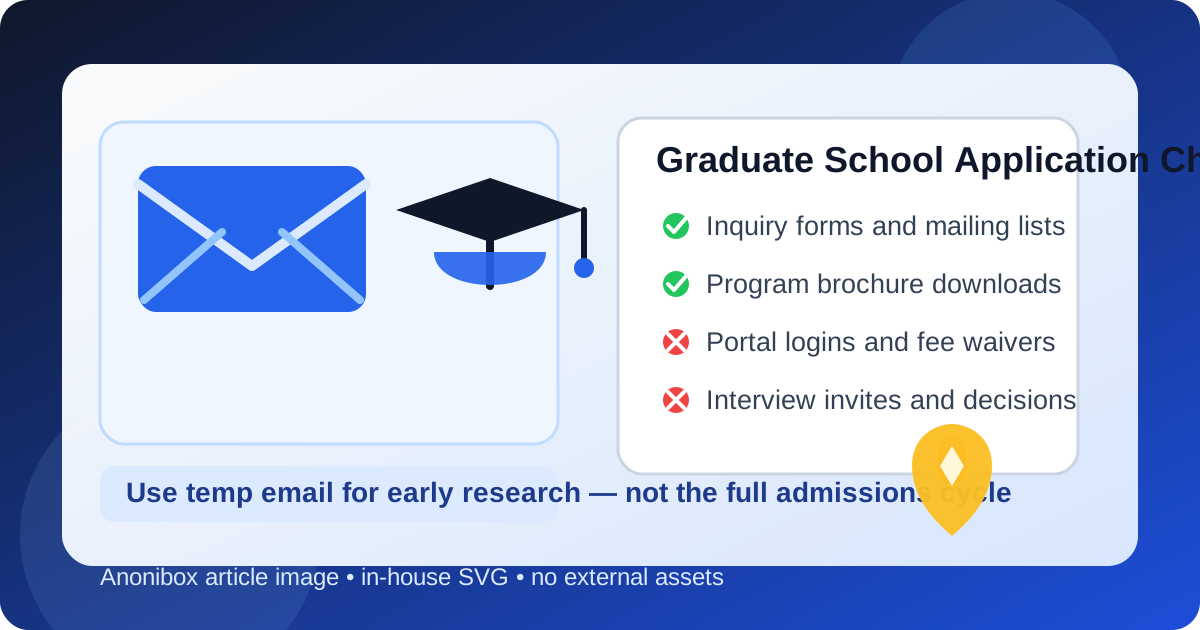
- Safe for temporary email: brochure downloads, general mailing lists, one-time inquiry forms, low-trust lead forms, and stand-alone events.
- Safer with a permanent inbox: official applications, school portals, recommendation systems, interviews, funding conversations, admitted-student follow-up, and anything involving account recovery.
Examples
Example 1: early research
You are comparing ten programs and want curriculum guides, deadlines, and virtual-event links. A temporary address is reasonable if you only need the initial information and do not want all ten programs sending marketing emails to your main account forever.
Example 2: real application submission
You are opening an application portal, paying the fee, requesting letters, and tracking transcripts. A temporary address is the wrong tool here. Use a dedicated permanent inbox instead.
Example 3: questionable aggregator site
You find a third-party “match with graduate schools” form that asks for your email before it shows anything useful. A temporary address can help you test whether the site is legitimate without exposing your main inbox immediately.
Privacy risks to keep in mind
The appeal of temporary email is real: fewer marketing emails, less exposure, and cleaner separation. But the cost is reliability. Graduate school communication is too important to miss because an inbox expired or became inaccessible.
There is also a credibility angle. While most schools care more about whether they can reach you than what provider you use, an obviously temporary address can look less stable than a normal dedicated application inbox. That alone is not a reason to panic, but it is another reason not to rely on disposable email for the full process.
Best-practice setup for most applicants
- Create one separate long-term email address just for applications.
- Use that address for official portals, faculty communication, interviews, and decisions.
- Use aliases or filters to keep individual schools organized.
- Use a temporary address only for early-stage research or low-trust marketing forms.
- Check the application inbox consistently through the full admissions cycle.
Final answer
So, should you use a temporary email for graduate school applications? Usually not for the actual application itself. It can be helpful for early research, mailing-list signups, and privacy protection when you are still exploring programs, but it is too risky for anything tied to a real admissions workflow.
If you want the privacy benefits without the downside, the smarter move is a separate permanent inbox or an alias you control. That gives you cleaner organization, less spam, and a much lower chance of missing a message that actually affects your future.