Usually yes — a temporary email can be a smart choice for recruiter outreach if you use it early, keep it active long enough for replies, and switch to a more stable address once a real conversation starts.
It helps reduce spam and protect your main inbox, but it becomes a problem if the address expires before scheduling, screening, or offer-stage follow-up.
Recruiter outreach sits in an awkward middle ground. On one side, you want to look reachable, organized, and professional. On the other, you may not want every recruiter, resume database, and sourcing tool tied directly to your permanent personal inbox. That trade-off is exactly why people ask whether a temporary email is a good fit.
For many job seekers, the answer is yes at the top of the funnel. A temporary or disposable address can be useful when you are testing job-market interest, replying to cold recruiter messages, creating accounts on job platforms, or contacting recruiters whose legitimacy you have not fully verified yet. It gives you a buffer between your real identity and the noisy part of the hiring ecosystem.
But recruiter outreach is not the same as signing up for a one-time coupon. If the conversation turns into real screening calls, interview scheduling, take-home assignments, or offer discussions, you need continuity. That means the best approach is not “always use a temporary email” or “never use one.” It is knowing when a temporary inbox helps and when it starts getting in your way.
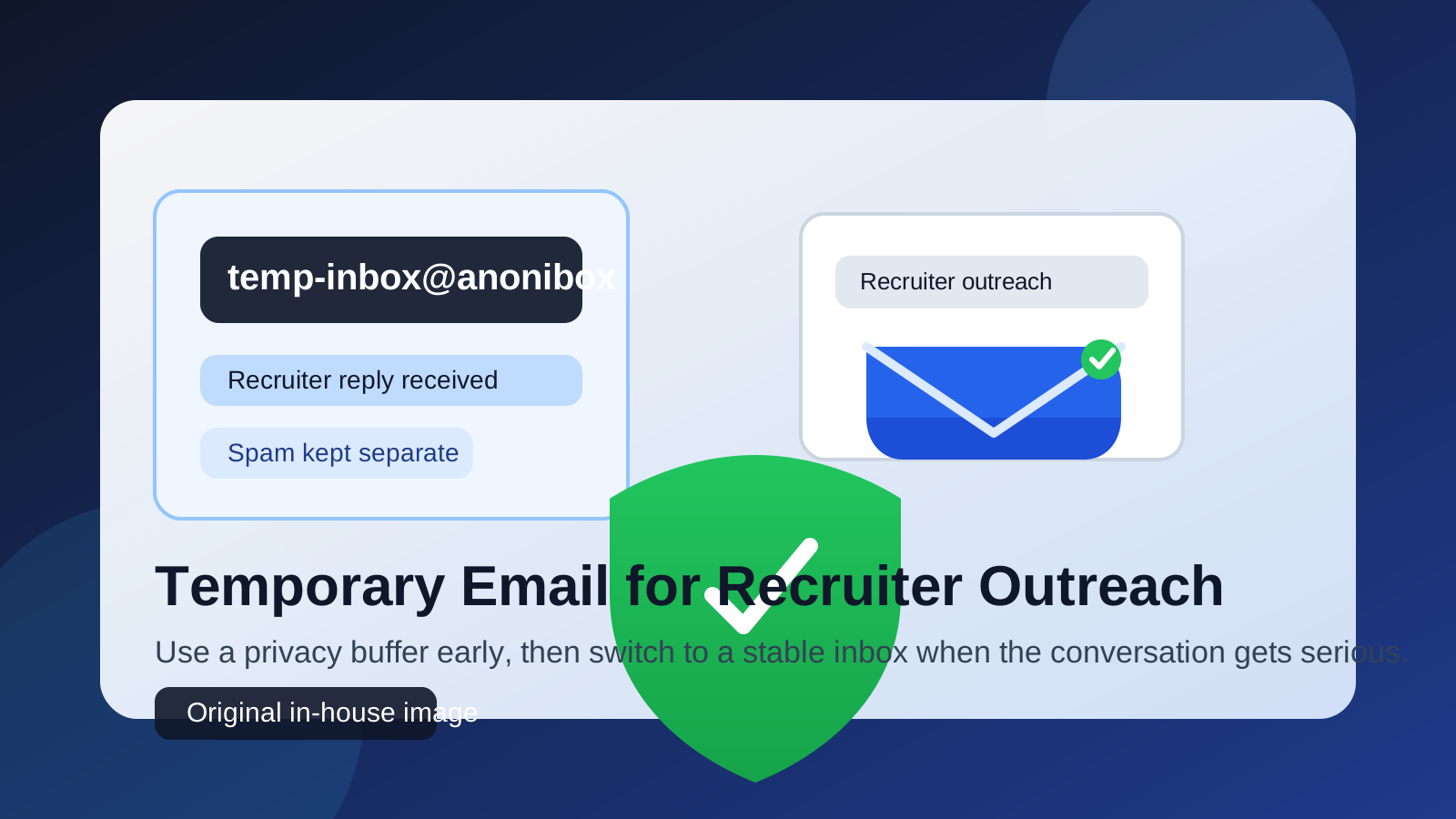
Short answer: use a temporary email for early recruiter outreach, not for the whole hiring process
If you want the fastest practical answer, here it is: a temporary email is usually fine for first contact, exploratory outreach, and low-trust situations. It is less ideal once a recruiter is actively moving you through interviews or sending important follow-up that cannot be missed.
Think of it as a privacy filter. Early on, you are deciding which recruiters deserve access to your main contact details. Later, once a real opportunity is underway, you want stability more than separation.
Why people use temporary email for recruiter outreach
There are a few obvious reasons this keyword makes sense for real job seekers.
1. Recruiter outreach can create long-term inbox clutter
Once your email lands in recruiter databases, sourcing tools, newsletter lists, and ATS exports, it can stay there for a long time. Even legitimate recruiters often move between firms or recycle candidate lists months later. A temporary address limits how much of that follow-up reaches your main inbox forever.
2. Not every recruiter message is equally trustworthy
Some recruiter outreach is excellent. Some is generic. Some is low-effort scraping. And some is outright scam activity. Using a temporary inbox at the start gives you room to evaluate who is real before handing over the address you use for banking, personal contacts, and important accounts.
3. You may want separate channels for different job-search tracks
Some people are casually open to recruiter messages while still employed. Others are running an active search across multiple industries, compensation levels, or locations. A separate inbox helps you segment those streams so one noisy lane does not contaminate everything else.
4. Privacy matters when you are currently employed
If you are job hunting quietly, protecting your personal routines matters. A temporary address can help reduce accidental cross-over between current-employer systems, public profiles, recruiter outreach, and your long-term personal inbox.
When a temporary email is a good idea
A temporary email makes the most sense in these situations:
- You are replying to cold recruiter outreach and want to screen for quality before committing more personal details.
- You are creating recruiter-platform or talent-network accounts that may generate a lot of marketing follow-up.
- You are testing demand in the market and do not want your primary inbox flooded yet.
- You are sharing a resume on lower-trust surfaces where spam exposure is more likely.
- You want a job-search-only channel that keeps recruiter traffic out of your daily personal email.
In those cases, a temporary inbox works like a waiting room. Recruiters can reach you, but they do not immediately gain access to the address tied to the rest of your life.
When a temporary email is a bad idea
This is the part people skip: a temporary inbox can absolutely backfire if you use it at the wrong stage.
- Do not use a short-lived inbox for active interview scheduling. If the address may expire tomorrow, it is the wrong tool.
- Do not use a disposable address if you rarely check it. Privacy is not helpful if it causes missed opportunities.
- Do not use one where continuity matters. Offer details, reschedules, assignment links, and calendar coordination need a stable home.
- Do not use an obviously sketchy address format. Some disposable domains may look suspicious to recruiters or trigger filters.
The main risk is simple: recruiter outreach often starts casual, then turns time-sensitive very quickly. If your inbox cannot survive that transition, you may lose good opportunities for a preventable reason.
Temporary email vs email alias vs dedicated job-search inbox
These options sound similar, but they solve slightly different problems.
Temporary email
Best for: early outreach, low-trust signup flows, initial screening of recruiter traffic, and spam reduction.
Weakness: limited lifespan or weaker continuity depending on the service.
Email alias
Best for: keeping a stable forwarding address while hiding your base inbox.
Weakness: still requires a real destination inbox underneath, and some alias setups are better than others for long-term organization.
Dedicated job-search inbox
Best for: active searches, multiple simultaneous applications, and interview-stage communication.
Weakness: less disposable, so more long-term maintenance.
If you want the most practical strategy, many people end up using all three at different stages. A temporary email helps for exploratory recruiter outreach. A stable alias or dedicated inbox takes over once a recruiter becomes worth talking to seriously.
How to use a temporary email for recruiter outreach without looking flaky
1. Use it at the beginning, not at the finish line
Start with the temporary inbox when replying to broad outreach, signing up for talent communities, or testing whether a recruiter is legitimate. If the conversation becomes serious, move the thread to a stable address before scheduling friction appears.
2. Pick an address you can monitor reliably
The address does not have to be your forever inbox, but it does need to stay available long enough for real replies. If you use Anonibox or any other temporary-email workflow, choose one that gives you enough time to receive verification messages, follow-ups, and reasonable back-and-forth.
3. Keep the local part professional enough
A recruiter does not need to see a silly or throwaway-looking name. A simple address format based on your initials, role target, or a neutral identifier looks more credible and reduces the chance of being ignored.
4. Move to a stable address once the recruiter proves real
You do not need to overexplain. If the conversation becomes active, you can simply say you prefer to continue from another address you monitor more closely. That is normal and does not need to sound dramatic.
5. Save anything important immediately
Temporary inboxes are good for privacy, not for permanent records. Save interview details, job descriptions, recruiter names, compensation notes, and scheduling links somewhere you control.
Will recruiters see temporary email as unprofessional?
Sometimes, but not always. Most recruiters care more about whether you respond promptly than whether your domain is deeply memorable. A temporary email becomes a problem when it looks obviously disposable, bounces, or disappears right when they are trying to move fast.
That means the professionalism question is really a reliability question. If the inbox behaves like a real communication channel, the risk is lower. If it behaves like a self-destructing burner that you forget to monitor, then yes, it can make you look disorganized.
What about spam, phishing, and fake recruiters?
This is one of the strongest reasons to start with a separate inbox. Fake recruiter campaigns often begin with generic praise, vague roles, requests to move to another app, or attachments and links that should not be trusted. Keeping that traffic out of your main inbox is sensible.
A temporary address will not make scams harmless, but it reduces long-term exposure. You still need normal caution:
- Verify the recruiter’s company and domain independently.
- Be skeptical of urgent requests to switch to Telegram, WhatsApp, or odd portals immediately.
- Do not send sensitive identity documents early.
- Do not share one-time verification codes with anyone.
- Do not assume a message is real just because it mentions your resume or LinkedIn profile.
A practical workflow that works well
- Use a temporary email for discovery. Reply to cold outreach, talent-network signup flows, or lower-trust recruiter channels there.
- Watch for quality signals. Is the recruiter specific, professional, and tied to a real company or retained search?
- Promote good conversations. If the opportunity looks real, move it to a stable alias or dedicated job-search inbox.
- Reserve your main personal inbox for what truly matters. That keeps your long-term address out of a lot of noise.
This layered approach is usually better than giving every recruiter your permanent inbox on day one or, at the other extreme, trying to run an entire job search from an address you might lose.
Where Anonibox fits naturally
If you want a fast buffer between recruiter traffic and your primary inbox, Anonibox fits the early-stage use case well. It is especially useful when you are exploring the market, answering cold recruiter messages, or protecting yourself from a wave of follow-up before you decide who is worth deeper engagement.
The key is to use that buffer intentionally. Anonibox can help you keep your search cleaner and more private, but once a recruiter is coordinating interviews or sending important next steps, you should use a stable address you control for the longer haul.
Quick checklist before you use a temporary email for recruiter outreach
- Will the inbox stay active long enough for replies?
- Can you monitor it consistently for a few days or weeks?
- Does the address look neutral and professional enough?
- Do you have a stable follow-up inbox ready if the conversation gets serious?
- Are you using it for privacy and organization, not to dodge legitimate communication?
If you can answer yes to those questions, a temporary email is a reasonable tool. If not, a stable alias or dedicated job-search inbox is probably the better fit.
Conclusion
So, should you use a temporary email for recruiter outreach? In many cases, yes — especially at the beginning. It can reduce spam, protect your main inbox, and give you a safer buffer while you figure out which recruiters are real, relevant, and worth your time.
Just do not confuse temporary with careless. The best recruiter-outreach setup is one that protects your privacy without risking missed replies. Use a temporary inbox for early filtering, move strong opportunities to a stable address, and keep your communication prompt and professional throughout. That balance gives you the privacy benefits without sabotaging your own search.